

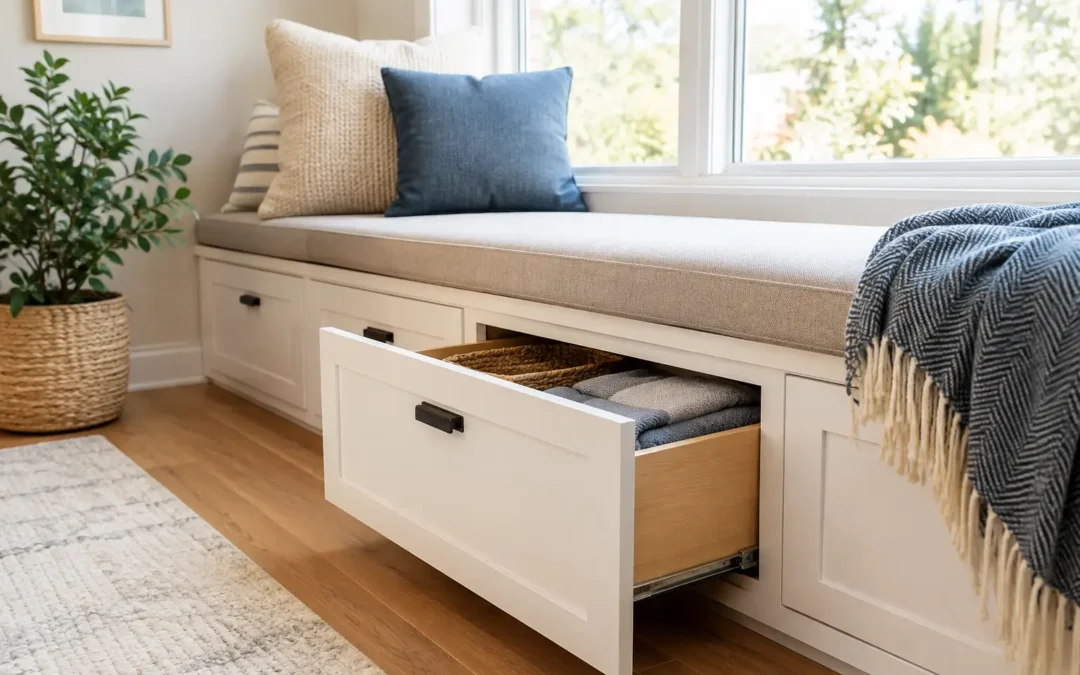
A bay window is often one of the loveliest features in a home, yet it can be surprisingly difficult to furnish well. A sofa may block the light, freestanding furniture can look awkward against angled walls, and the space beneath the sill is commonly left empty. Window seat storage changes that. It creates a proper place to pause with a coffee, read, watch the garden or simply enjoy the daylight, while putting valuable hidden storage exactly where it is needed.
For homes where every room has to work hard, a fitted window seat is not just a decorative detail. It is a made-to-measure solution that can deal with toys, shoes, books, blankets, paperwork or the everyday items that never seem to have a natural home.
Why fitted window seat storage earns its place
The difference between a fitted window seat and a loose storage bench is in the fit. A bespoke design follows the true shape of your bay, alcove or wall, including uneven corners, skirting boards, radiators and window reveals. The result feels like part of the room rather than an item that has been placed in it.
It also makes use of an area that standard furniture rarely handles well. In a lounge, this can free up floor space otherwise taken by baskets and occasional cabinets. In a bedroom, it can become extra linen storage without adding another bulky chest of drawers. In a hallway, it provides a useful perch for putting on shoes while keeping footwear out of sight.
There is an aesthetic benefit too. A well-designed seat can make a bay window look more deliberate and substantial. Finished in the same colour as surrounding cabinetry, wall panelling or fitted wardrobes, it can bring the whole room together. Alternatively, a contrasting painted finish can turn the window area into a quiet focal point.
Start with what needs storing
The best window seats are designed from the contents outwards, not just from the cushion down. Before choosing doors, drawers or lift-up lids, think honestly about what will live inside.
Deep, infrequently used items suit a hinged top. Spare bedding, Christmas decorations, board games and seasonal coats are all good candidates. A full-width lift-up lid gives excellent capacity and keeps the front of the seat clean and uncluttered. However, it is less convenient for things you need every day, particularly if cushions and people are usually on top of it.
Drawers are often the better choice for regular access. They are ideal in a hallway for shoes, in a family room for toys, or in a home office for files and cables. Because contents come forward rather than upwards, drawers can be used without disturbing the seating area. They do need sufficient room in front to open properly, so they may not suit a narrow walkway.
Cupboard doors offer another practical route, especially for taller items or awkwardly shaped belongings. In a large bay, dividing the base into several sections can make the storage easier to manage than one vast, dark compartment. The right answer depends on the room, the available depth and how your household actually lives.
Do not waste the awkward sections
Bay windows are rarely perfectly square. The angled side returns can be too shallow for conventional storage but too useful to ignore. A bespoke design can use those areas for narrow cupboards, open book shelving or carefully shaped lids. This is where fitted furniture earns its value: the proportions are worked out for your room rather than dictated by a standard unit size.
Get the dimensions right before thinking about cushions
Comfort starts with sensible proportions. Most adults find a finished seat height of around 450mm comfortable, although the right measurement should account for the cushion thickness and the style of seating you want. A seat that is too high feels perched; one that is too low can be awkward to get up from.
Depth matters just as much. A shallow ledge may look attractive but will not offer much more than occasional seating. For a place intended for reading or relaxing, a deeper seat is more inviting, provided it does not intrude too far into the room. In a tight hallway, a more compact bench can still be useful, but it should be designed around circulation first.
Window sills, opening casements and blinds also need careful consideration. The seat should not prevent windows from opening safely or make catches difficult to reach. If curtains are already planned, allow for how they will fall around the joinery. Small details such as these are often what separate a beautiful design drawing from a seat that remains easy to live with years later.
Plan for heat, light and access
A radiator beneath a window presents a common question. It does not automatically rule out a window seat, but it must be handled properly. Boxing a radiator in without sufficient ventilation can reduce its output and may expose the joinery to unnecessary heat. A purpose-made grille, ventilation slots and suitable internal clearances allow warm air to circulate while maintaining a polished finish.
Where possible, it is worth considering whether the radiator can be repositioned as part of a wider room refurbishment. That may create uninterrupted storage, but it adds cost and coordination with a heating engineer. Keeping the radiator in place is often the sensible option, particularly when a well-designed vented cover gives the room the look and function you want.
Natural light is another reason to be restrained with tall furniture around a bay. The great advantage of a window seat is that it makes use of the lower part of the opening while preserving the brightness that drew you to the room in the first place. If you add shelves or cabinets either side, keep their scale balanced so they frame the window rather than crowd it.
Choose a finish that belongs in the room
The seat itself should feel integrated with the rest of the interior. In a period property, framed drawer fronts, beading and traditional handles can sit comfortably with original features. In a newer home, flat fronts, discreet finger pulls and a crisp painted finish can create a calmer, more contemporary effect.
Painted cabinetry is especially flexible because it can be matched to existing colours or chosen to introduce something new. A soft neutral can help a substantial seat blend into the architecture. A deeper green, blue or charcoal can give a pale room more definition without relying on extra furniture. Timber accents, such as an oak top or shelf detail, can add warmth if the room has hard flooring and clean-lined finishes.
The cushion deserves equal attention. It should be firm enough to retain its shape, tailored to the exact dimensions of the seat and made in a fabric that suits the room’s use. Families may prefer a durable, easy-clean fabric, while a quieter bedroom can accommodate softer textures. Loose scatter cushions make a deep window seat feel more like a proper retreat, but avoid piling on so many that the bench becomes impractical.
Window seat storage ideas by room
In a living room, the strongest approach is often a full bay seat with a mixture of drawers and concealed compartments. It gives guests extra seating at Christmas or family gatherings, but earns its keep every day by swallowing throws, games and children’s clutter.
In a bedroom, a window seat can replace an extra chair that tends to collect clothes. Use it for spare bedding, off-season clothing or handbags, then add a fitted cushion to create a useful dressing spot. If it sits below a wardrobe run, matching the doors and paint finish gives the room a calm, considered appearance.
In a child’s room, storage needs to be straightforward enough for children to use. Deep drawers for toys or a lift-up bench for bulky items can work well, but soft-close fittings are worth specifying to protect little fingers. A comfortable seat by the window can also encourage a reading corner without taking up more floor space.
In a hallway or boot room, the design should be more hard-wearing. Drawers, open cubbies for everyday shoes and a wipeable cushion are practical choices. Hooks or wall panelling above the bench can turn a previously neglected stretch of wall into an organised arrival point for the whole household.
Why bespoke fitting makes the difference
There are plenty of ready-made benches, but they tend to leave gaps, waste corners and impose their own dimensions on your home. A made-to-measure window seat can work around the realities of the space, from a bowed wall to an off-centre radiator, while matching the finish and detailing of other fitted furniture.
At WOW Interior Design, the process starts with understanding how you use the room. A free design visit allows measurements, storage needs and finish choices to be discussed on site, before a tailored design and clear quotation are prepared. Professional installation then ensures the seat is fitted cleanly, securely and with the care a permanent piece of furniture deserves.
A window area should not have to choose between looking good and being useful. With the right proportions, sensible access and cabinetry built for the space, it can become one of the most hardworking and enjoyable corners of your home.