

A bedroom can look perfectly tidy and still fail to work. Perhaps the wardrobe stops short of the ceiling and gathers dust above it. Perhaps a sloping roof leaves a useful corner empty, or drawers clash with the bed every morning. This bespoke bedroom furniture review looks at whether made-to-measure fitted furniture genuinely solves those problems – and when it may not be the right investment.
For homeowners who want a bedroom to feel calmer, more organised and properly finished, bespoke furniture offers far more than a smart exterior. The difference lies in how the room is planned: every unit is designed around the space, the way you live and the items you need to store.
Bespoke bedroom furniture review: what are you paying for?
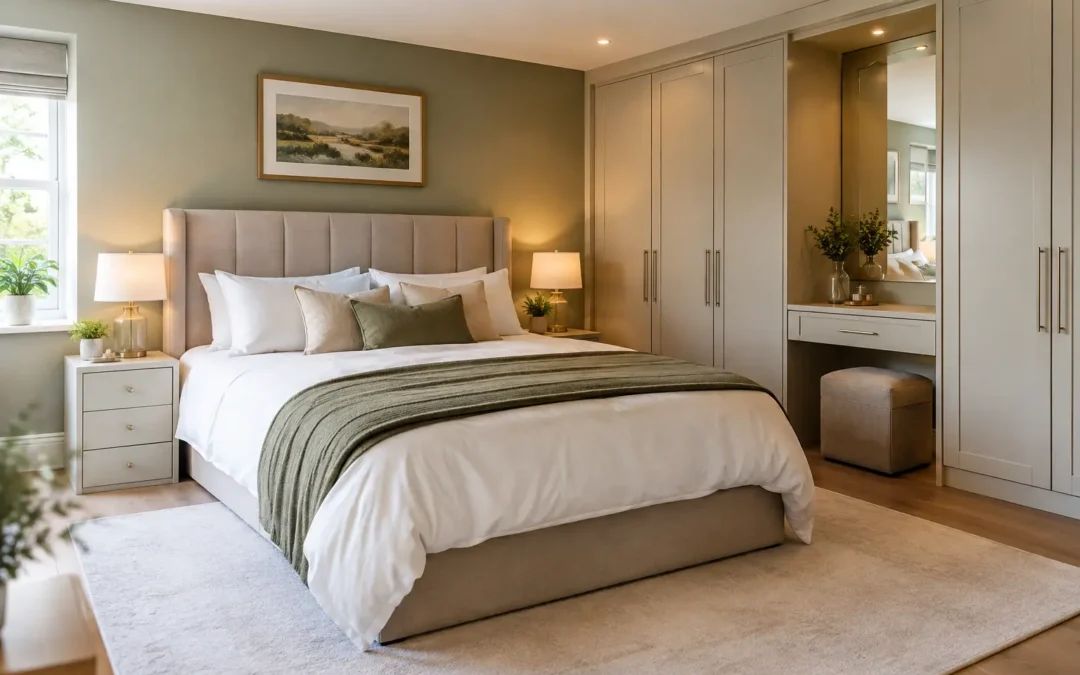
Bespoke bedroom furniture is designed, manufactured and fitted for one specific room. Rather than selecting a standard wardrobe size, you decide how the storage should perform. That might mean full-height wardrobes around a chimney breast, a dressing table fitted into an alcove, deep drawers beneath a window or cabinetry shaped precisely beneath eaves.
The main value is not simply that the furniture fits. It is that awkward gaps become useful storage, visual clutter is reduced and the room gains a more considered, built-in appearance. A well-designed fitted bedroom can make a compact room feel larger because the storage follows the perimeter cleanly instead of interrupting the floor space with separate pieces.
Naturally, this costs more than buying flat-pack or freestanding furniture. The price reflects surveying, design time, tailored manufacture, chosen materials, finishing and professional installation. It is therefore best viewed as a long-term home improvement rather than a quick furniture purchase.
The biggest advantage: storage that works harder
Most bedrooms have at least one wasted area. It may be the narrow strip between a wardrobe and wall, the top section above a standard unit, or the difficult shape created by a loft conversion. Off-the-shelf furniture is made to fixed dimensions, so it asks you to work around it. Bespoke furniture is planned to make the room work for you.
A good design begins with the contents of your wardrobe, not only its appearance. Long dresses need a different hanging height from shirts. Folded knitwear needs generous shelves. Shoes, bags, luggage, bedding and laundry all need a considered place if they are not to migrate onto chairs and floors.
This is where a design consultation earns its place. Internal layouts can include double hanging rails, pull-out shoe storage, drawers, adjustable shelving, mirrored doors and dedicated compartments for accessories. There is no need to add every possible feature, though. Too many specialist fittings can raise the cost and make a wardrobe less flexible as your needs change. The strongest layouts usually combine practical hanging space with adaptable shelves and drawers.
Appearance matters, but proportion matters more
Fitted furniture can suit a traditional Kent cottage, a Victorian terrace or a clean-lined new-build, provided the style respects the room. Shaker-style doors can bring warmth and detail, while handleless or simple slab fronts create a quieter contemporary look. Painted finishes are particularly useful because they can be matched to an existing wall colour, panelling or soft furnishings.
The more significant design decision is proportion. Tall doors make the ceiling feel higher. A continuous run of furniture can look refined, but only if it is broken up thoughtfully with open shelving, a central dressing area or differing door widths where appropriate. Deep, dark finishes can feel luxurious in a large, bright bedroom but may overwhelm a small room with limited natural light.
A reputable designer should be prepared to say when less is more. Filling every wall with cabinetry is not automatically the best answer. Bedrooms need breathing room as well as storage.
Materials and fitting determine whether it feels premium
The photographs may sell the idea, but the everyday experience comes down to construction and fitting. Doors should align neatly, drawers should run smoothly and panels should sit cleanly against walls, ceilings and uneven floors. These details separate fitted furniture that looks good on installation day from furniture that continues to feel solid and satisfying years later.
Material choice should be discussed plainly. Different boards, finishes, door styles and hardware have different strengths, price points and maintenance needs. A painted finish gives excellent freedom with colour and can be refreshed in the future, while some factory-finished surfaces may be more resistant to marks. There is no universal best option – households with young children, pets or a busy family routine may prioritise durability differently from someone creating a quieter principal bedroom.
Professional installation also matters. Older homes rarely have perfectly straight walls or level floors. A skilled fitting team measures carefully, scribes panels accurately and leaves the room clean and usable. Rushing this stage can undermine an otherwise excellent design.
Is bespoke furniture worth the higher cost?
For many established homeowners, yes – particularly where standard furniture would leave obvious gaps, waste valuable space or create a cluttered look. It can also be worthwhile before selling, not as a guaranteed shortcut to a higher valuation, but because a well-organised fitted bedroom can make a property more appealing and easier to understand at a viewing.
However, bespoke is not always the sensible choice. If you expect to move very soon, are renting, need a temporary solution or have a straightforward room where a quality freestanding wardrobe fits perfectly, standard furniture may offer better value. Freestanding pieces are also easier to move, rearrange and replace.
The case for fitted furniture becomes stronger when the bedroom has architectural challenges, storage is persistently inadequate or you want a cohesive result that will serve the household for many years. The question is less about whether bespoke is inherently better and more about whether it solves expensive-to-ignore problems in your particular room.
What to ask before approving a design
A clear proposal should explain the layout, finish, internal storage and installation scope. Do not approve a design solely because the doors look attractive. Ask how the wardrobe will be used day to day, where full-length clothing will hang, whether drawers have enough clearance and how access will work around radiators, windows or bedside furniture.
It is also sensible to confirm what is included in the quotation. Check whether removal of existing furniture is covered, whether any electrical work is required, how long installation is likely to take and what preparation is needed before the fitters arrive. Clear answers prevent surprises and help the project run smoothly.
At WOW Interior Design, the approach begins with an in-home design visit and careful measuring, so the discussion can focus on the realities of your space rather than generic catalogue sizes. With more than 25 years of experience, the team can balance the practical demands of storage with the finish you want for your home.
The verdict for a fitted bedroom
A bespoke bedroom is at its best when it quietly removes daily frustrations. Clothes have a proper home, difficult corners become useful, and the furniture belongs to the architecture rather than merely sitting against it. The initial investment is higher, but the result can bring order and polish to one of the most personal rooms in the house.
Before choosing finishes or handles, spend time noticing how you use the room for a week. The coat left on a chair, the suitcase with nowhere to go and the shelf that is always overfull are not small inconveniences. They are the brief for a bedroom designed properly around you.