

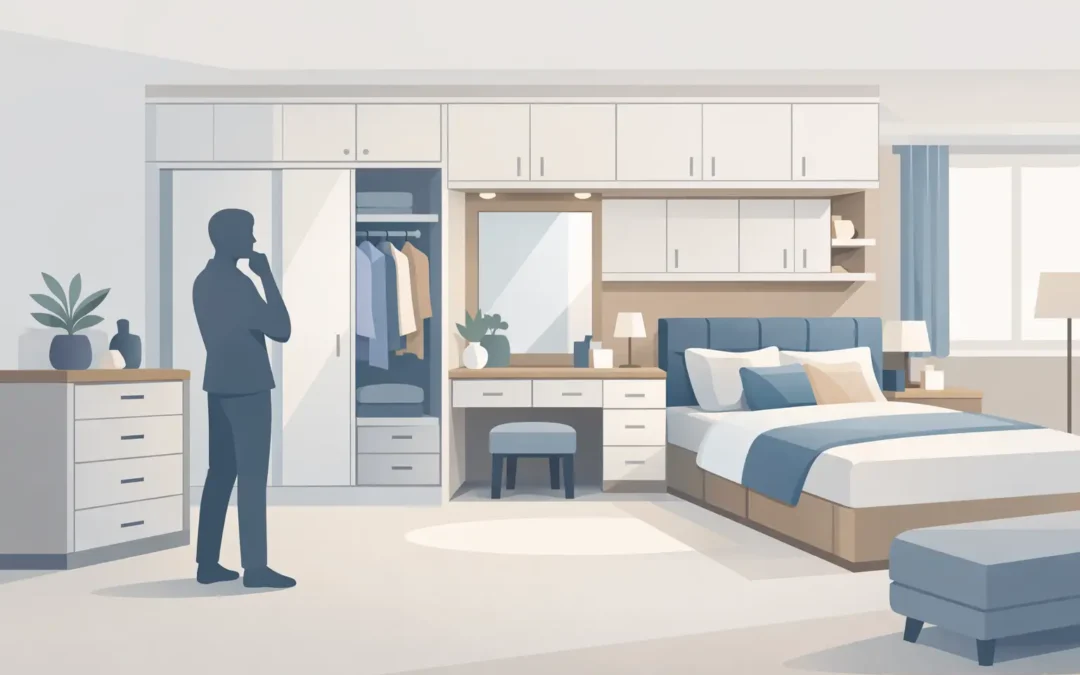
If you have ever tried to fit a standard wardrobe into an alcove, under a sloping ceiling or across a wall with awkward angles, you will already understand the appeal behind the question: what is fitted bedroom furniture? It is furniture designed and built specifically for your room, rather than bought in standard sizes and made to work as best it can. The result is a bedroom that uses space properly, looks more considered and feels far less cluttered.
That sounds simple, but fitted bedroom furniture is more than a wardrobe attached to a wall. Done properly, it is a tailored storage solution that takes account of your room dimensions, your layout, how you live and what you need to store day to day. It is the difference between filling a room with furniture and shaping the room around the way you use it.
What is fitted bedroom furniture in practical terms?
Fitted bedroom furniture is made to measure furniture that is designed to fit the exact dimensions of a bedroom. It can include wardrobes, drawers, bedside units, dressing tables, overhead storage, media units and shelving, all built as part of a joined-up design.
Unlike freestanding furniture, fitted pieces are not limited by retail sizes. They can run wall to wall, floor to ceiling and around architectural features such as chimney breasts, eaves, bulkheads and alcoves. That matters more than many homeowners expect. In most bedrooms, the wasted gaps around standard furniture quickly add up. You might lose useful storage above a wardrobe, leave dead space in corners or end up with dust-trapping voids that serve no purpose at all.
With fitted furniture, those gaps are designed out. The room tends to feel calmer and better resolved because every element has a place and every part of the layout is working harder.
How fitted furniture differs from freestanding furniture
The main difference is not just that one is fixed and the other is movable. It is that fitted furniture starts with the room, while freestanding furniture starts with the product.
When you buy from a high street range, you are choosing from a set of pre-made widths, heights and finishes. You then adjust your expectations to fit what is available. That can work well enough in a box-shaped room with straightforward storage needs. It is usually less successful in older properties, loft rooms or bedrooms where every inch counts.
Fitted bedroom furniture is approached the other way around. The space is measured first. Then the internal storage is planned around what you need to keep there – long hanging, folded clothes, shoes, handbags, bedding, jewellery or even a concealed workspace. The exterior finish is selected to suit the style of the room, whether that means something classic and painted, modern and minimal, or somewhere in between.
That is why fitted furniture often looks more integrated. It belongs to the room rather than being placed in it as an afterthought.
Why homeowners choose fitted bedroom furniture
For most people, the decision comes down to three things: space, appearance and practicality.
The space-saving benefit is usually the first driver. A fitted wardrobe can use the full height of a room, which creates significantly more storage than a standard unit. In smaller bedrooms, that can free up floor area and make the room feel less crowded. In larger bedrooms, it can bring order to what would otherwise become scattered furniture pieces across multiple walls.
Appearance matters just as much. Bedrooms work best when they feel restful, and visual clutter gets in the way of that. Fitted furniture creates cleaner lines and a more cohesive finish. Instead of separate wardrobes, chest of drawers and open shelves competing for attention, the whole room feels planned.
Then there is day-to-day practicality. Good fitted furniture is not only about external looks. The inside matters. Shelves at the right height, drawers where you actually need them, rails for the right garment lengths, enough shoe storage and sensible access all make a real difference. The best designs are not generic. They reflect how the homeowner lives.
What can be included in a fitted bedroom design?
Wardrobes are the obvious starting point, but a full fitted bedroom can include much more. Beside wardrobes, many homeowners choose matching drawer units, bedside cabinets, bridge units over the bed, dressing tables, window seats and display shelving.
In some rooms, the smartest solution is a combination of open and closed storage. Closed wardrobes keep the room looking tidy, while open shelving or recessed display areas add character without making the space feel heavy. In awkward rooms, built-in cabinetry around chimney breasts or within alcoves can turn previously unusable areas into valuable storage.
This is where bespoke work earns its keep. The design can be shaped around your architecture rather than forced into standard modules. If your ceiling slopes, your wardrobes can slope with it. If the room is narrow, the internal layout can be adjusted so access still works comfortably. If you want a painted finish in a specific colour, that can be built into the design from the start.
Is fitted bedroom furniture worth it?
For many homeowners, yes – but it depends on what you want from the room.
If you move frequently, prefer to rearrange furniture regularly or need a low-cost short-term solution, fitted furniture may not be the best fit. Freestanding pieces are more flexible and usually cheaper upfront. That trade-off is real.
But if you are improving a home you plan to stay in, and you want the bedroom to work properly every day, fitted furniture often offers better long-term value. You are paying for a design tailored to your room, materials chosen for durability and a result that makes the space more usable. In practical terms, that can mean fewer compromises, better storage and a finish that still feels right years later.
There is also the question of quality. Bespoke fitted furniture is usually built with the room and installation process in mind, rather than mass-produced for broad appeal. That tends to show in the detailing, the fit and the overall look.
What makes good fitted bedroom furniture?
Not all fitted furniture is equal. A good result comes from a mix of design judgement, accurate measuring, quality manufacturing and careful installation.
The design needs to solve problems, not just look attractive on a drawing. That means considering door clearances, drawer access, light levels, ceiling height and how the furniture will sit with existing features in the room. A wardrobe that looks impressive but blocks a window reveal or makes the room feel boxed in is not good design.
Materials matter as well. Bedrooms need furniture that stands up to daily use but still looks refined. Durable cabinet construction, reliable hinges and runners, and well-finished surfaces all play a part. So does the final fitting. Even the best-made furniture can be let down by poor installation.
That is why homeowners tend to value an end-to-end service. When one team handles design, measuring, manufacture and fitting, there is far less room for details to get lost along the way.
What is fitted bedroom furniture best suited for?
It works particularly well in rooms with awkward layouts, but it is not only for difficult spaces. Box rooms, loft conversions and period homes with alcoves are obvious candidates because off-the-shelf furniture often wastes too much room. Yet straightforward bedrooms benefit too, especially when the aim is a cleaner, more polished look.
Family homes are a strong example. Bedrooms often end up carrying more than clothes alone – spare bedding, seasonal items, accessories and sometimes work-related storage as well. Fitted furniture helps organise all of that without making the room feel overfilled.
It also suits homeowners who want a more tailored interior. Rather than mixing pieces over time and hoping they sit well together, you can create a bedroom with a clear sense of order from the beginning.
The process behind a fitted bedroom
A proper fitted bedroom project usually starts with a home design visit and detailed measuring. This stage matters because small errors on site become visible problems later. Once measurements are taken, the layout, internal storage and finishes are developed to suit the room and the homeowner’s priorities.
From there, the furniture is manufactured to specification and professionally installed. A good fitting team does more than assemble units. They ensure the finished furniture sits cleanly against walls and ceilings, works smoothly and leaves the room looking finished rather than patched together.
For homeowners, that managed process removes much of the uncertainty. You are not trying to coordinate separate suppliers, guess measurements or work out whether standard products will fit. The room is planned as a whole.
WOW Interior Design works in exactly this way, which is one reason fitted interiors feel far more straightforward than many people expect.
If you are weighing up whether fitted furniture is right for your bedroom, the best test is a simple one: look at the space you have now and ask where it is being wasted. The answer usually tells you very quickly whether a bespoke solution would just look better – or genuinely make the room easier to live with.