

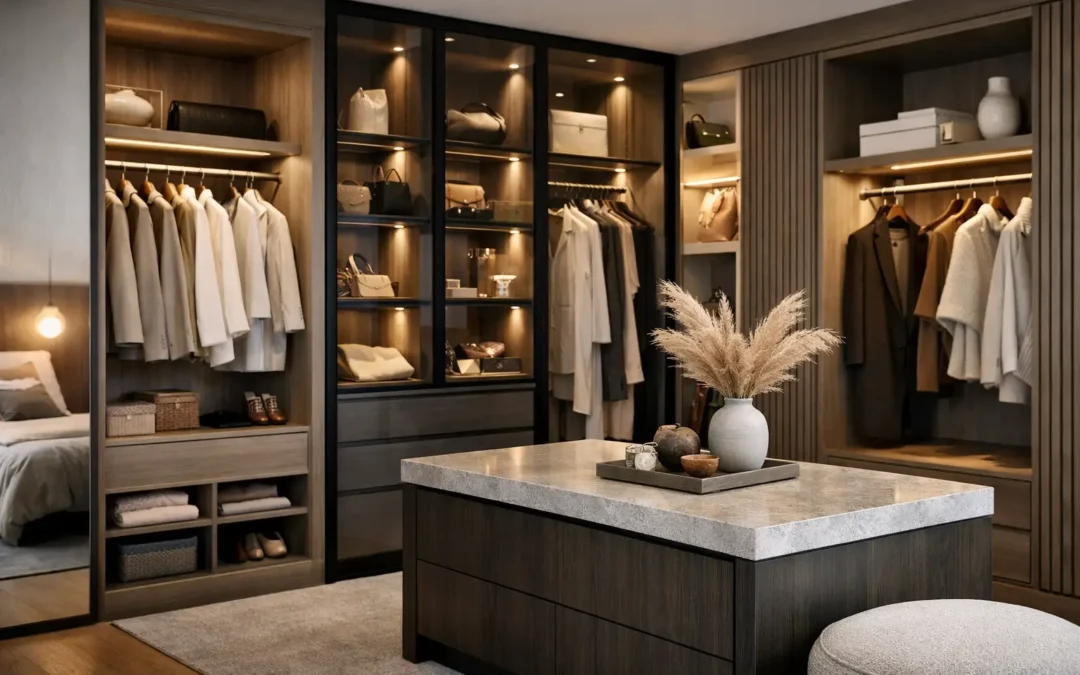
A wardrobe can look immaculate from the outside and still make every morning harder than it needs to be. The most useful wardrobe interior trends are moving attention beyond doors and finishes, towards the way storage performs day after day. Homeowners are asking for a place for everything: clothes that are easy to see, drawers that stop small items disappearing, and layouts designed around real routines rather than a standard rail and shelf.
For fitted wardrobes, this is where bespoke design earns its place. An interior should suit the clothes you own, the room you have and the way your household lives. A beautifully organised interior also means the room stays calmer, with less left on chairs, floors and dressing tables.
Wardrobe interior trends are becoming more personal
The era of filling a wall with one long hanging rail and a few high shelves is fading. It was a simple solution, but it often wasted the lower half of the wardrobe and made everyday items difficult to reach. Current interiors are more deliberately divided, with each section given a job.
That does not mean every wardrobe needs the same collection of accessories. A couple sharing a bedroom may need separate zones and different hanging heights. A family home may benefit from flexible storage that changes as children grow. Someone with a carefully chosen work wardrobe may prioritise shirt rails and shoe shelves, while a keen traveller may need roomy drawers for knitwear and luggage storage above.
The trend is not simply more compartments. It is better judgement about what deserves accessible, visible space and what can be stored higher up. A considered design makes the wardrobe feel larger because it removes the dead areas that standard furniture often creates.
Zoning for real morning routines
The strongest practical trend is wardrobe zoning. Frequently worn clothing belongs between waist and eye level, where it can be reached without effort. Less-used seasonal pieces can sit on higher shelves, while heavier items are better supported in lower drawers or deeper compartments.
Double hanging remains a smart use of height
Double hanging rails are particularly effective for shirts, blouses, skirts and folded trousers. They use vertical space efficiently without making clothing feel crammed in. A full-height section should still be included for dresses, coats and longer garments, but it does not need to dominate the entire design.
The right balance depends on a client’s wardrobe. Installing too much double hanging for someone who owns long dresses is frustrating. Equally, giving a full-height rail to a collection that mostly consists of shirts and jackets is wasted capacity. Measuring garments during the design stage can prevent both problems.
Drawers are replacing loose storage boxes
Integrated drawers bring order to the items that tend to drift around a bedroom: underwear, socks, gym wear, accessories and folded T-shirts. Shallow drawers work well for smaller pieces, while deeper drawers suit knitwear and jeans. Internal dividers are a worthwhile addition when they will be used consistently, especially for belts, watches, jewellery or ties.
The key is to avoid overcomplicating the layout. Too many narrow drawers can restrict larger items and make the interior feel fussy. A mix of drawer depths normally gives a more useful result.
Shoes deserve a planned home
Shoe storage is increasingly being designed into wardrobes rather than treated as an afterthought. Adjustable shelves offer the most flexibility, as footwear varies greatly in height. Angled displays can look attractive, but flat shelves are often more practical for everyday pairs and easier to keep clean.
For a compact bedroom, a dedicated shoe section may need to share space with bags or folded clothing. A bespoke layout can make that compromise work without turning the wardrobe into a crowded catch-all.
Warm finishes inside the wardrobe
Wardrobe interiors no longer have to be plain white by default. Light neutral finishes remain popular because they reflect light and make clothing easy to find, but warmer wood effects and soft textured decors are increasingly chosen to make the interior feel as considered as the exterior.
A warm oak-style finish can bring depth to a calm, modern bedroom. Linen-effect or muted grey interiors offer a quieter look that works well with painted doors. Darker interiors can feel particularly luxurious behind pale doors, although they need good lighting and may be less practical in a deep unit with limited natural light.
This is one area where visual impact and maintenance should be considered together. Very dark finishes can show dust, while highly textured surfaces may be harder to wipe down. The best choice is one that complements the room, still allows clothing to be seen clearly and feels right for everyday use.
Discreet lighting with a purpose
Lighting is becoming a more common part of the wardrobe brief, but it should solve a problem rather than become a gimmick. Sensor-operated LED lighting can illuminate rails, drawers and deeper corners when doors are opened. It is especially useful in rooms where the wardrobe sits away from a window or where one partner gets dressed earlier than the other.
A warm white light generally feels more comfortable in a bedroom than a cold, blue-toned alternative. It should reveal the true colour of clothing without making the interior feel clinical. Good lighting also brings out the quality of internal finishes and makes an organised wardrobe easier to maintain.
For many homes, lighting works best when kept discreet. The aim is a clean, polished result that quietly improves the experience of using the furniture.
Flexible storage for changing households
A fitted wardrobe is a long-term investment, so a rigid interior is not always the best choice. Adjustable shelving allows a section to move from shoes to handbags, or from children’s clothes to adult storage as needs change. Removable dividers and repositionable rails can add further flexibility where it is genuinely useful.
This matters in Kent homes where bedrooms can vary widely, from compact new-build rooms to loft conversions and period properties with uneven walls, chimney breasts or sloping ceilings. The interior needs to work with those features, not leave awkward voids around them.
There is a trade-off. Fully adjustable systems offer versatility, but a completely fixed layout can look neater and provide stronger support for heavy items. The right approach is often a planned combination: fixed elements for the main structure, with selected shelves that can move when life changes.
The return of concealed, clutter-free storage
The best wardrobe interiors make it easier to put things away. Pull-down hanging rails can bring high-level clothing within reach. Pull-out trouser racks, tie racks and valet rails can be useful in the right place, particularly where space is limited. However, accessories should be selected for how they will be used, not because they look impressive on a showroom plan.
Concealed storage is also gaining ground for laundry, spare bedding and bulky seasonal items. Deep upper cupboards, integrated laundry baskets and dedicated bedding shelves can keep a bedroom looking settled without relying on additional freestanding furniture.
A useful test is simple: if an accessory makes the wardrobe easier to use every week, it is probably worth including. If it takes up valuable space for an occasional task, a well-proportioned shelf or drawer may serve you better.
Why fitted design makes these trends work
Many wardrobe interior trends rely on accurate planning. A standard unit has fixed widths, depths and heights, so the homeowner adapts to the furniture. With bespoke fitted wardrobes, the furniture is designed around the homeowner instead.
That starts with understanding what needs to be stored, then measuring the available space precisely. Door opening, skirting boards, alcoves, ceiling height and access around the bed all affect the final design. The internal layout must be considered at the same time as the exterior, because a striking door style is only half the job if the contents remain difficult to organise.
At WOW Interior Design, a free design visit gives homeowners the opportunity to discuss those practical details before a layout is finalised. With more than 25 years of experience, the focus is on producing a fitted interior that looks refined, uses every available inch and is installed with care.
The right trend for your wardrobe is the one that makes getting ready feel simpler. Start with the clothes and belongings you use every day, be honest about the space you need for the rest, and let the interior do the hard work behind closed doors.