

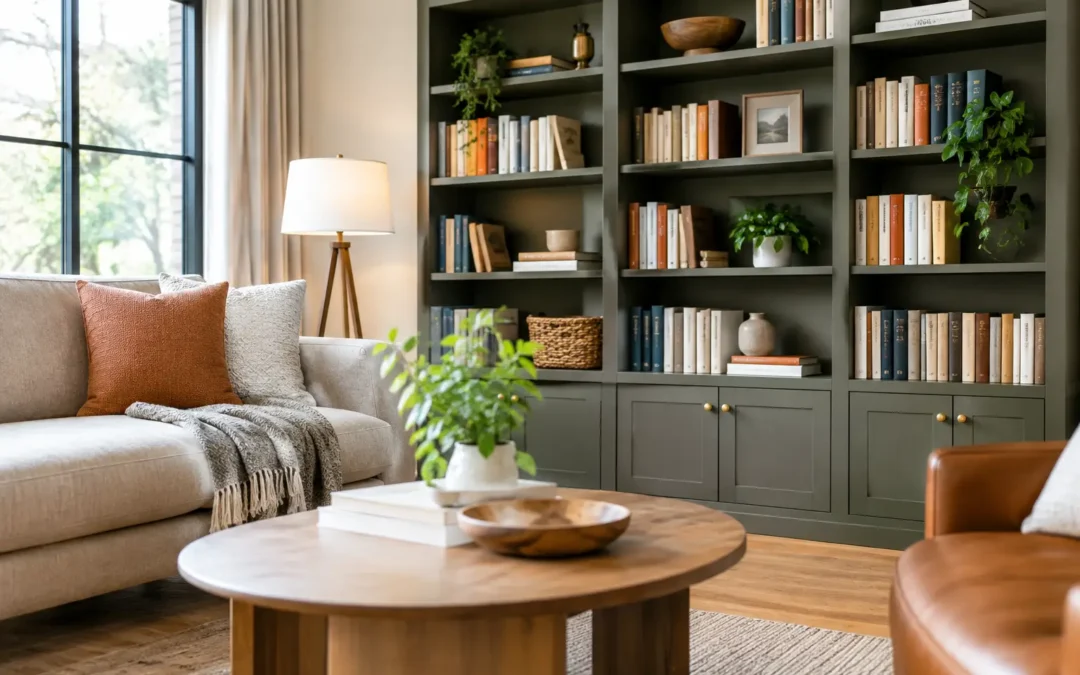
A living room shelf has to do more than hold books. It may need to frame a fireplace, conceal the television, make use of an unused alcove and still leave the room feeling calm. Well-planned library shelving for living rooms gives every item a place without turning your main relaxation space into a storage wall.
The difference is in the planning. Freestanding bookcases can be useful, but they rarely follow the lines of the room or make the most of its full height. Bespoke fitted shelving is designed around the architecture, your collection and how you actually live, creating a result that looks considered from every angle.
Start with how the room is used
Before choosing a door style or paint colour, consider what the living room needs to support. A formal sitting room with a carefully chosen book collection calls for a different design from a busy family space where games, chargers, children’s books and media equipment need to disappear at the end of the day.
This is why open shelves alone are not always the answer. They make books and decorative pieces accessible, but they also put everyday clutter on display. Combining open library shelving with base cupboards, drawers or lift-up storage creates a better balance. The shelves give the room character; the closed storage handles the less attractive essentials.
Think about the contents honestly. Measure the tallest art books, albums and binders rather than designing every shelf to a standard book height. Leave space for new purchases too. Shelves packed to the edge from day one can quickly feel cramped.
Make the most of the room’s architecture
The most successful fitted libraries look as though they have always belonged in the house. That means working with the features already there, rather than forcing a standard unit into an awkward gap.
Alcoves are an obvious opportunity. Either side of a chimney breast, bespoke shelving can turn shallow, overlooked recesses into useful storage while keeping the fireplace as the focal point. The depth needs careful consideration: very deep shelves can make small paperbacks hard to see, while shelves that are too shallow will not comfortably hold larger books. A tailored design avoids both problems.
A full wall of shelving can work beautifully in a larger room, particularly where there is a long blank wall with no natural purpose. Built from wall to wall and floor to ceiling, it provides serious capacity and a strong architectural finish. In a smaller lounge, however, full-height cabinetry may feel imposing if it is too dark, too deep or crowded with objects. Lighter painted finishes, a mixture of open and closed sections, and considered negative space can keep it feeling airy.
Sloping ceilings, bay windows, low window sills and uneven walls are precisely where fitted furniture earns its place. Instead of losing valuable space to filler panels and awkward gaps, the cabinetry can be made to follow the room accurately.
Around a television or fireplace
A media wall and library can sit together comfortably, but proportions matter. If the television is placed at the centre, surrounding shelves should not make it look like an afterthought. A recessed section, wider side panels or low cupboards beneath the screen can help the arrangement feel intentional.
Where a fireplace is the focal point, shelving on both sides creates symmetry without competing with it. Avoid placing sensitive books immediately beside a working stove or open fire, and always allow for the required clearances and heat protection. A professional design should accommodate these practical requirements from the beginning.
Choosing the right depth, spacing and proportions
Good library shelving is not simply a grid of equal boxes. Repetition can look neat on paper but often becomes restrictive once you begin filling it.
Most standard books are comfortable on relatively shallow shelves, while larger hardbacks and coffee-table books need more room. Adjustable shelving is useful where collections change often, although fixed shelves can offer a cleaner look and greater strength over long spans. The right solution often combines both: fixed sections where the design needs visual consistency and adjustable areas for practical flexibility.
Shelf thickness also affects the overall feel. Slim shelves suit a contemporary scheme, but longer spans may need thicker materials or discreet support to prevent sagging over time. This is particularly relevant for heavy books. A fitted library should be built for the load it will carry, not just for the photograph taken on installation day.
Proportion is equally important. Very narrow vertical compartments can look fussy, while oversized shelves can leave books looking lost. A designer will vary widths and heights in a controlled way, creating room for books, ceramics, framed photographs and artwork without making the display appear random.
Library shelving for living rooms: open, closed or both?
For most homes, a combination of storage types delivers the best long-term result. Open shelves bring warmth, colour and personality. They are ideal for books you reach for regularly, treasured objects and the pieces that make the room feel like yours.
Closed cupboards are valuable beneath shelving, where they create a visual anchor and hide bulkier belongings. They can store board games, spare throws, children’s toys, cables, routers and less decorative media equipment. Push-to-open doors offer a sleek contemporary appearance, while framed doors with handles can add detail and suit more traditional interiors.
Glass-fronted cabinets sit between the two. They protect special books and objects from dust while keeping them visible. They work especially well in a formal lounge, though they do require the contents to stay reasonably orderly.
There is no single correct layout. A household with young children may prioritise closed, accessible storage at low level. A keen reader may prefer more open shelving and fewer cupboards. The best design reflects what needs storing now, with enough flexibility for the room to evolve.
Finishes that belong in the living room
A library should feel like furniture, not an office storage system. Paint offers enormous freedom here. A soft neutral can blend shelving into the walls for a calm, built-in appearance, while a deeper green, blue or charcoal can make a library wall feel rich and distinctive. With bespoke painted furniture, the colour can be selected to complement existing joinery, wall finishes and upholstery.
Timber-effect interiors add warmth, especially when paired with painted fronts. A natural wood finish can be equally effective in a contemporary home, but it needs to be chosen with the floor and other furniture in mind. Too many competing wood tones can make the space feel disjointed.
Lighting deserves early thought. Small integrated LEDs can highlight shelves and make a darker corner more inviting in the evening. They are particularly effective around display pieces, but the light should be soft rather than harsh. Wiring, switches and cable routes are far easier to manage before the furniture is made and fitted.
Styling shelves without creating visual clutter
Once the cabinetry is in place, resist the urge to fill every shelf at once. Books are the main event in a library, so begin there. Arrange them in a way that is useful to you, whether by subject, author or a looser mix. Horizontal stacks can break up a run of vertical books and give an object somewhere to sit.
Leave some breathing room between groups. A few well-chosen photographs, ceramics or plants will look more effective than a dense collection of unrelated ornaments. If the room is already busy with patterned curtains, artwork or bold upholstery, simpler shelf styling usually works best.
Practical items can be kept behind lower cupboard doors, making it easier to maintain the room without constantly rearranging displays before guests arrive.
Why fitted shelving is worth considering
Off-the-shelf units may cost less initially and can be moved later, which suits renters or anyone who expects to change homes soon. For homeowners planning a lasting improvement, however, fitted library shelving offers advantages that are difficult to replicate. It uses the full available space, deals neatly with uneven walls and gives you control over every proportion, finish and storage detail.
The quality of installation matters as much as the design. Neat scribing to walls, accurate alignment and a clean finish are what make cabinetry read as part of the room. At WOW Interior Design, the process begins with a free design visit and in-home measurement, so the proposed layout is based on the real room rather than assumptions.
A well-designed library does not ask you to choose between a beautiful living room and a useful one. Give the books a home, keep daily clutter behind closed doors, and let the furniture bring order to the space you already enjoy.