

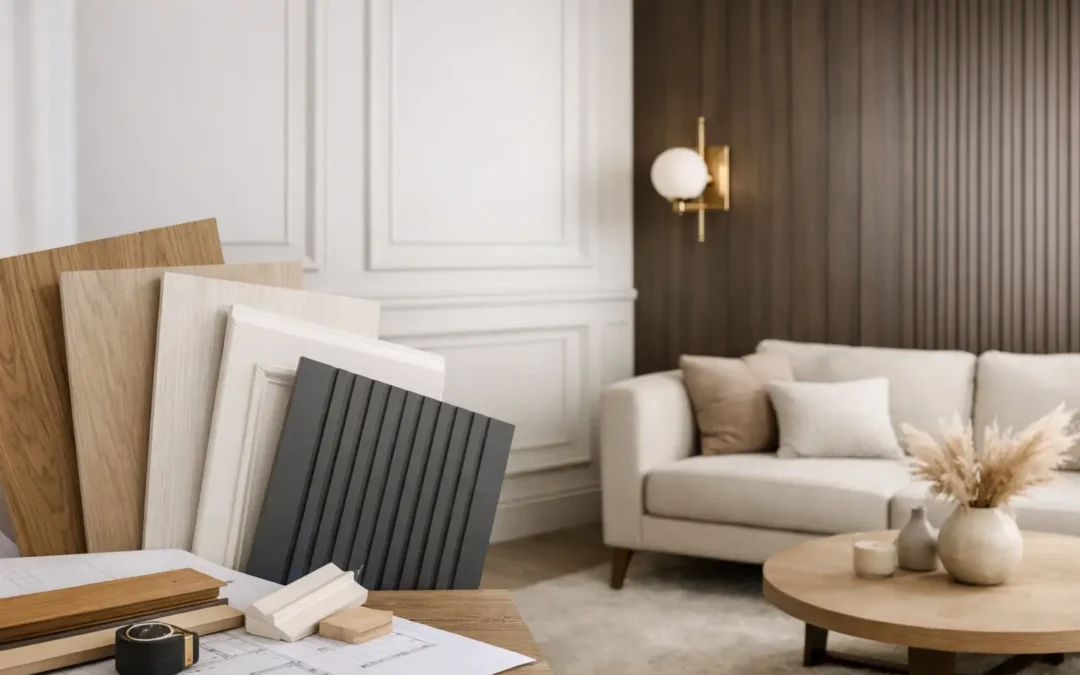
A bare wall can make a well-furnished room feel unfinished. Get the panelling right, though, and the whole space looks more considered, more architectural and far better put together. This wall panelling guide is designed for homeowners who want more than a passing trend – it is for people who want a room to feel properly designed, suit the way they live, and stand up to everyday use.
Wall panelling has become popular for good reason, but the best results are not just about picking a pattern you have seen online. Proportion matters. So does material choice, the condition of the wall underneath, and how the panelling works with furniture, lighting and storage. When those details are handled well, panelling can make a room feel taller, calmer, warmer or simply more finished.
What wall panelling actually changes
Panelling is often treated as a decorative extra, but in practice it changes how a room reads. It gives flat walls structure, creates rhythm, and helps tie together features that might otherwise feel disconnected. In a bedroom, that might mean giving purpose to the wall behind the bed. In a hallway, it can add character to a narrow space that usually gets overlooked. In a home office or snug, it can make the room feel grounded and intentional rather than improvised.
There is also a practical side. Panelling can protect vulnerable walls in busy parts of the house, disguise minor surface imperfections and create a cleaner visual line around the room. That does not mean it hides every problem. If a wall is uneven, damp or poorly prepared, those issues need sorting first. Good panelling starts with sound groundwork.
A wall panelling guide to the main styles
Not every style suits every property. One of the biggest mistakes homeowners make is choosing a design in isolation rather than in context with the room.
Shaker-style panelling is one of the most adaptable options. Its simple framed layout works in period homes and newer builds alike because it feels classic without becoming fussy. It is especially effective in bedrooms, dining rooms and hallways where you want definition but not visual clutter.
Raised or more traditional decorative panelling tends to suit homes with stronger original character. Used well, it can look elegant and substantial. Used in the wrong room, it can feel too formal or too busy. This is where scale matters. A compact room with low ceilings rarely benefits from overly ornate detailing.
Slatted panelling creates a more contemporary look. It adds texture and can work particularly well behind media walls, in home offices or in spaces where you want warmth without obvious period styling. It also pairs well with fitted furniture because the lines feel deliberate and architectural.
Half-height panelling is practical and versatile. It gives the room definition without taking over, and it works well in hallways, landings, cloakrooms and family spaces. Full-height panelling can be striking, but it needs more thought. In some rooms it adds impact. In others it can make the space feel heavy if the proportions are off.
How to choose the right panelling for your room
The room should lead the design, not the other way round. Start with how the space is used.
In a bedroom, panelling often works best when it supports the layout. A feature wall behind the bed can frame the room beautifully, especially when it is aligned with bedside furniture, lighting or fitted wardrobes. If the panels fight against those elements, the result can feel disjointed.
In hallways and stairs, durability and proportion are usually more important than decoration. These are high-traffic areas, so the finish needs to cope with knocks and scuffs. Panelling can also help break up long walls and make transitional spaces feel far more polished.
Living rooms give you more flexibility, but they also reveal poor planning quickly. If the television, fireplace, alcoves and storage are all competing for attention, panelling should bring order rather than add another layer of noise. Sometimes the best decision is to panel one wall only. Sometimes it is better integrated across the whole room.
For home offices, libraries and multifunctional spaces, wall panelling often works best as part of a wider fitted scheme. That is where a bespoke approach has a clear advantage. Panelling can be designed to sit neatly alongside shelving, cabinetry and desks, so the room feels cohesive rather than pieced together.
Materials, finish and durability
A good-looking installation depends heavily on the materials used. This is not the place to cut corners.
MDF is a common choice for painted panelling because it gives a smooth, consistent finish and works well for precise detailing. Quality matters, though. Better boards machine more cleanly, hold up better and produce a sharper final result. Timber has its place too, particularly in certain styles or where a natural finish is part of the design, but it behaves differently and needs to be selected carefully.
Paint finish is equally important. The right colour can make panelling feel subtle and elegant or bold and dramatic. A finish that is too delicate for the room will soon show wear. In family homes, hallways, children’s bedrooms and busy living areas, durability matters just as much as appearance.
This is one reason bespoke panelling often delivers better long-term value than low-cost DIY kits. The finish, fit and preparation tend to be much stronger, and that shows not just on installation day but months and years later.
What affects the cost
A straightforward wall panelling guide would be easier if there were a fixed price, but there is not. Cost depends on the size of the room, the style, the wall condition, the finish, and whether the panelling is a standalone feature or part of a wider fitted interior.
Simple framed panelling on one prepared wall will naturally cost less than a full-room installation with complex detailing, bespoke sizing and integrated joinery. Access can affect labour too, particularly on staircases or awkward upper landings. So can the level of preparation required before installation begins.
The cheapest option is rarely the best value if the proportions are poor, the lines are uneven or the finish does not last. Well-made panelling should feel like part of the house, not something applied as an afterthought.
Why proportions matter more than trends
This is where professional design really earns its keep. Even the most popular panelling style can look wrong if the spacing, height and width are not tailored to the room.
Panels that are too narrow can make a wall look cramped. Panels that are too large can look empty and awkward. Dado height that ignores window sills, radiators or furniture can leave the room feeling visually unsettled. These are the details many homeowners struggle to judge from inspiration photos alone, because what works in one house may not work in another.
A measured design takes in the room as a whole – ceiling height, wall length, sockets, switches, architectural features and how the furniture will sit once everything is complete. That is what turns panelling from a nice idea into a convincing finished result.
DIY or professional installation?
It depends on the standard you want and the complexity of the job.
DIY panelling can work for simple feature walls if the walls are straight, the design is uncomplicated and you are confident with measuring, cutting and finishing. But many walls are less true than they first appear, and small errors become obvious very quickly once everything is painted.
Professional installation is usually the better route when the panelling needs to fit perfectly, run through awkward spaces, match existing fitted furniture or deliver a premium finish. It also removes the guesswork around layout, materials and preparation. For homeowners investing in a long-term improvement rather than a quick cosmetic update, that reassurance matters.
Companies such as WOW Interior Design approach panelling as part of the room, not as an isolated surface treatment. That is often the difference between something that looks stylish in photographs and something that genuinely improves the way the space feels and functions.
Common mistakes to avoid
The biggest mistake is treating panelling as purely decorative. It has to suit the architecture of the room and the practical use of the space.
Another common issue is copying a design without adjusting it to the wall dimensions. That often leads to awkward panel widths, misaligned features and a finish that feels amateur. Choosing the wrong paint colour or sheen can also flatten the effect. Panelling needs enough contrast or tonal depth to show its shape.
Finally, avoid leaving panelling as the only considered element in the room. It should work with flooring, storage, lighting and soft furnishings. The best interiors feel resolved from wall to wall.
If you are considering panelling, take a step back before choosing a style board or paint chart. Look at the room properly, think about how you use it, and decide what the wall needs to do as well as how you want it to look. That is usually where the right design starts.