

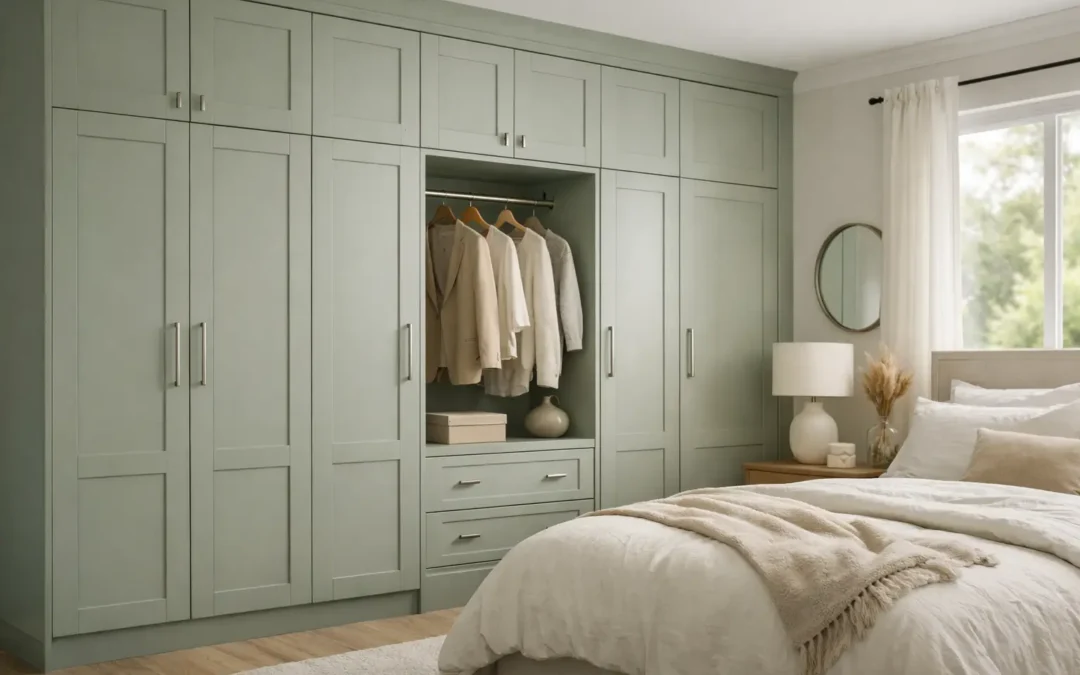
A wardrobe should not look like it was carried into the room as an afterthought. Painted fitted wardrobes are designed around the room itself – its ceiling height, alcoves, chimney breast, sloping roof and the way you actually get dressed each morning. The result is storage that earns its footprint, while giving the bedroom a calmer, more considered finish.
For many homeowners, paint is what turns practical joinery into part of the interior. It allows the wardrobe doors, surrounding wall panelling and bedroom colour scheme to work together rather than compete. With the right proportions, layout and finish, fitted furniture can make even a busy family bedroom feel more spacious.
Why choose painted fitted wardrobes?
A painted finish gives you control that standard wardrobe ranges rarely offer. Rather than choosing from a limited set of wood-effect or foil finishes, you can select a colour that suits your home, whether that is a soft off-white, a warm neutral, a deep blue or a confident green. At WOW Interior Design, painted items can be finished in virtually any colour, giving you far more freedom to match existing décor or set the direction for a complete room refresh.
Colour is only one part of the benefit. Because the wardrobe is made to measure, it can run from wall to wall and floor to ceiling, with no dust-catching gap above and no wasted strip of space at either side. This is particularly valuable in Kent homes with alcoves, uneven walls, period features or loft-room angles that make freestanding furniture difficult to position well.
A fitted design also changes how the room feels. A large wardrobe can be visually dominant, but painting it in a colour close to the walls helps it sit back into the architecture. Conversely, a darker shade can make it a deliberate feature, especially when paired with matching bedside units, shelving or wall panelling.
The finish should suit the room, not just the colour chart
Choosing a paint colour is exciting, but it should follow the practical decisions rather than lead them. First consider the room’s natural light, flooring, wall colour and how much visual weight the wardrobe can carry. A north-facing bedroom may benefit from warmer neutrals, while a generous, bright room can comfortably take a deeper tone.
The door style matters just as much. Shaker-style doors suit both traditional and contemporary homes, with enough detail to feel crafted without becoming overly decorative. Flat slab doors create a cleaner, more modern look. A more detailed framed style can bring character to a period property, particularly when the wardrobes are designed around a chimney breast or original alcove.
The paint sheen deserves thought too. A lower-sheen finish looks soft and sophisticated, but it can show marks more readily in a child’s room or a high-traffic dressing area. A more durable, lightly lustrous finish is easier to wipe down and reflects a little more light. There is no single right answer – it depends on the room, the household and the look you want to live with.
Hardware provides the final contrast. Brushed brass handles add warmth against greens, blues and earthy neutrals. Black hardware can sharpen a pale contemporary scheme. Knobs, bar handles or discreet integrated pulls all alter the character of the doors, so it is worth viewing them alongside the paint sample rather than choosing them in isolation.
Storage planned around real life
Beautiful doors are only half the job. The inside of a fitted wardrobe should reduce the daily scramble for clothes, shoes and bedding. A thoughtful internal layout starts with what you own and how you use it, not with a standard rail and shelf arrangement.
For example, a shared wardrobe may need separate hanging zones, drawers for smaller items and accessible shelves for folded knitwear. A bedroom used by children may work better with lower rails and drawers that they can reach themselves. In a principal bedroom, full-height hanging for dresses and coats can sit alongside double hanging for shirts and trousers, with deep top storage reserved for luggage and seasonal items.
Drawers are particularly useful where floor space is limited, as they can remove the need for a separate chest of drawers. Pull-down rails can make high spaces usable, while shoe shelves, jewellery drawers and adjustable shelving add order without making the interior feel over-engineered. The best solution is usually the simplest one that accommodates your routines properly.
Getting the proportions right
Fitted wardrobes do not have to make a bedroom feel smaller. Poorly planned furniture can do that, especially if it projects too far into the room or uses a heavy colour in a narrow space. Good design balances storage capacity with comfortable circulation around the bed and doors.
Depth is a key consideration. Full-depth wardrobes are ideal for standard hanging, but a shallower unit may be the smarter choice beside a doorway, in a tight box room or along a restricted wall. In those areas, a combination of shelves, drawers and front-facing hanging can still create valuable storage. Sliding doors can save swing space, although hinged doors often provide easier access to the full wardrobe interior and allow for more traditional painted detailing.
The top line also matters. Taking the cabinetry to the ceiling creates a built-in appearance and avoids an awkward void. Where ceilings slope, the wardrobe can step or taper with the roofline so that every available centimetre is considered. This level of adjustment is where bespoke furniture has a clear advantage over trying to adapt standard units to an imperfect room.
A measured approach from design to installation
A successful fitted wardrobe begins with an in-home design consultation. This is the point to discuss the room’s frustrations: clothes that do not fit, clutter on chairs, unused alcoves, a lack of drawer space or furniture that simply looks disconnected. Accurate measuring follows, along with consideration of skirting boards, coving, sockets, radiators and door clearances.
From there, the design can be developed around your preferred style, colour and internal storage. A clear quotation should reflect the agreed specification, so you understand what is being made and installed before work begins. It is also the right time to decide whether the wardrobes should be part of a broader scheme, perhaps with matching fitted bedside tables, a dressing table, shelving or panelling.
Professional installation is not a minor detail. Walls and floors are rarely perfectly square, particularly in older properties, so the fitting team needs the experience to scribe and adjust components for a precise finish. Careful fitting, clean working practices and proper final adjustments are what make bespoke wardrobes look built-in rather than merely assembled.
Care that keeps a painted finish looking fresh
Painted furniture is made for everyday living, but a little care protects the finish. Wipe doors with a soft, damp cloth and avoid abrasive cleaners, scouring pads or harsh sprays. Deal with splashes and fingerprints promptly, especially around handles and lower drawer fronts.
Small knocks can happen in any active home. One advantage of a painted finish is that minor touch-ups are generally more straightforward than repairing a damaged printed surface. Keeping a record of the chosen colour and finish makes future maintenance easier. For substantial damage, a professional assessment is worthwhile, particularly where a flawless sprayed appearance is important.
Making the decision with confidence
Painted fitted wardrobes are a long-term improvement, not a quick furniture purchase. They cost more than a flat-pack alternative because they are designed, made and fitted for your room, but they also solve problems that standard furniture leaves behind: wasted space, poor proportions and storage that never quite works.
The most successful schemes do not chase a short-lived trend. They use a colour and door style that feel right for the house, then put the practical detail where it matters – behind the doors. If you are planning a bedroom upgrade, begin with the awkward space you want to reclaim and the everyday clutter you want to remove. That is usually where a truly tailored room starts to take shape.