

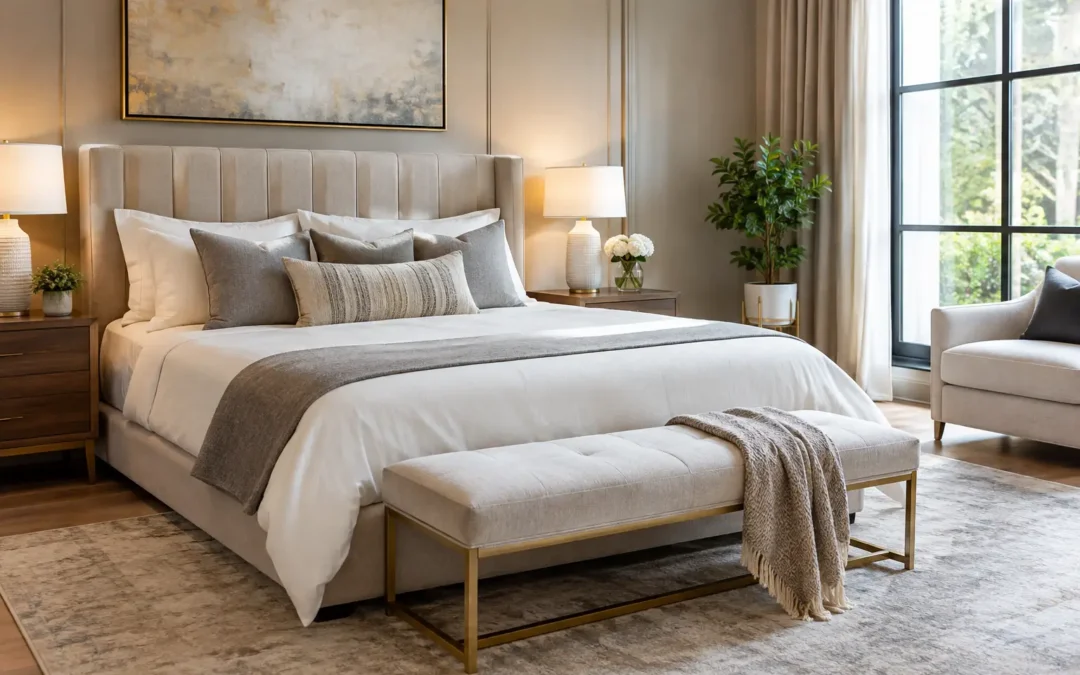
A luxury bedroom should feel effortless when you walk into it. There should be a clear place for every item, room to move comfortably, and a finish that feels considered rather than crowded. This luxury bedroom planning guide focuses on the decisions that make the biggest difference: the layout, the storage behind the doors, the materials you touch every day, and the details that turn a bedroom into a properly restful space.
Luxury is not simply about choosing the most expensive finish. It is about having a room designed around your home, your belongings and your routine. A fitted solution can make use of a shallow recess, an angled ceiling or an otherwise wasted wall, while giving the whole room a calm, built-in appearance.
Start with how the bedroom needs to work
Before choosing door styles or paint colours, look honestly at how the room is used. Is it a busy family bedroom where two people get ready at different times? Is it a compact guest room that needs generous storage without feeling enclosed? Or is it a main bedroom where you want a quiet, hotel-like feel at the end of the day?
These answers shape the design. A couple with a large wardrobe may need separate hanging zones, dedicated drawers and a sensible place for shoes. A bedroom with limited floor space may benefit from full-height fitted wardrobes, reducing the need for freestanding chests and side units. If the room also needs to accommodate a dressing table or a small work area, it is better to plan this from the start than try to squeeze it in later.
Take stock of what you own before agreeing the internal layout. Count long garments, folded clothes, bags, shoes and bulky seasonal items. This is where an experienced designer earns their keep. A wardrobe can look impressive on a drawing, but it must hold what you actually use.
Measure the room, not just the available wall
Accurate measuring is essential in any luxury bedroom planning guide. The obvious wardrobe wall is only part of the picture. Windows, radiators, sockets, door swings, skirting boards, coving and ceiling slopes can all affect what will fit and how comfortably the room will function.
Think about circulation too. You need enough clearance to open wardrobe doors and drawers without blocking the route around the bed. Sliding doors can be an excellent answer in tighter rooms, while hinged doors provide full access to the wardrobe interior and can create a more traditional furniture feel. Neither is automatically better – the right choice depends on the room dimensions and the look you want.
Full-height furniture is often the most efficient option, particularly in homes where storage is at a premium. It uses the upper part of the room for less frequently needed items and avoids the dust-catching gap above a standard wardrobe. In a lower-ceilinged room, however, a carefully proportioned design may feel more balanced than pushing every unit to the ceiling.
Plan around the bed first
The bed is the visual and practical centre of the room. Establish its position before committing to storage, especially if you are considering bedside cabinetry, a feature headboard wall or fitted units either side.
A symmetrical arrangement can bring a strong sense of calm, but it is not the only route to a polished result. In an awkward room, one tall wardrobe wall paired with a simple upholstered headboard may be more useful and more attractive than forcing matching furniture into unsuitable spaces. The best designs work with the architecture rather than fighting it.
Make fitted storage do the hard work
A fitted wardrobe is most valuable when the inside is as carefully planned as the exterior. Standard hanging rails and a shelf will not suit every household. Consider the mix of double hanging, full-length hanging, adjustable shelving, drawers and shoe storage needed for your day-to-day life.
Drawers are particularly useful for underwear, knitwear, accessories and items that become untidy on open shelves. Pull-out trays can make small accessories easier to find. Deep shelves can hold luggage or bedding, although they need to be used with care: if they are too deep, items at the back can quickly disappear from view.
For many homes, a combination of visible and concealed storage works best. Closed wardrobes keep the bedroom looking peaceful, while a small open niche can create a place for books, a favourite object or a softly lit display. It should be intentional, though. Open storage adds character, but it also requires tidiness.
In rooms with alcoves, chimney breasts or sloping ceilings, bespoke furniture can transform difficult areas into useful storage. This is one of the clearest advantages over off-the-shelf furniture. Instead of filling a room with units that almost fit, each cabinet can be made to follow the available space precisely.
Choose finishes that will still feel right in years to come
The most successful luxury bedrooms tend to have a restrained palette. This does not mean everything needs to be neutral, but the larger fitted elements should support a restful atmosphere rather than compete for attention. Warm whites, soft greys, earthy greens, deep blues and painted timber tones can all work well when chosen in relation to the room’s natural light.
Painted fitted furniture offers useful flexibility because it can be specified in virtually any colour. A lighter finish can help a compact bedroom feel more open, while a darker shade can give a larger room depth and character. If you like a bolder colour, consider where it will sit. A deep navy wardrobe wall can look striking in a bright bedroom, but may feel heavy in a north-facing room with limited daylight.
Door design matters as much as colour. Shaker-style doors are a dependable choice for period and contemporary homes alike. Flat, handleless fronts create a cleaner, more modern appearance, while fluted or panelled details can introduce texture without adding clutter. Handles should feel good in the hand and suit the room’s wider scheme, from bedside lighting to curtain poles.
Use lighting to create comfort, not glare
Bedroom lighting is often treated as an afterthought, yet it has a major effect on how luxurious the finished room feels. One central ceiling fitting rarely provides enough flexibility. You need practical light for dressing, softer light for winding down, and task lighting where you read or apply make-up.
Wardrobe lighting is particularly useful in deep or full-height units. Sensor-operated lighting can illuminate the interior when doors open, making darker clothing and lower drawers easier to use. Beside the bed, wall lights or integrated reading lights free up valuable space on bedside tables.
Keep the colour temperature warm rather than stark. Bright, cool lighting may be useful in a utility area, but a bedroom should feel calm in the evening. Dimmers are a sensible addition where possible, allowing the room to adapt from morning routine to bedtime.
Do not overlook the details around the furniture
A well-planned bedroom is a complete scheme, not just a new wardrobe. Curtains or blinds, flooring, wall colour, sockets and artwork should all be considered while the design is still being developed. This prevents costly changes later and helps the fitted furniture look like it has always belonged in the room.
Wall panelling behind the bed can give the room a focal point and help frame integrated bedside storage. It works especially well where a standard headboard would leave an awkward gap or make the room feel disconnected. The scale matters: fine vertical battens can add height, while wider panels often suit rooms with more generous proportions.
Also consider practicalities that are easy to miss. Where will charging cables go? Do you need a discreet laundry basket? Is there space for a full-length mirror? Will a radiator limit the position of a dressing table? Small answers to these questions are what make a premium bedroom easy to live with every day.
Work with a clear design and installation process
Bespoke bedroom furniture should not feel like a gamble. A proper design visit allows the room to be measured accurately, your storage needs to be discussed and the likely options to be explained clearly. You should understand the proposed layout, finishes, internal configuration and quotation before work begins.
At WOW Interior Design, the focus is on creating fitted bedrooms that are designed, supplied and installed around the individual home. That includes making the most of awkward spaces, specifying finishes that suit your scheme and ensuring the installation is completed cleanly and professionally.
Do not be tempted to make every decision based on a showroom image alone. A finish that looks excellent under display lighting may appear different in your own bedroom, and a highly detailed door style may not suit a small room. Samples, accurate plans and practical advice are far more useful than following a trend blindly.
The best bedroom plans leave you with less visual noise and more room to relax. Begin with the life you want the room to support, then let the storage, layout and finishes follow. When every element has a purpose, a luxury bedroom feels not only beautiful on installation day, but easier to enjoy every morning and every night.