

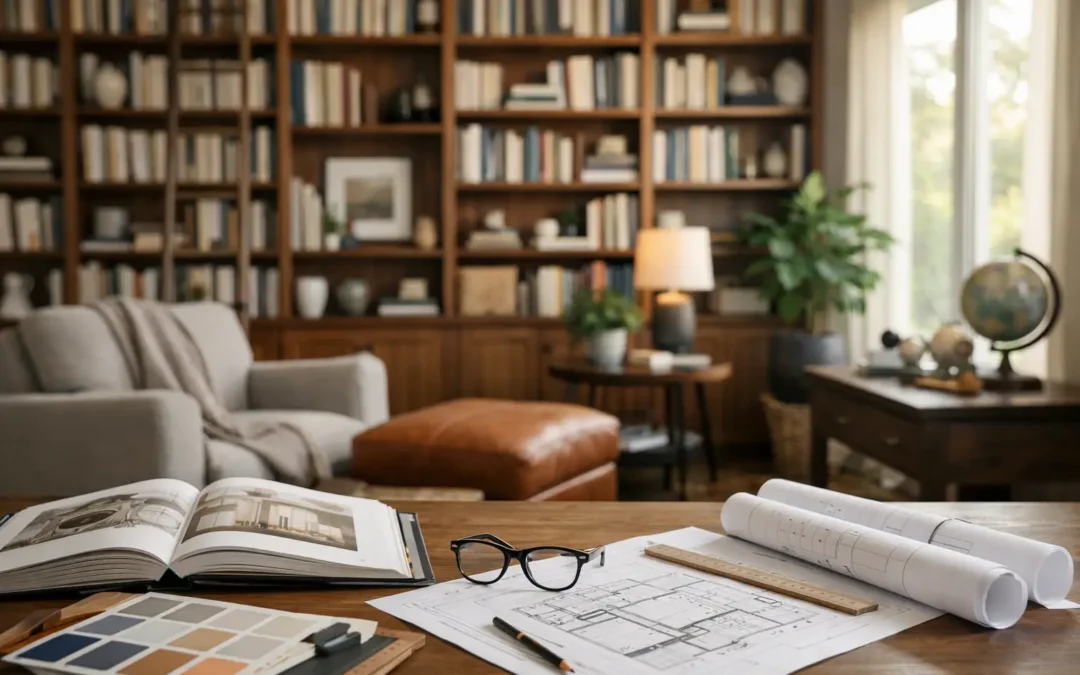
A good home library is not just a room with bookshelves. It needs to earn its place in the house. If you are thinking about how to design a home library, the real question is how you want the room to work day after day – quiet reading retreat, practical storage space, smart study, or a mix of all three.
That decision shapes everything that follows. The best libraries feel calm and considered, but they also solve problems. They keep books organised, make awkward walls useful, and turn underused rooms into spaces with purpose. When the design is right, the room looks settled from day one rather than pieced together over time.
Start with how the room will be used
Before choosing colours, shelving styles or lighting, decide what the room needs to do. Some homeowners want a traditional library feel with full-height shelving, a ladder and a deep chair by the window. Others want a cleaner, more flexible room with books, display storage and a desk built into one fitted wall.
This is where many projects either come together or go off track. If the room also needs to work as a home office, occasional guest room or family snug, the layout must reflect that from the start. A library designed only for appearance can end up lacking proper task lighting, enough closed storage, or the right seating. On the other hand, a room designed purely for storage can feel flat and utilitarian.
The right balance depends on your home and your habits. If you read daily, comfort matters as much as shelving. If you collect hardbacks, shelf depth and load-bearing strength matter more than decorative styling. If you mainly want the look of a library with some practical storage, a mixed arrangement of open shelves and lower cupboards often works better than filling every wall with books.
How to design a home library around the space you have
You do not need a dedicated grand room to create a proper library. One of the biggest advantages of bespoke fitted furniture is that it allows the design to suit the room you actually have, not the idealised version found in magazines.
A spare bedroom can become a library and study. An alcove in a living room can be fitted with shelving and cabinetry to create a library wall. A loft room with sloping ceilings, a landing, or a box room can all work surprisingly well if the storage is designed around the architecture.
This is where fitted design makes a clear difference. Standard bookcases rarely make full use of height, corners or uneven walls. They leave wasted gaps, collect dust above the top, and often look temporary. Bespoke shelving can run wall to wall and floor to ceiling, wrap around door frames, and include storage where freestanding pieces simply cannot. The room feels intentional because every element belongs there.
When planning the layout, keep circulation in mind. A home library should feel comfortable to move through, not crowded. That means allowing enough room to stand in front of shelves, reach the upper sections safely and place seating without blocking the flow of the room. If the space is compact, fitted shelving on one wall with a window seat or a slim desk opposite can work far better than trying to line every wall.
Get the shelving right
Shelving is the backbone of the room, and this is where practical decisions matter most. Books are heavy. Large art books and hardbacks need stronger shelves and often a little more depth than paperback fiction. If shelves are too long without support, they can bow over time. If they are too shallow, books overhang and look untidy.
A well-designed library usually includes a mix of shelf heights rather than identical rows from top to bottom. That gives you space for taller books, framed items and decorative objects without making the whole wall feel repetitive. It also helps the room feel more bespoke.
Lower cabinetry is worth serious thought too. Not everything in a library needs to be on display. Cupboards below the open shelving can hide paperwork, chargers, games, spare throws and all the practical bits that easily spoil the look of the room. This is often the difference between a room that photographs well and a room that works well every week.
If you want a more architectural finish, consider integrated details such as shaker-style fronts, panelled backing, cornices or library-style ladder rails. These features can add character, but they should suit the property. In a period home, traditional detailing may feel exactly right. In a newer home, simpler lines and a painted finish often give a smarter result.
Lighting matters more than people expect
Many libraries look good in daylight and fall short in the evening. Lighting needs to do two jobs: make the room inviting and make it easy to read.
Relying on one central ceiling light is rarely enough. Layered lighting works best, with general room lighting, focused task lighting for reading or desk use, and softer accent lighting to bring the shelving to life. Wall lights, picture lights over shelving, or discreet integrated shelf lighting can all help create depth.
Natural light also needs some thought. A bright room is pleasant to spend time in, but direct sunlight can fade book spines over time, particularly in south-facing spaces. Curtains, blinds or shutters can protect the collection while still keeping the room comfortable. If the library includes a reading chair, place it to benefit from natural light without creating glare.
Choose finishes that suit the house
A home library should feel connected to the rest of the property, not like a themed room dropped in from somewhere else. The finish you choose has a huge impact on that.
Painted shelving is a strong choice because it offers flexibility. Deep blues, greens, charcoals and warm neutrals all work well in libraries, but the best colour depends on the room size, natural light and surrounding décor. Darker shades can make a library feel rich and cocooning, especially in a snug or dedicated reading room. Lighter shades can keep a multi-use space feeling open and fresh.
Timber effects and wood veneers can add warmth, but they need to be handled carefully. Too much heavy wood in a smaller room can feel dated or oppressive. Used well, though, timber details bring depth and a sense of craftsmanship that suits a library perfectly.
Hardware also deserves attention. Handles, knobs and ironmongery may seem minor, yet they help define whether the room feels classic, contemporary or somewhere in between. These finishing details should support the overall design rather than compete with it.
Make room for comfort
Bookshelves may be the main feature, but people make the room useful. Seating, desk space and soft furnishings all affect whether you actually want to spend time there.
If space allows, include at least one proper reading seat with good light nearby and a small surface for a drink or notebook. If the room is doing double duty as a workspace, built-in desk joinery can keep the look cohesive rather than introducing office furniture that feels separate from the rest of the scheme.
Acoustics also matter. Hard surfaces, lots of shelving and timber flooring can make a room feel echoey. A rug, curtains and upholstered seating help soften the sound and make the space more comfortable. This is particularly useful in family homes where the library needs to feel calm rather than overly formal.
Think long term, not just move-in day
One of the most common mistakes in home library design is planning only for the books you own now. Collections grow. Uses change. Children get older. A part-time home office can become a full-time one.
That is why flexibility matters. Adjustable shelving in selected sections, concealed cable management, cupboards for non-book storage and space for future technology can all make the room more adaptable. A well-fitted library should still serve you properly years down the line.
This is also where a tailored design process adds real value. A proper survey, measured design and professional installation reduce the compromises that often come with trying to assemble a room from off-the-shelf pieces. For homeowners investing in a long-term upgrade, that matters. The result is cleaner, more durable and usually far more efficient in how it uses the room.
For many clients, the best outcome is not the most elaborate one. It is the room that fits the house, suits the way they live, and turns storage into something attractive. That is exactly why bespoke fitted libraries continue to appeal – they solve practical problems while giving the home a more polished finish.
If you are working out how to design a home library, start with function, build around the room itself, and be honest about what you need to store and how you want to live in the space. Get that right, and the finished room will not just look impressive on installation day. It will keep proving its worth every time you walk in.