

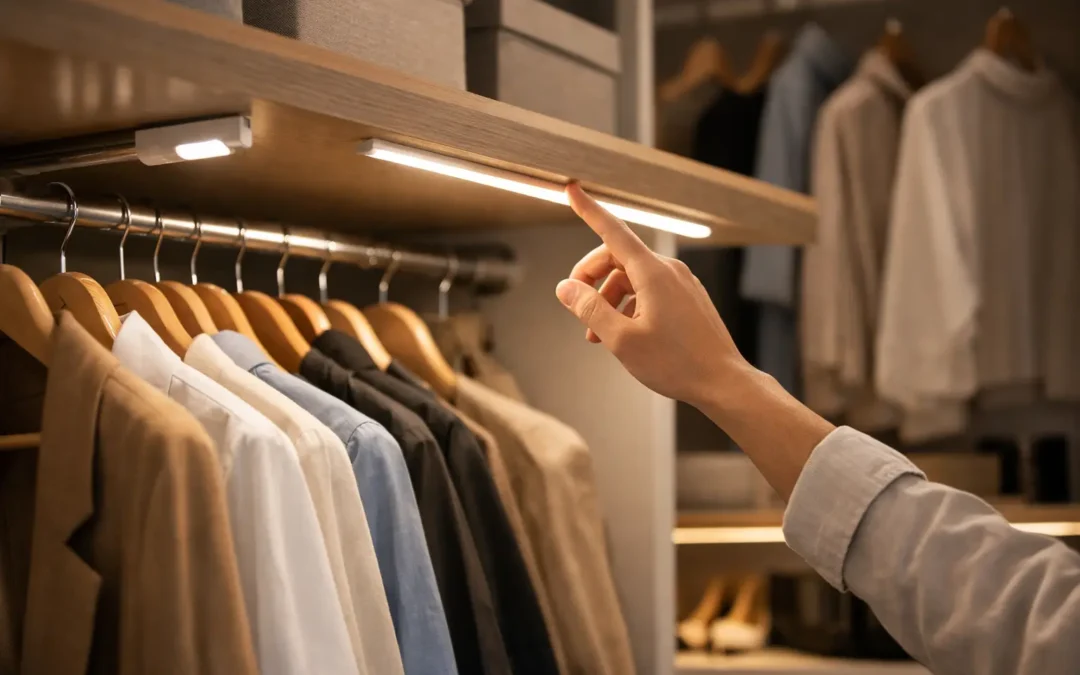
A beautifully fitted wardrobe can still feel impractical if you cannot see what is inside it. Knowing how to choose wardrobe lighting means planning for the way you actually use the space: early mornings, darker winter afternoons, deep shelves and the familiar hunt for the missing navy jumper.
The best lighting is not simply the brightest option. It should make clothes easy to find, show colours accurately, complement the room and switch on without fuss. When it is designed into a bespoke wardrobe from the outset, it also looks considered rather than added on.
Start with how the wardrobe is used
Lighting requirements depend on the wardrobe layout and the room around it. A shallow wardrobe with wide-opening doors beside a window may need only gentle internal illumination. A deep, full-height fitted wardrobe in a darker bedroom will benefit from more purposeful lighting, particularly around hanging rails and lower storage.
Think about who uses the wardrobe and when. A shared bedroom wardrobe may be opened while someone else is asleep, so a soft, targeted light is more useful than a harsh interior glow. In a dressing room, better colour visibility matters more, especially when choosing clothes for work or an event.
The internal arrangement should lead the design. Long-hang sections, shoe pull-outs, drawers, open display shelves and corner storage all create shadows differently. A bespoke design gives you the opportunity to position lighting around those practical details rather than attempting to fix poor visibility once the wardrobe is installed.
Choose the right wardrobe lighting position
Where the light sits has a greater effect than many homeowners expect. A single fitting in the centre of the wardrobe ceiling can leave the front of hanging clothes in shadow. It may also be blocked by bulky items on the top shelf.
LED strips in vertical side panels
Vertical LED strips set into the wardrobe side panels give even light down the full height of the interior. They work particularly well in tall wardrobes, sections with hanging rails and shelving that needs to be clearly visible from top to bottom.
This approach creates a smart, built-in appearance when the strip is housed in an aluminium profile with a diffuser. The diffuser softens the individual LED points, so the light feels refined rather than clinical. It also helps prevent glare when you are standing close to the wardrobe.
Lighting beneath shelves
Shelf lighting is an excellent choice for folded clothing, handbags, display areas and shoes. It directs light exactly where it is needed and stops deeper shelves from becoming dark recesses. In a wardrobe with several compartments, it can make the interior feel lighter and more organised without flooding the room with light.
The trade-off is planning. Each shelf position needs to be agreed before manufacture, particularly if cables are to be concealed within the cabinetry. This is one reason lighting should be discussed during the design visit, not treated as a final accessory.
Illuminated hanging rails
A light-up hanging rail is a neat solution for everyday clothing. The light is positioned close to the garments themselves, making it easy to see colours, fabrics and empty space on the rail. It is especially effective in wardrobes with full-height doors, where light from above may not reach lower clothing properly.
This option suits a clean, contemporary look, although it may not be necessary in every section. For example, an illuminated rail in a frequently used wardrobe bay can be more valuable than lighting a less-used top storage area.
Select a colour temperature that suits clothes and the room
LED light is available in different colour temperatures, measured in Kelvin. This can sound technical, but the decision is straightforward once you consider the mood you want and the job the light must do.
Warm white, usually around 2700K to 3000K, creates a softer and more relaxed feel. It is often a good match for bedrooms with warm paint colours, timber finishes and traditional detailing. However, very warm light can make some colours appear more yellow than they are.
Neutral white, around 3500K to 4000K, is often the most practical choice inside a wardrobe. It provides clearer visibility for selecting outfits while still feeling comfortable in a bedroom or dressing area. For many fitted wardrobes, this is the sensible middle ground.
Cooler white light can feel crisp, but it is not always flattering in a bedroom and may make an otherwise inviting interior feel stark. It can work in a highly contemporary dressing room, but it should be chosen carefully alongside the rest of the room lighting.
For the best colour accuracy, ask about LEDs with a Colour Rendering Index of 90 or above. A higher CRI helps clothing colours look closer to how they appear in daylight. This matters if you are matching black, navy and charcoal, or trying to judge subtle tones in fabrics.
Decide how the lights should switch on
The most convenient wardrobe lighting should work without becoming another task at the start and end of the day. Door-activated sensors are a popular choice because the lights come on when the wardrobe opens and turn off when it closes. They are discreet, simple to use and help avoid wasted energy.
Motion sensors can also work well, particularly in walk-in wardrobes or dressing rooms. They are useful when you may step into the space with your hands full. The sensor position and time delay need careful consideration, though. Poorly placed sensors can switch lights off while you are still standing at the wardrobe, which soon becomes frustrating.
A wall switch or smart control may suit a larger dressing area where wardrobe lights form part of the wider lighting scheme. This gives greater control over ambience, but it is less automatic than a door sensor. In practice, many homeowners prefer automatic internal lighting and separate switched lighting for open shelving, mirrors or feature panels.
Consider power, cabling and installation early
The cleanest wardrobe lighting is planned before the fitted furniture is made. Wiring can then be hidden within panels, behind plinths or above the wardrobe, leaving the finished interior free from visible leads and plug-in adaptors.
Mains-powered LED lighting is usually the most dependable long-term option for a fitted wardrobe. It offers consistent performance and avoids the inconvenience of changing batteries. It does, however, need a suitable electrical supply, so coordination with a qualified electrician may be required before installation.
Rechargeable or battery-operated lights can be useful in existing wardrobes where running a cable is difficult. They are quick to fit and may suit a temporary solution, but they are not normally the best choice for a premium fitted interior. Battery charging, reduced brightness over time and visible fittings can all compromise the experience.
A good design also considers access to drivers and electrical components. They should be concealed, but not buried where future maintenance becomes difficult. Well-planned lighting is as much about sensible installation detail as it is about appearance.
Match light output to the size of the space
More light is not automatically better. Wardrobe interiors need enough brightness to identify clothing and use storage comfortably, not enough to feel like a retail display. The right output depends on the wardrobe depth, finish colours and whether the room already receives good natural light.
Dark interiors, such as deep grey, walnut or black finishes, absorb more light and usually benefit from stronger or more evenly spread illumination. Lighter interiors reflect light well, so a lower output may be sufficient. Glossy surfaces can also create reflections, making diffused lighting preferable.
For a typical wardrobe compartment, focused LED strips or illuminated rails usually provide better results than a single high-output fitting. The aim is to reduce shadows across the usable storage area. If a design includes glass-fronted sections or open shelves, lighting can be slightly more decorative because it will be seen even when the doors are closed.
Make lighting part of the overall wardrobe design
Wardrobe lighting should support the character of the furniture rather than compete with it. A classic shaker-style wardrobe may suit discreet warm or neutral shelf lighting, while a sleek handleless design can carry integrated vertical LEDs with a more contemporary feel.
Finishes matter too. A pale painted wardrobe with brass handles might call for a warm, gentle glow. A modern matt wardrobe with smoked glass and dark internals may benefit from neutral white lighting that defines the lines of the cabinetry. There is no single correct answer because the best result depends on the room, the joinery and your daily routine.
At WOW Interior Design, lighting can be considered alongside every part of a fitted wardrobe, from the internal layout and door style to finishes and installation details. That joined-up approach means the storage works properly before the final panel is fitted.
A wardrobe should make getting ready feel easier, not add another small irritation to the day. Choose lighting that is well placed, comfortable to use and designed around your belongings, and the difference will be felt every time you open the doors.