

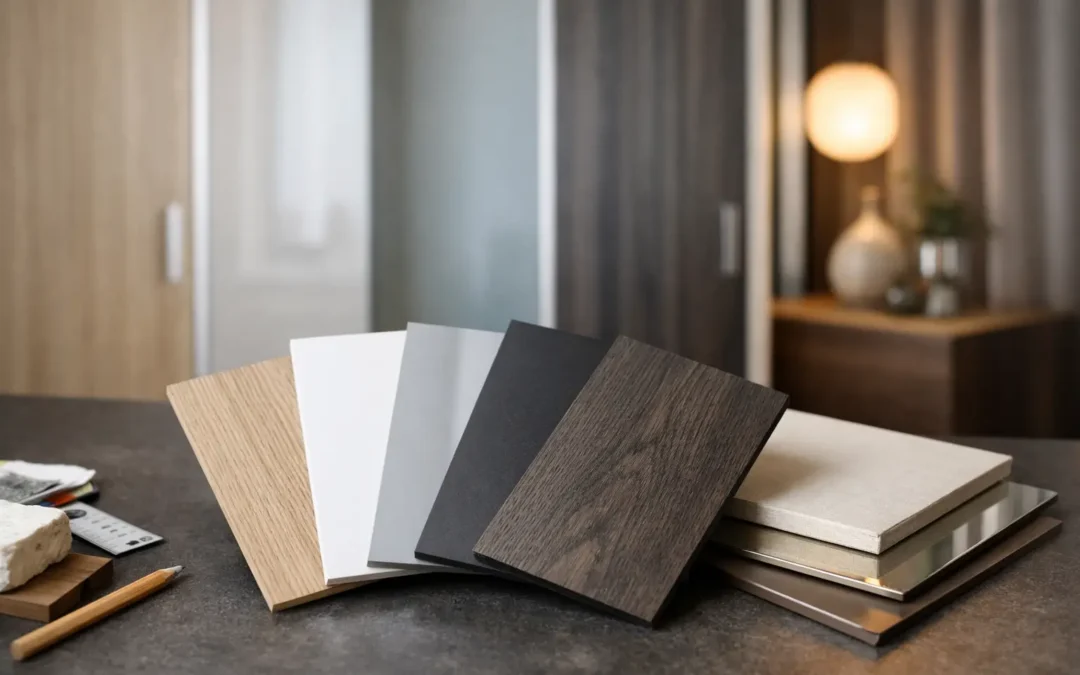
A wardrobe can be perfectly planned inside, but if the doors are wrong, the whole room feels slightly off. That is why knowing how to choose wardrobe door finishes matters so much. The finish is what you see every day, what catches the light, what shows fingerprints, and what decides whether the wardrobe quietly blends in or becomes a strong design feature.
For most homeowners, the decision comes down to more than appearance. You need a finish that suits the size of the room, works with the light you have, fits your overall style, and still looks good after years of use. A family bedroom, a compact loft room and a calm principal suite will not all want the same answer.
How to choose wardrobe door finishes for your room
The best place to start is with the room itself, not with a sample board. Wardrobe doors take up a lot of visual space, so their finish should work with the architecture, flooring, wall colour and natural light. If you choose in isolation, you can end up with doors that look impressive on a small sample but feel too heavy, too shiny or too flat once installed across a full run of fitted wardrobes.
In smaller bedrooms, lighter finishes often help the space feel calmer and more open. Soft painted shades, subtle woodgrains and muted matt finishes are usually easier on the eye than very dark, reflective doors. That does not mean dark finishes are a bad choice. In a larger room with good light, they can look striking and tailored, especially when balanced with warm flooring and well-planned lighting.
If the room has awkward angles or sloping ceilings, the finish becomes even more important. A bespoke fitted wardrobe can make these spaces feel intentional, but only if the door finish complements the shape of the room rather than drawing attention to every junction and line.
Start with the finish types that suit fitted wardrobes
Most wardrobe door finishes fall into a few broad categories, each with its own strengths.
Painted finishes are one of the most versatile choices. They work well when you want the wardrobe to feel built into the room rather than added afterwards. Painted doors can be matched to existing joinery or chosen in a contrasting colour to create more presence. They are especially useful if you want a fully tailored result, because colour choice gives you far more control over the final look.
Woodgrain finishes bring warmth and texture. They can feel contemporary or classic depending on the tone and door style. Lighter oak-style grains tend to keep things relaxed and modern, while deeper walnut-style tones create a richer, more architectural feel. The trade-off is that some wood effects can date more quickly than a well-chosen painted finish, so it is worth thinking about how long you want the room to hold its look.
Matt finishes are consistently popular because they look refined and understated. They soften the overall appearance of large wardrobes and are generally more forgiving than high gloss when it comes to everyday marks. If you want a calm, high-end feel, matt is often a safe and effective choice.
Gloss finishes reflect more light, which can help brighten darker rooms. They suit clean-lined, modern interiors particularly well. The downside is practical – gloss tends to show fingerprints, smudges and dust more easily, especially on darker colours. For some households that is not a problem. For others, it becomes irritating quite quickly.
Mirrored finishes can be useful where you want to increase light and create a sense of space. They are particularly effective in bedrooms that do not have room for a separate full-length mirror. That said, full mirrored doors are not right for everyone. Some clients prefer to use mirror panels selectively rather than across the entire wardrobe, so the result feels balanced rather than overpowering.
Think about light before you pick a colour
Light changes everything. A finish that looks warm and elegant in a bright showroom can feel muddy in a north-facing bedroom. Likewise, a cool pale grey may look crisp by day but become flat and slightly cold in artificial evening light.
This is where practical experience matters. When choosing wardrobe door finishes, always consider how much natural light the room gets, which direction it faces, and what lighting you use at night. South-facing rooms can handle deeper tones more easily because they have more warmth and brightness. Darker rooms often benefit from softer shades and finishes that stop the space feeling closed in.
It is also worth looking at sheen level in relation to light. A highly reflective finish will bounce light around, but it will also highlight every angle, handle and nearby surface. A lower-sheen finish absorbs more light and usually creates a softer, more composed look.
Match the finish to how you live
A wardrobe in a guest room can be chosen almost entirely on appearance. A wardrobe in a busy main bedroom has to work harder. This is where many people make the wrong call – they choose the finish they like best visually without thinking about the reality of daily use.
If you have young children, rushed mornings or pets brushing past furniture, durability and maintenance should move higher up the list. Very dark gloss doors may look smart at first, but they will show every touch. Some pale matt finishes are easier to live with, but they can still mark if the material is not right for the setting.
Handle choice also affects how clean the doors stay. Handleless designs look sleek, but if the opening point is built into the door edge, that area will get more regular contact. In some rooms, a well-designed handle is actually the more practical option. It is a small detail, but on fitted furniture, small details make a noticeable difference over time.
Door style and finish should work together
One of the simplest rules in wardrobe design is this: the more detailed the door style, the calmer the finish usually needs to be. Shaker-style or panelled doors often suit painted finishes beautifully because the texture and framing provide enough visual interest already. Add a very bold gloss or strong reflective surface, and the design can start to fight with itself.
By contrast, slab doors with clean lines can take more contemporary finishes well. Matt, gloss, woodgrain and glass-effect finishes all tend to work best on simpler door profiles where the material can do the talking.
This balance matters if you want a bedroom that still feels smart in five or ten years. Trends come and go, but proportion and restraint tend to last.
Budget matters, but value matters more
There is no point pretending every finish costs the same. Some materials and bespoke painted options will naturally sit higher than standard off-the-shelf choices. The key question is whether the finish adds genuine long-term value to the room.
If a more durable, better-suited finish means the wardrobe still looks excellent years from now, it is often money well spent. If a cheaper finish leaves you compromising on colour, texture or overall quality, the saving can feel short-lived. With fitted wardrobes, you are not just buying doors. You are investing in how the room works and how finished it feels.
A good design process should make these decisions clearer. Seeing the wardrobe in context, with measurements, room layout and colour direction taken into account, usually leads to better choices than trying to compare materials in the abstract.
How to avoid common finish mistakes
The most common mistake is choosing a finish purely because it is fashionable. What suits a social media image or a showroom set-up may not suit your bedroom, your lighting or your storage layout.
Another mistake is ignoring contrast. If your walls, carpet and wardrobe are all too similar in tone, the room can feel washed out. On the other hand, too much contrast can make a fitted wardrobe feel visually dominant. The right finish usually sits in conversation with the rest of the room rather than competing with it.
It is also worth avoiding overcomplication. Mixing mirrored panels, strong woodgrain, metallic handles and bold paint colours can work, but only if it is handled with care. In most bedrooms, a more controlled palette gives the best result.
For homeowners investing in bespoke fitted furniture, this is where a proper design consultation earns its place. At WOW Interior Design, we often find that the right finish is not the one a client first had in mind. Once the room, storage needs and overall style are looked at properly, the better option becomes much clearer.
A practical way to make the final decision
If you are narrowing down options, compare each finish against four simple questions. Does it suit the room size and light? Does it fit the style of your home? Will it cope with everyday use? And will you still like it when current trends have moved on?
If the answer is yes to all four, you are usually on the right track. If one area feels like a compromise, pause before committing. Wardrobe doors cover a lot of space, and getting the finish right has a big effect on the finished room.
The best wardrobes do not rely on a single feature to impress. They work because every detail has been thought through properly, and the door finish is one of the details that pulls everything together. Choose it with the room in mind, and the result will feel right every time you walk in.