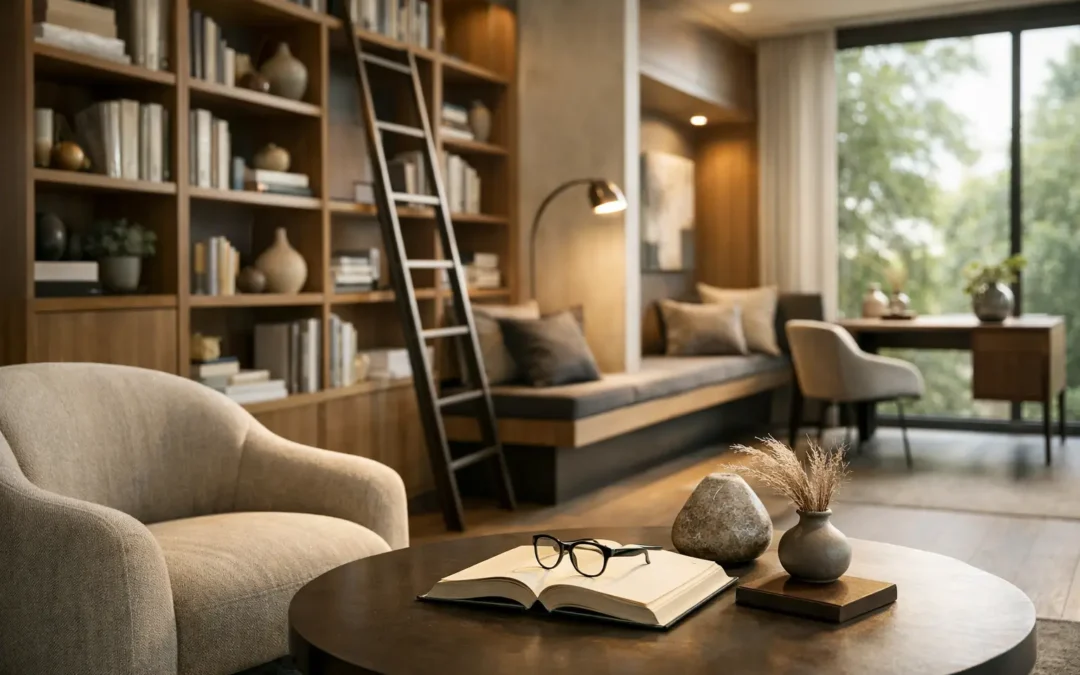
A home library is no longer simply a row of bookcases in a spare room. The strongest home library design trends 2027 will bring are about giving books, work, display and quiet time a proper place within the home. For homeowners who want a room to feel considered rather than crowded, fitted furniture is becoming the difference between useful storage and a feature that genuinely improves daily life.

The direction is clear: more warmth, fewer generic units and far better use of every inch. Whether the library occupies a full room, a living-room wall, a landing or part of a home office, the best results will look built into the architecture of the house, not added as an afterthought.

Home Library Design Trends 2027: A More Personal Approach

The move away from uniform, off-the-shelf shelving will continue. Homeowners are investing in rooms that reflect how they actually live: shelves sized for much-loved hardbacks, cupboards for paperwork and technology, open areas for objects collected over time, and a comfortable place to sit down with a book.

This does not mean every library needs to be dark, traditional and formal. A classic floor-to-ceiling library in a period property can be beautiful, but so can a clean-lined painted scheme in a newer home. The shared principle is intentional design. The furniture should suit the room’s proportions, the available light and the contents it needs to hold.

For many properties in Kent and the South of England, this is particularly valuable in rooms with chimney breasts, alcoves, sloping ceilings or uneven walls. Standard bookcases tend to leave awkward gaps, gather dust at the top and make a room feel pieced together. Bespoke fitted shelving turns those constraints into part of the design.

Full-Height Shelving With a Lighter Feel

Floor-to-ceiling libraries remain a leading choice, but their appearance is becoming more refined. Rather than filling every section with identical open shelves, 2027 schemes will use varied depths, selected closed storage and deliberate areas of visual space.

A full-height unit can include lower cupboards for less attractive items, such as files, board games, printers or spare cables. Above, adjustable shelves give books room to grow. A few wider bays can accommodate art, ceramics or framed photographs, preventing the wall from becoming a solid mass of spines.

The trade-off is simple: open shelving makes a strong visual statement but requires regular styling and dusting. If you prefer a calmer, lower-maintenance room, use open shelves for favourite books and display pieces, with painted cupboards below to contain the everyday clutter. This combination gives the library depth without demanding perfection.

The return of the library ladder

A rolling ladder can be a practical addition where shelves extend well above reach. It also brings character, particularly in tall rooms or hallways. However, it should earn its place. In a compact room, a ladder may restrict circulation or become more decorative than useful. A well-planned shelf layout, with less frequently used books stored higher up, is often the more sensible answer.

Richer Colours, Natural Timber and Layered Finishes

Bright white furniture will always have a place, especially where a room needs to feel larger. Yet the next wave of home library interiors is warmer and more confident. Expect deep greens, inky blues, softened burgundy tones, earthy browns and complex neutrals that change gently through the day.

Painted fitted furniture makes this trend flexible. A library can be colour-matched to existing panelling, walls or a favourite fabric, creating a properly cohesive room. Darker shades give books a dramatic backdrop and suit evening reading, while putty, stone and muted olive can make a smaller room feel calm without becoming bland.

Natural timber details are also being used to stop painted joinery feeling flat. This might be an oak-effect interior, a timber-toned desktop within a library-office arrangement, or warm brass and bronze handles. The aim is not to add every finish at once. Two or three well-chosen materials are usually enough.

If the room receives limited daylight, very dark cabinetry needs careful handling. Pair it with good lighting, a lighter ceiling and enough contrast around the seating area. In a naturally bright south-facing room, stronger colours can be used with far more confidence.

Libraries That Work Alongside Home Offices

The separate study is not always realistic, and it is not always necessary. One of the most practical home library design trends for 2027 is the library that also supports focused work, without looking like a corporate office when the day is done.

A fitted desk can sit within the shelving run, framed by books and closed cabinetry. Charging points, a printer shelf and cable routes can be planned from the start, while doors or pocket-style panels can conceal work equipment after hours. The room remains welcoming enough for reading, entertaining or family use.

This arrangement depends on honest priorities. If you regularly use two large monitors, a substantial desk depth and sensible ergonomic positioning matter more than preserving a perfectly symmetrical shelving layout. If the workspace is only for occasional admin, a compact integrated desk can be far more discreet. Good bespoke design starts with how the room will be used, not with a photograph copied from a magazine.

Proper Reading Zones, Not Just Storage

A library earns its name when it encourages people to linger. That is why seating and lighting are becoming central to the design, rather than being selected at the end.

A deep armchair, small side table and well-positioned lamp can turn one end of a library into the most inviting part of the house. In a larger room, a window seat built into the fitted furniture provides additional storage and a natural reading spot. In a narrow alcove, even a single chair with a wall light may be enough.

Lighting deserves early consideration. Integrated shelf lighting can highlight selected objects and bring depth to darker finishes, but it should not be the only source of light. A reading chair needs a softer, directional light that does not cast shadows across the page. Dimmable lighting is particularly useful where the room changes from a daytime office to an evening retreat.

Smarter Storage for More Than Books

Modern home libraries often need to hold far more than a book collection. Family documents, children’s games, records, technology, hobby materials and inherited pieces all need a home. The trend is towards furniture with a clear internal plan, rather than open shelving forced to carry everything.

Consider what belongs behind doors and what deserves to be seen. Lower drawers are useful for papers and smaller items. Deep cupboards can house equipment or bulkier games. Glass-fronted sections protect special editions while keeping them visible. Adjustable shelves allow the furniture to adapt as collections change.

This is where made-to-measure work has a lasting advantage. Shelf heights can be planned around the books you own, cupboards can stop short of radiators, and shallow units can make use of a corridor without narrowing it unnecessarily. The design should give you capacity for the future, but not so much empty shelving that the room feels cold on installation day.

Architectural Details That Make a Library Belong

The most successful fitted libraries feel connected to the house. In 2027, expect more homeowners to use details such as cornice, plinths, fluted panelling, framed doors and carefully proportioned shelf divisions to create that effect.

These details should match the property rather than follow a fixed trend. Traditional mouldings can suit Victorian and Edwardian homes, while simpler slab doors and fine shadow gaps work well in contemporary interiors. A library wall can also be paired with decorative wall panelling elsewhere in the room to create a stronger sense of continuity.

There is a balance to strike. Too much ornament can overwhelm a small room or make book storage feel theatrical. Too little detail can leave a large fitted wall looking plain. A professional design visit is useful because proportions, sightlines and practical access can be assessed in the actual space, not guessed from measurements alone.

Designing for Longevity Rather Than a Short-Lived Look

Trends are useful when they help you define what you like, but a fitted library is a long-term investment. Choose a layout that serves your habits first, then bring personality through paint, handles, lighting and styling. Those elements are easier to refresh later than the structure of the furniture.

At WOW Interior Design, a bespoke library is planned around the room and the people using it, from the first design conversation through to professional fitting. The result should be storage that works hard, finishes that suit your home and a room you will want to spend time in.

The best library for 2027 will not be the one that copies every trend. It will be the one that gives your books a place, clears the clutter from view and makes a quiet corner of your home feel distinctly yours.

A home library is no longer simply a row of bookcases in a spare room. The strongest home library design trends 2027 will bring are about giving books, work, display and quiet time a proper place within the home. For homeowners who want a room to feel considered rather than crowded, fitted furniture is becoming the difference between useful storage and a feature that genuinely improves daily life.

The direction is clear: more warmth, fewer generic units and far better use of every inch. Whether the library occupies a full room, a living-room wall, a landing or part of a home office, the best results will look built into the architecture of the house, not added as an afterthought.

Home Library Design Trends 2027: A More Personal Approach

The move away from uniform, off-the-shelf shelving will continue. Homeowners are investing in rooms that reflect how they actually live: shelves sized for much-loved hardbacks, cupboards for paperwork and technology, open areas for objects collected over time, and a comfortable place to sit down with a book.

This does not mean every library needs to be dark, traditional and formal. A classic floor-to-ceiling library in a period property can be beautiful, but so can a clean-lined painted scheme in a newer home. The shared principle is intentional design. The furniture should suit the room’s proportions, the available light and the contents it needs to hold.

For many properties in Kent and the South of England, this is particularly valuable in rooms with chimney breasts, alcoves, sloping ceilings or uneven walls. Standard bookcases tend to leave awkward gaps, gather dust at the top and make a room feel pieced together. Bespoke fitted shelving turns those constraints into part of the design.

Full-Height Shelving With a Lighter Feel

Floor-to-ceiling libraries remain a leading choice, but their appearance is becoming more refined. Rather than filling every section with identical open shelves, 2027 schemes will use varied depths, selected closed storage and deliberate areas of visual space.

A full-height unit can include lower cupboards for less attractive items, such as files, board games, printers or spare cables. Above, adjustable shelves give books room to grow. A few wider bays can accommodate art, ceramics or framed photographs, preventing the wall from becoming a solid mass of spines.

The trade-off is simple: open shelving makes a strong visual statement but requires regular styling and dusting. If you prefer a calmer, lower-maintenance room, use open shelves for favourite books and display pieces, with painted cupboards below to contain the everyday clutter. This combination gives the library depth without demanding perfection.

The return of the library ladder

A rolling ladder can be a practical addition where shelves extend well above reach. It also brings character, particularly in tall rooms or hallways. However, it should earn its place. In a compact room, a ladder may restrict circulation or become more decorative than useful. A well-planned shelf layout, with less frequently used books stored higher up, is often the more sensible answer.

Richer Colours, Natural Timber and Layered Finishes

Bright white furniture will always have a place, especially where a room needs to feel larger. Yet the next wave of home library interiors is warmer and more confident. Expect deep greens, inky blues, softened burgundy tones, earthy browns and complex neutrals that change gently through the day.

Painted fitted furniture makes this trend flexible. A library can be colour-matched to existing panelling, walls or a favourite fabric, creating a properly cohesive room. Darker shades give books a dramatic backdrop and suit evening reading, while putty, stone and muted olive can make a smaller room feel calm without becoming bland.

Natural timber details are also being used to stop painted joinery feeling flat. This might be an oak-effect interior, a timber-toned desktop within a library-office arrangement, or warm brass and bronze handles. The aim is not to add every finish at once. Two or three well-chosen materials are usually enough.

If the room receives limited daylight, very dark cabinetry needs careful handling. Pair it with good lighting, a lighter ceiling and enough contrast around the seating area. In a naturally bright south-facing room, stronger colours can be used with far more confidence.

Libraries That Work Alongside Home Offices

The separate study is not always realistic, and it is not always necessary. One of the most practical home library design trends for 2027 is the library that also supports focused work, without looking like a corporate office when the day is done.

A fitted desk can sit within the shelving run, framed by books and closed cabinetry. Charging points, a printer shelf and cable routes can be planned from the start, while doors or pocket-style panels can conceal work equipment after hours. The room remains welcoming enough for reading, entertaining or family use.

This arrangement depends on honest priorities. If you regularly use two large monitors, a substantial desk depth and sensible ergonomic positioning matter more than preserving a perfectly symmetrical shelving layout. If the workspace is only for occasional admin, a compact integrated desk can be far more discreet. Good bespoke design starts with how the room will be used, not with a photograph copied from a magazine.

Proper Reading Zones, Not Just Storage

A library earns its name when it encourages people to linger. That is why seating and lighting are becoming central to the design, rather than being selected at the end.

A deep armchair, small side table and well-positioned lamp can turn one end of a library into the most inviting part of the house. In a larger room, a window seat built into the fitted furniture provides additional storage and a natural reading spot. In a narrow alcove, even a single chair with a wall light may be enough.

Lighting deserves early consideration. Integrated shelf lighting can highlight selected objects and bring depth to darker finishes, but it should not be the only source of light. A reading chair needs a softer, directional light that does not cast shadows across the page. Dimmable lighting is particularly useful where the room changes from a daytime office to an evening retreat.

Smarter Storage for More Than Books

Modern home libraries often need to hold far more than a book collection. Family documents, children’s games, records, technology, hobby materials and inherited pieces all need a home. The trend is towards furniture with a clear internal plan, rather than open shelving forced to carry everything.

Consider what belongs behind doors and what deserves to be seen. Lower drawers are useful for papers and smaller items. Deep cupboards can house equipment or bulkier games. Glass-fronted sections protect special editions while keeping them visible. Adjustable shelves allow the furniture to adapt as collections change.

This is where made-to-measure work has a lasting advantage. Shelf heights can be planned around the books you own, cupboards can stop short of radiators, and shallow units can make use of a corridor without narrowing it unnecessarily. The design should give you capacity for the future, but not so much empty shelving that the room feels cold on installation day.

Architectural Details That Make a Library Belong

The most successful fitted libraries feel connected to the house. In 2027, expect more homeowners to use details such as cornice, plinths, fluted panelling, framed doors and carefully proportioned shelf divisions to create that effect.

These details should match the property rather than follow a fixed trend. Traditional mouldings can suit Victorian and Edwardian homes, while simpler slab doors and fine shadow gaps work well in contemporary interiors. A library wall can also be paired with decorative wall panelling elsewhere in the room to create a stronger sense of continuity.

There is a balance to strike. Too much ornament can overwhelm a small room or make book storage feel theatrical. Too little detail can leave a large fitted wall looking plain. A professional design visit is useful because proportions, sightlines and practical access can be assessed in the actual space, not guessed from measurements alone.

Designing for Longevity Rather Than a Short-Lived Look

Trends are useful when they help you define what you like, but a fitted library is a long-term investment. Choose a layout that serves your habits first, then bring personality through paint, handles, lighting and styling. Those elements are easier to refresh later than the structure of the furniture.

At WOW Interior Design, a bespoke library is planned around the room and the people using it, from the first design conversation through to professional fitting. The result should be storage that works hard, finishes that suit your home and a room you will want to spend time in.

The best library for 2027 will not be the one that copies every trend. It will be the one that gives your books a place, clears the clutter from view and makes a quiet corner of your home feel distinctly yours.