

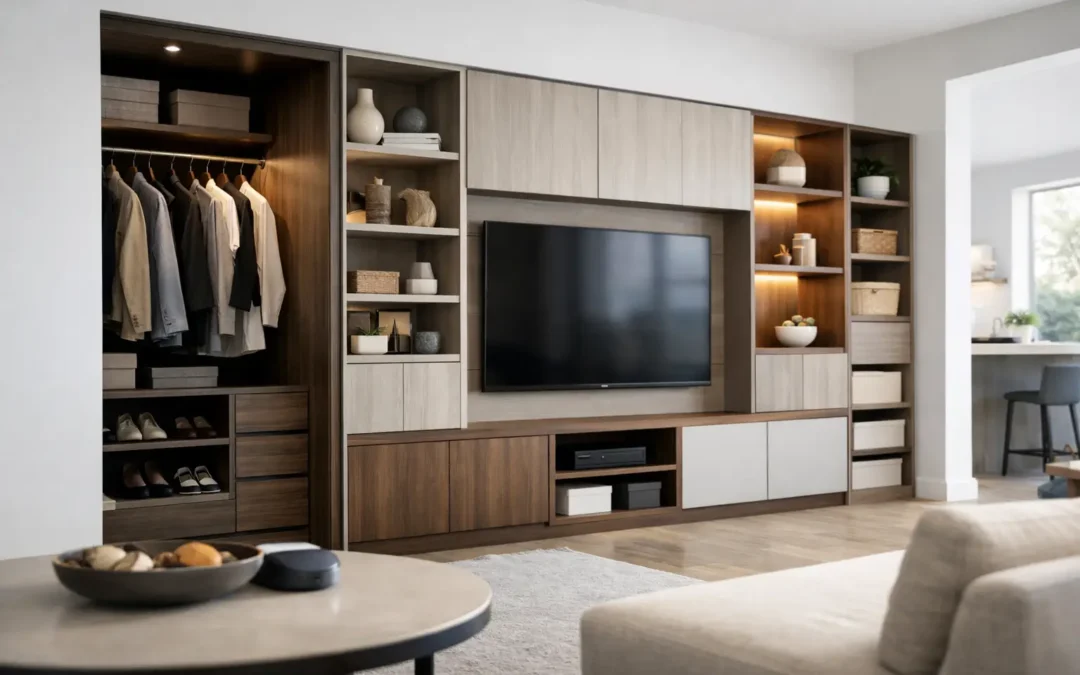
A spare room that becomes an office by day and a guest room by night. A hallway cupboard built around awkward boxing-in. A bedroom wall turned into calm, clutter-free storage that actually suits the house. That is where the future of bespoke storage is heading – not towards more furniture, but towards better use of every inch.
For homeowners, this matters because storage is no longer a background feature. It affects how a room looks, how easy it is to live in, and whether the house feels orderly or constantly under pressure. Off-the-shelf pieces can still work in some homes, but more people are realising that standard sizes and generic layouts often leave wasted space, visual clutter and daily frustration behind.
What the future of bespoke storage really looks like
The biggest shift is simple. Bespoke storage is becoming less about filling a wall and more about solving a room properly. That means design starts with how the space is used, who uses it, and what needs to disappear neatly behind doors, inside drawers or within open display areas.
In practical terms, homeowners are asking for fitted interiors that do more than hold belongings. They want wardrobes that support real routines, home offices that hide cables and paperwork, alcove units that look built with the house rather than pushed into it later, and bedrooms that feel calm rather than crowded. The future is not driven by novelty for its own sake. It is driven by better planning.
This also means the line between furniture and interior design is becoming less distinct. Storage is increasingly part of the room architecture. Wall panelling, fitted shelving, media units, dressing areas and workstations are being designed as one joined-up scheme, not as separate purchases made months apart.
Smarter layouts, not just smarter features
When people hear about future-focused interiors, they often think of lighting sensors, charging points and hidden gadgets. Those can be useful, but the bigger improvement usually comes from the layout itself.
A well-designed fitted wardrobe with the right mix of hanging space, drawers, shoe storage and top-level compartments will outperform a trend-led unit full of features you rarely use. The same applies in living spaces. Deep cupboards may sound generous, but if items disappear at the back and become hard to reach, that extra depth works against you.
The strongest bespoke schemes are getting more precise. Internal configurations are being planned around actual habits: longer hanging for dresses and coats, narrower sections for shirts, shelves sized for storage boxes that fit neatly, and drawers designed for the items people use every day. That level of tailoring is where bespoke earns its value.
The future of bespoke storage is more design-led
There was a time when fitted storage was judged mainly on capacity. If it held more, it was seen as better. That is no longer enough.
Homeowners now expect storage to improve the look of the room as much as its function. Clean lines, balanced proportions, carefully chosen handles, painted finishes in the right shade, integrated desks, open shelving used sparingly, and wardrobes built wall-to-wall and floor-to-ceiling all help create a more polished result.
This is especially important in homes where one room needs to work harder. A guest bedroom may also be a study. A landing may need to become useful storage. A living room may need built-in media units that do not dominate the space. In these situations, design quality is not a luxury. It is what stops practical additions from looking purely utilitarian.
For period homes and character properties, this matters even more. The best bespoke storage respects original features while making the room work for modern life. That might mean shaping units around chimney breasts, echoing traditional detailing, or choosing colours and finishes that sit comfortably within the property rather than fighting it.
Materials and finishes will matter more
Another part of the future of bespoke storage is durability. People are becoming more careful about what they bring into their homes, especially when making a significant investment. They want fitted furniture that lasts, keeps its appearance and continues to function properly after years of use.
That pushes quality materials and sound manufacturing to the front. Strong carcasses, reliable runners and hinges, well-prepared painted finishes, and accurate installation all make a visible difference over time. Cheap interiors can look acceptable on day one, but weak construction tends to reveal itself quickly in misaligned doors, marked surfaces and tired-looking edges.
There is also growing interest in finishes that feel personal rather than mass-produced. Bespoke painted colours, timber effects used in the right setting, textured panels and carefully selected hardware all help a room feel considered. The future is not one fixed style. It is better choice, handled with restraint.
Storage will become more integrated across the whole home
One of the clearest changes in recent years is that fitted storage is no longer limited to bedrooms. Homeowners are thinking more broadly and expecting the same standard of tailoring throughout the house.
That includes utility spaces, boot rooms, under-stairs storage, hallways, libraries, home offices and living rooms. As a result, the future of bespoke storage is about consistency as much as capacity. A house feels more settled when storage solutions are designed to work together visually and practically.
This joined-up approach is particularly useful for busy family homes. If each room absorbs clutter properly, the house runs better day to day. Shoes have a place. Coats are hidden neatly. Toys can be put away. Work documents are stored without taking over the dining table. These are not dramatic changes, but they improve how a home functions every single day.
Why bespoke is outperforming modular furniture in key areas
Modular and flat-pack furniture still have their place. They can be quicker to buy, easier to replace and suitable for short-term needs. If you are furnishing a temporary room or working to a tight budget, standard furniture may be the sensible option.
But for awkward spaces, long-term family use and rooms where appearance matters, bespoke has a clear advantage. It makes full use of height, width and difficult corners. It avoids the dead gaps that collect dust and waste valuable storage. It can be designed around radiators, sloping ceilings, boxing-in and uneven walls. Most importantly, it looks intentional.
That said, bespoke is not only about maximum storage. Sometimes the right decision is to build less, not more. Leaving breathing space, introducing open shelving where it suits the room, or avoiding over-complicated internals can create a better result. Good design is not about cramming every possible feature into one unit. It is about knowing what the room needs and what it does not.
The process will matter as much as the product
As expectations rise, homeowners are placing more value on the experience as well as the finish. They want clear advice, practical ideas, accurate measuring, honest guidance on budget, and installation handled by people who respect the home.
That is another reason bespoke storage is moving forward. When it is done properly, it removes uncertainty. The design is developed around the property, the materials and layout are agreed in advance, and the fitting team delivers a result that feels complete rather than pieced together.
For clients across Kent and the South of England, that managed approach is often just as important as the furniture itself. Home improvement projects are easier to commit to when the process feels controlled and well handled.
What homeowners should expect next
Looking ahead, expect bespoke storage to become even more tailored, more architectural and more closely linked to the way people actually live. Rooms will be asked to do more, and fitted interiors will respond by becoming more adaptable, more refined and more specific to the home.
Technology will play a part, but it will not be the main story. The real progress will come from sharper design thinking, better materials, and a stronger understanding of how to combine storage with style. That is where bespoke stands apart.
If you are planning improvements, the best starting point is not choosing door styles or colours. It is looking honestly at how the room falls short now. Once that is clear, the right bespoke solution tends to follow – and the result is a home that feels calmer, smarter and far easier to live in.