

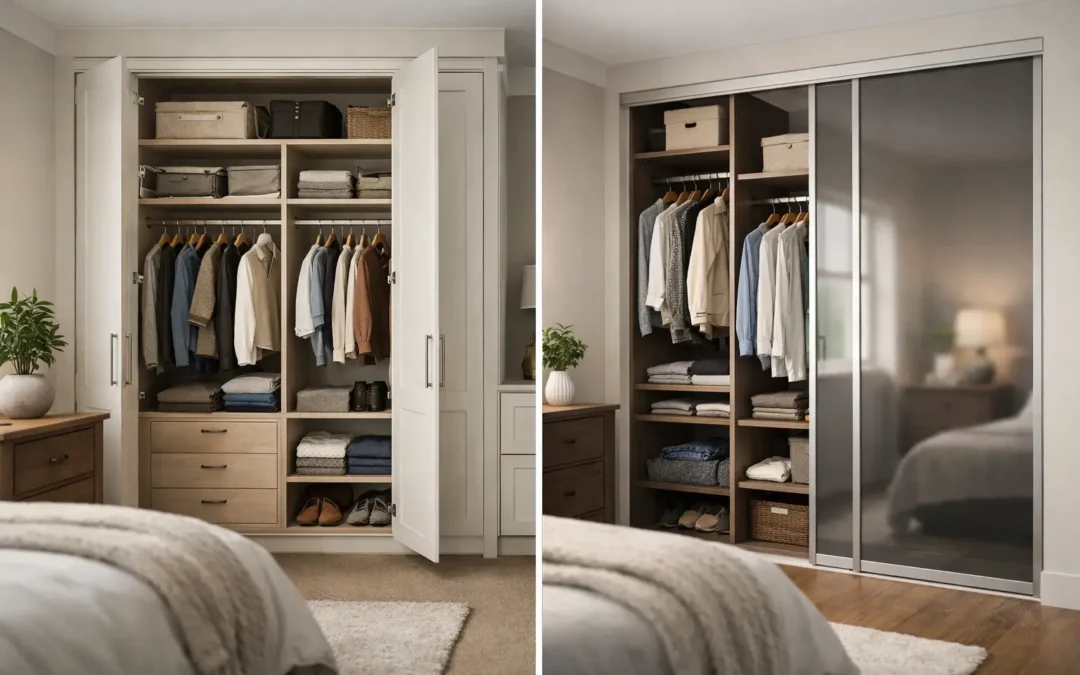
If you are weighing up fitted wardrobes or sliding doors, the real question is not which one looks better in a showroom. It is which option will work properly in your room, with your layout, your storage needs and the way you use the space every day. A good wardrobe should make the room feel calmer and more useful, not leave you working around awkward doors, wasted corners or storage that never quite fits.
This is where many homeowners get stuck. Sliding doors are often sold as the smart answer for tight spaces, while fitted wardrobes are seen as the more tailored, higher-end option. In practice, one is not automatically better than the other. The right choice depends on the footprint of the room, the position of the bed, ceiling height, alcoves, and how much access you want at any one time.
Fitted wardrobes or sliding doors: what is the difference?
A fitted wardrobe is built to the dimensions of your room. It can run wall to wall, floor to ceiling, fit neatly into alcoves and work around sloping ceilings, chimney breasts or uneven walls. The internal layout is designed around what you actually need to store, whether that is long hanging, double hanging, drawers, shelves or a combination.
Sliding doors are a door style, not a complete storage solution in themselves. They can be used as part of a fitted wardrobe design, but people often compare them with more traditional hinged fitted wardrobe doors. So when homeowners ask about fitted wardrobes or sliding doors, they are usually deciding between a fully bespoke fitted wardrobe with hinged fronts, or a fitted storage run finished with sliding doors.
That distinction matters. The biggest gains usually come from the fitted interior, because that is what makes use of every inch. The door choice then shapes how the wardrobe feels to use and how it sits in the room.
When sliding doors make more sense
Sliding doors earn their keep when floor space is limited. In a smaller bedroom, a door that glides rather than opens outward can make movement easier around the bed or near a chest of drawers. If there is not much clearance in front of the wardrobe, sliding fronts can avoid that cramped feeling that hinged doors sometimes create.
They also suit a cleaner, more contemporary look. Large door panels can give a room a simple, uninterrupted finish, especially in modern homes where clients want a streamlined appearance rather than lots of visible door breaks. Mirrored sliding doors can also help bounce light around, which is useful in darker bedrooms.
That said, sliding doors do have trade-offs. You only access one section of the wardrobe at a time, because one panel slides over another. For some households that is no problem. For others, especially busy couples getting ready at the same time, it can become irritating quite quickly.
The frame and track system also need to be specified and installed properly. Poor-quality sliding systems can feel clumsy, become noisy over time or look bulky. Done well, they are smooth and dependable. Done badly, they are the part you notice for the wrong reasons.
When fitted wardrobes with hinged doors come out on top
If your priority is access, hinged doors are hard to beat. You can open the full width of a section and see everything at once. That makes day-to-day use easier, especially if your wardrobe includes drawers, shelves and pull-out features behind the doors.
Hinged fitted wardrobes also tend to give more flexibility in design details. You can choose classic panelled fronts, shaker styles, contemporary slab doors, painted finishes in any colour and more decorative detailing if that suits the rest of the room. For period homes or properties where you want the furniture to feel integrated rather than obviously modern, hinged doors often sit more comfortably.
They can also be easier to maintain over the long term. The mechanisms are simple, adjustments are straightforward and there are fewer moving components than with a sliding track system. If the room has enough space for the doors to open comfortably, that simplicity is a genuine advantage.
The obvious downside is clearance. If the bed, bedside tables or another item of furniture sits too close to the wardrobe, opening the doors can be awkward. In that case, even a beautiful hinged wardrobe can become less practical than it should be.
Space planning matters more than most people realise
Homeowners often focus on the wardrobe frontage first, but the room layout should lead the decision. A wardrobe that looks impressive on paper can be frustrating if it interrupts the route around the bed, clashes with a radiator or makes a dressing area feel pinched.
This is why proper measuring matters. The width of walkways, the swing of the bedroom door, ceiling variations and the exact depth available all influence what will work. In many homes across Kent and the South East, bedrooms are not perfectly square and alcoves are rarely standard. Bespoke design solves that problem because the furniture is made for the room, not forced into it.
A well-planned fitted wardrobe can also take advantage of height in a way freestanding furniture cannot. Full-height cabinetry creates storage right up to the ceiling, which is ideal for suitcases, seasonal items or spare bedding. Whether the front is hinged or sliding, that extra capacity is often what transforms the room.
Storage inside the wardrobe is where the value sits
It is easy to get caught up in the exterior finish and forget what happens inside. But if the internal layout is wrong, the wardrobe will never perform properly.
A bespoke fitted interior can be divided around the way you live. That might mean more shelving for knitwear, wider drawers for folded clothing, dedicated shoe storage, double hanging for shirts and jackets, or full-height hanging for dresses and coats. In family homes, his-and-hers sections or storage arranged by routine often makes the room easier to keep tidy.
This is another reason the fitted wardrobe route usually delivers better results than a standard system. You are not just choosing a door. You are creating a storage solution that matches the room and the household. That is where the everyday benefit comes from.
Style should follow the room, not the trend
Sliding doors are often associated with a sleek, contemporary feel. Hinged fitted wardrobes can lean classic, but they can also be very modern depending on the finish. So the decision should not be based on trend alone.
A calm bedroom works best when the wardrobe feels like part of the architecture. In some rooms, that means flat painted fronts that blend into the walls. In others, a panelled design adds character and depth. Mirrored sliding panels can be practical, but they are not right for everyone. Some clients love the extra light and the convenience of a full-length mirror. Others prefer a softer, more furniture-led finish.
Materials and workmanship matter here. Premium boards, good paint finishes, well-made internals and careful installation all affect how fitted furniture looks after a few years, not just on day one. That is one of the key differences between a tailored fitted solution and something more off the shelf.
Cost, value and the long-term view
For many homeowners, budget is part of the fitted wardrobes or sliding doors conversation. Sliding door systems can sometimes appear more cost-effective at first glance, but price depends on the specification. Large glass or mirrored panels, quality track systems and bespoke sizing can quickly change that.
Hinged fitted wardrobes can be very cost-effective when they are designed efficiently and built to make proper use of the full space. They also tend to offer a more traditional fitted furniture look, which many homeowners see as a stronger long-term investment.
The better question is not which option is cheapest. It is which one gives you the best result for the room and will still feel right in five or ten years. Storage that improves daily life, helps keep the bedroom organised and adds to the finish of the home usually proves its value over time.
So which should you choose?
Choose sliding doors if the room is tight on clearance, you want a contemporary look and you are happy with sectional access rather than opening the whole wardrobe at once. They are especially useful where every bit of floor space counts.
Choose fitted wardrobes with hinged doors if you want full visibility, easier access, more traditional styling options and a simpler mechanism. If the room can comfortably accommodate opening doors, this option often gives the best all-round usability.
For many households, the smartest answer is not to think in opposites at all. Start with a bespoke fitted design, then choose the door style that suits the room. That is how you avoid paying for storage that looks good but works badly.
At WOW Interior Design, that is exactly how we approach it – by looking at the room first, then creating fitted furniture that makes proper use of the space and feels right for the home.
The best wardrobe choice is the one that makes the room easier to live with every single day, because good design should not ask you to compromise with your own space.