

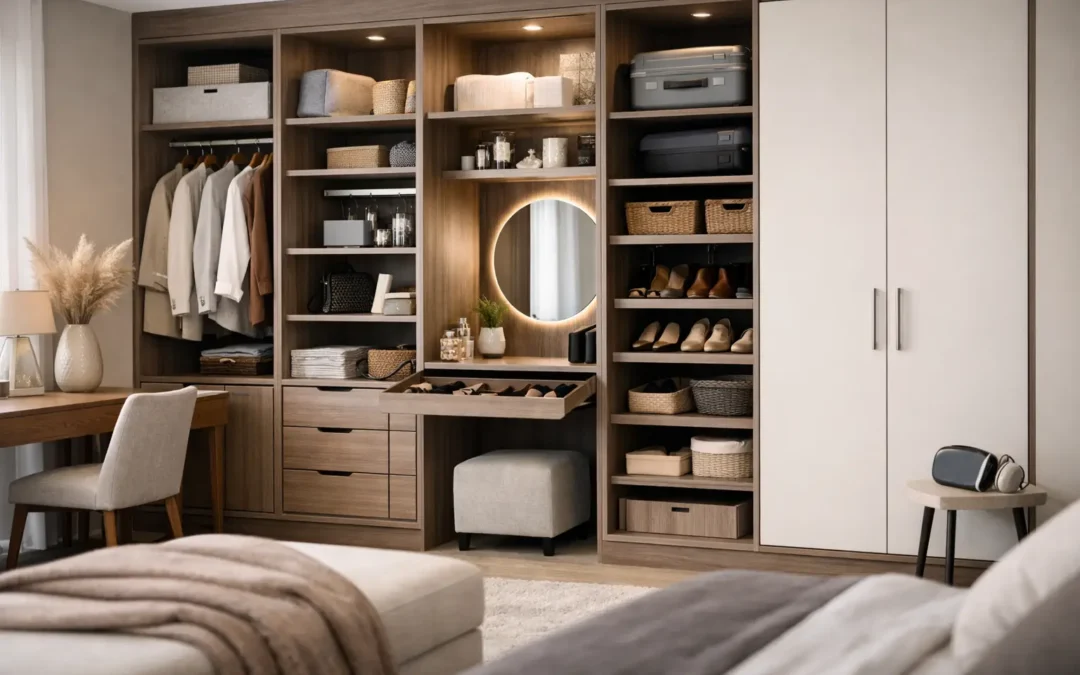
A wardrobe can look immaculate on installation day and still become frustrating within a month if the inside has not been designed around real life. The most useful fitted wardrobe trends 2026 will not be about copying a showroom look. They are about creating calmer bedrooms, making difficult spaces earn their keep, and giving every item a sensible home.
For homeowners investing in a long-term improvement, the direction is clear: less visual noise, more personal character, and storage that is properly planned rather than simply made bigger. A fitted wardrobe should suit the room, but it should also suit the people using it.
Fitted wardrobe trends 2026 homeowners will notice
Warm, grounded colours replace cold minimalism
Bright white fitted wardrobes will always have their place, particularly in compact or naturally dark bedrooms. However, 2026 is likely to see more homeowners choosing warmer neutrals, softened greens, clay tones, muted blues and rich timber effects. These finishes make a fitted wardrobe feel like part of the room rather than a large block of cabinetry.
Painted furniture is particularly useful here because the colour can be chosen to complement existing flooring, curtains or wall tones. A soft putty finish may keep a traditional Kent bedroom light without making it stark, while a deep olive or inky blue can give a larger principal bedroom real presence.
The trade-off is light. A dark finish can be striking, but it absorbs light and may overpower a small room with limited daylight. This is where a bespoke design earns its value: a darker external finish can be balanced with lighter walls, well-placed lighting and a layout that does not crowd the window.
Texture becomes part of the design
Flat, handleless doors remain a clean option, but perfectly smooth surfaces are no longer the only route to a contemporary room. Fluted details, narrow shaker frames, reeded glass and subtle timber grain add depth without making a bedroom feel fussy.
Texture is especially effective when a wardrobe runs across a wide wall. It breaks up the scale and gives the furniture a more crafted appearance. For period homes, a slim framed door can sit comfortably alongside original features. In newer homes, vertical fluting or a timber-effect panel can stop the room feeling too uniform.
There is a balance to strike. Strong patterns, very wide shaker frames and heavily textured doors can date more quickly than a quieter design. If you want longevity, use a classic door style and introduce personality through colour, handles or one feature section rather than every door.
Concealed storage becomes non-negotiable
The most practical trend is also the least showy. Bedrooms are being asked to work harder, particularly where a home office, dressing area or nursery has taken over spare space elsewhere in the house. The answer is not always more furniture. It is better concealed storage within the furniture already there.
Full-height fitted wardrobes make use of the often-wasted area above standard freestanding units. Internally, a combination of double hanging, long hanging, deep drawers, adjustable shelves and top cupboards prevents the familiar problem of one crowded rail and several unusable shelves.
Consider what needs to disappear from view: suitcases, spare bedding, winter coats, laundry baskets, ironing boards or a vacuum cleaner. These items should shape the layout from the first design conversation. A wardrobe designed around the actual contents of a household will remain organised far more easily than one built to a generic internal plan.
Wardrobes that look more like furniture
A key part of the fitted wardrobe trends for 2026 is the move away from a purely built-in look. Homeowners want fitted storage that still feels considered and individual, with the visual weight of well-made furniture.
This can mean adding a cornice, a plinth, carefully chosen handles or an open niche for books and decorative pieces. It may also mean continuing the finish around a dressing table, window seat or bedside units so the room feels intentional from wall to wall.
That said, open shelving needs discipline. It photographs beautifully, but it can quickly become a landing place for cables, papers and everyday clutter. A small, purposeful display area works well; relying on open shelves for most bedroom storage usually does not. Closed doors remain the most effective way to keep a bedroom restful.
Integrated dressing areas and work zones
A fitted wardrobe wall can do more than hold clothes. A recessed dressing table with a mirror and drawer storage creates a useful getting-ready space without introducing another freestanding piece. In a guest room or compact home, the same principle can accommodate a discreet desk that closes away visually once the working day is over.
The success of these combinations depends on proportion. The desk or dressing area needs adequate knee space, task lighting and useful drawer depth. It should not feel like an afterthought squeezed between two wardrobe doors. Measuring the room properly and agreeing how it will be used are essential before fabrication begins.
Smarter interiors matter more than gadgetry
Internal wardrobe fittings are becoming more refined, but practical choices matter more than novelty features. Pull-down rails are useful in very tall cupboards, for example, but only where the user can operate them comfortably. Pull-out trouser racks, jewellery trays and shoe shelves can be excellent additions, yet they should reflect a genuine need rather than fill the plan with mechanisms.
For most households, the highest-value improvements are straightforward: enough hanging space at the right heights, drawers for smaller items, shelves that are not too deep, and dedicated areas for bulky possessions. Lighting can also make a real difference. Sensor-activated internal lights are particularly helpful in deep wardrobes, darker bedrooms and early-morning routines.
Before choosing internals, take stock of your clothing rather than estimating. Count long dresses and coats, folded knitwear, shoes, bags and occasionwear. Couples often need very different arrangements on either side of the wardrobe. One person may need extensive hanging; the other may need drawers and shelving. Bespoke furniture should acknowledge that rather than divide the space equally by default.
The return of the fitted walk-in feel
Not every home has room for a separate dressing room, but a walk-in feel can be created in a standard bedroom through thoughtful planning. Floor-to-ceiling wardrobes around a doorway, a shallow run of cabinetry opposite the bed, or storage fitted into an alcove can establish a dedicated dressing zone without sacrificing too much floor space.
Mirrored doors still have a role, although the preference is moving towards restrained use. A single full-length mirror panel, bronze-tinted glass or a mirror positioned inside a door can provide function without turning an entire wall into a reflection. This is particularly useful where the bedroom already has several hard surfaces or receives strong afternoon sun.
Why a tailored layout outlasts a trend
The best 2026 wardrobe ideas share one principle: they are adapted to the architecture of the room. Sloping ceilings, chimney breasts, uneven walls and narrow alcoves are not reasons to settle for compromised storage. They are the reason fitted furniture makes sense.
A made-to-measure wardrobe can follow a roofline, bridge over a chimney breast or turn an awkward corner into accessible storage. It also avoids the dust-catching gaps above and beside standard units. The finished effect is cleaner, but the practical benefit is just as important: more usable volume without making the room feel overfilled.
At WOW Interior Design, this begins with an in-home design visit, where the room is measured and the storage challenge is understood before a layout is proposed. That process helps avoid expensive assumptions about what will fit, where doors can open and how the room will feel once the furniture is in place.
Choosing a wardrobe design with staying power
Trends are useful for sparking ideas, not for dictating every decision. If you are unsure about a bold colour or highly detailed door style, keep the larger fitted elements timeless and bring stronger personality into paint, handles, bedding or a feature wall. Those are easier to refresh later.
Spend more attention on proportions, internal storage and installation quality than on any single finish. Doors should open comfortably, drawers should be useful, and every section should have a clear purpose. When those foundations are right, a wardrobe can be updated with changing tastes while continuing to make the bedroom easier to live in.
The right place to start is not with a door sample. Start with the items that currently have nowhere to go, the corners of the room that are wasted, and the way you want the space to feel at the end of a busy day. That is how a fitted wardrobe becomes a lasting improvement rather than a passing trend.