

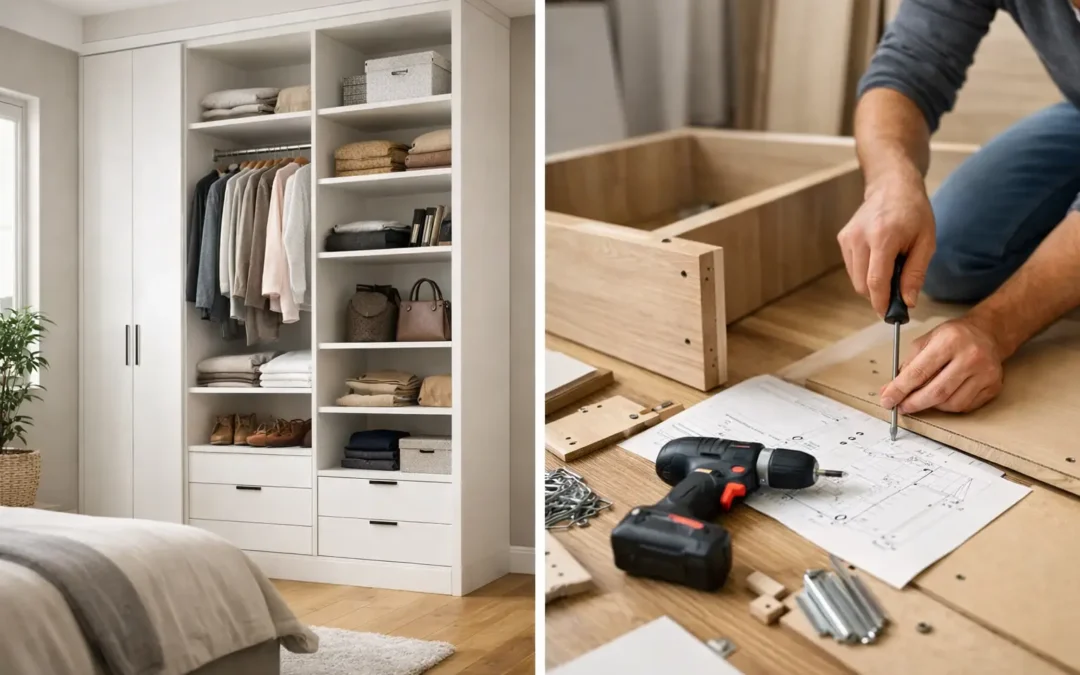
A wardrobe that stops 150mm below the ceiling, leaves an unused corner and fills with freestanding storage boxes is rarely a bargain for long. When weighing up built in wardrobes vs flatpack, the real question is not simply what costs less on day one. It is how well the storage works in your room, how it looks once installed, and whether it will still suit your household in years to come.
Flatpack furniture has a place, particularly for a quick bedroom refresh or a first home. But when a room has sloping ceilings, chimney breasts, uneven walls or a tight layout, made-to-measure fitted furniture can turn awkward space into useful, attractive storage.
Built in wardrobes vs flatpack: the core difference
Flatpack wardrobes are manufactured in standard widths, heights and finishes. You select a range, choose from the available internal layouts, transport it home or arrange delivery, and assemble it yourself or pay someone to fit it. It is a familiar route, with prices that are usually easy to see from the outset.
Built-in wardrobes are designed around the room and the way you use it. Every section can be sized to suit the available wall, from floor to ceiling and wall to wall if required. The doors, interior, handles, lighting and finish are chosen as part of one considered design, then professionally installed.
That difference affects more than appearance. It determines how much storage you gain, how settled the furniture feels within the room, and how many compromises you need to make.
Space: where fitted wardrobes earn their keep
The greatest advantage of a bespoke wardrobe is its ability to use space that standard furniture cannot reach. In many homes, the top of a flatpack wardrobe becomes a dust-catching ledge. Narrow gaps at either side are difficult to clean and too small to use properly. A fitted design can make both areas work for you.
This matters most in smaller bedrooms, loft rooms and older properties. A wardrobe can be built around a chimney breast, beneath an eave or across a wall that is not perfectly square. Instead of forcing the room to accommodate furniture, the furniture is made to accommodate the room.
Internal space also deserves close attention. One person may need long hanging for dresses and coats, while another needs shelves for knitwear, deep drawers for bedding and a dedicated section for shoes. A family bedroom may benefit from high-level storage for seasonal items that are not needed every week. With a bespoke design, these decisions are made before anything is manufactured.
Flatpack can still work well where the room is a regular shape, ceiling height is standard and your storage needs are straightforward. A well-chosen freestanding wardrobe is often sensible for a guest room, a rented property or a space likely to change purpose soon.
Cost: compare the whole investment
Flatpack wardrobes generally have the lower upfront price. That is their clear advantage, especially when you need storage quickly or are working to a fixed short-term budget. However, the ticket price is not always the final cost. Delivery, assembly, wall fixing, alterations to make units fit and disposal of packaging can all add up.
Bespoke fitted wardrobes cost more because they include design work, made-to-measure fabrication, materials and skilled installation. They should be viewed as a home improvement rather than a movable purchase. The value comes from the amount of usable storage gained, the quality of the finish and the fact that the furniture is built specifically for your home.
It is also worth comparing like for like. A basic flatpack carcass with plain doors is not equivalent to a floor-to-ceiling fitted wardrobe with a tailored interior, soft-close drawers and painted doors in a chosen colour. Decide which features genuinely matter, then ask for a clear quotation that shows what is included.
A good fitted furniture company will discuss your budget early and shape the design accordingly. You may choose a simpler door style, fewer internal drawers or a different finish while retaining the benefit of a made-to-measure fit.
Finish and design: furniture or part of the room?
Flatpack ranges are designed to appeal to many homes. That can make them easy to buy, but it also limits your choices. You may find a door style you like but not the right size, or the right dimensions but a finish that clashes with your existing flooring, wall colour or furniture.
Fitted wardrobes can be made to feel like part of the architecture of the room. Shaker doors can complement a traditional Kent home, while handleless or slim-profile designs suit a more contemporary scheme. Painted finishes allow the wardrobe to blend into the walls or become a deliberate feature. Mirrored doors can bring light into a darker bedroom, though they are not the right choice for every interior.
The details make a noticeable difference. Consistent gaps around doors, neatly scribed panels against uneven walls and carefully chosen handles give fitted furniture a calmer, more considered appearance. There is no visual clutter from unused gaps or mismatched add-on units.
Durability and everyday use
A wardrobe needs to cope with daily opening, closing, loading and occasional overfilling. Quality depends on the materials, fittings and installation, not only on whether a wardrobe is fitted or flatpack. There are capable flatpack systems and poor-quality bespoke products, so it pays to look beyond labels.
That said, professionally fitted wardrobes are secured as a permanent part of the room. The installer can account for wall conditions, skirting boards, floor levels and access requirements, rather than relying on a standard assembly instruction. Doors can be adjusted accurately and the final result checked before the team leaves.
With flatpack furniture, the long-term outcome often depends on assembly. A slightly misaligned carcass, loose hinge or overloaded shelf can affect how the wardrobe performs. Moving a flatpack wardrobe after it has been assembled can also be difficult, particularly if it has been cut down or fixed to the wall.
Flexibility: do you need to take it with you?
This is the point where flatpack has a practical edge. It can usually move house with you, although dismantling and reassembling may shorten its life. If you expect to relocate in the near future, or if you enjoy changing your furniture layout regularly, a freestanding option keeps your choices open.
Built-in wardrobes are designed to remain in place. For established homeowners, that is often a benefit rather than a drawback. A well-planned wardrobe can improve a bedroom immediately and make the property more appealing to future buyers because it solves a problem they would otherwise need to address.
Before committing, think about your likely plans for the room over the next five to ten years. A nursery may become a child’s bedroom, then a study. A thoughtful fitted design can be configured with adaptable shelving and hanging, but it should still reflect the room’s most likely future use.
When flatpack is the right answer
Flatpack is a sensible choice when speed, portability and initial cost matter more than a perfect fit. It suits standard-sized rooms, temporary arrangements and homes where you are happy to accept some unused space. It can also work as a stopgap while you plan a larger renovation.
Choose a range with solid back panels, adjustable hinges and interior options that meet your essential needs. Measure not only the wall but also the ceiling, skirting, door swing and route into the bedroom. A wardrobe that fits on paper can be far less convenient once it arrives in boxes.
When bespoke fitted wardrobes are worth it
Choose fitted wardrobes when storage is a persistent frustration, the room has awkward features, or you want a polished finish that properly belongs in the space. They are particularly effective where a single storage wall needs to work harder, whether that means accommodating two people’s wardrobes, hiding clutter or creating order in a compact bedroom.
The design process should make the decision easier, not more complicated. A home visit allows accurate measuring, a conversation about what you need to store and practical advice on finishes and layouts. At WOW Interior Design, this is where an idea becomes a room-specific plan, with professional installation handling the final details.
The best choice is the one that removes a daily annoyance rather than creating another compromise. If standard furniture leaves you measuring gaps, stacking boxes on top or wishing you had one more drawer, it may be time to design storage around your home instead.