

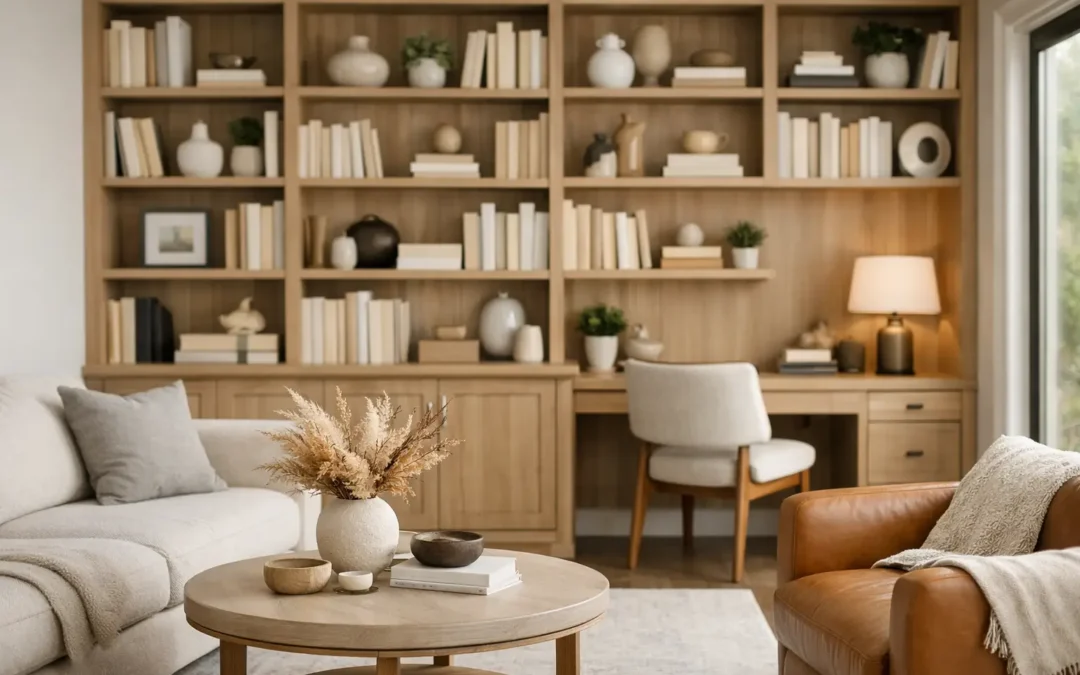
A wall of books can make a room feel settled, personal and properly lived in – but only when it has been designed for the way you use the space. When people search for built-in libraries, they are often looking for more than shelves. They want to make an awkward wall useful, bring order to a growing collection, and create a feature that looks as though it has always belonged in the home.
A bespoke fitted library does exactly that. It can frame a fireplace, turn an unused alcove into valuable storage, give a home office more authority or make a family room calmer and easier to organise. Rather than working around standard bookcases with their wasted gaps and awkward proportions, the furniture is designed around your room from the outset.
Why built-in libraries make such a difference
Freestanding bookcases can be useful, especially as a temporary solution. Yet they rarely make the best use of a full wall, a sloping ceiling or a recessed space. Dust gathers in the gaps above and beside them, while the room can look fragmented rather than considered.
Built-in libraries take the full height and width of the available space into account. They can run neatly to the ceiling, sit flush within alcoves and be shaped around radiators, chimney breasts, picture rails or uneven walls. The result is not simply more shelving. It is a more balanced room, with storage that feels integral to the architecture.
This matters particularly in period homes across Kent, where alcoves, chimney breasts and irregular walls are part of the character but can make off-the-shelf furniture frustrating. A fitted design respects those details instead of trying to hide them. In newer homes, it can add the sense of permanence and finish that a blank wall often lacks.
A library should suit more than books
The best library designs begin with an honest look at what needs to live there. Books may be the main attraction, but many households also need space for family photographs, ceramics, records, paperwork, speakers, games or a television. A well-planned fitted library can hold all of it without turning the room into a display of clutter.
Open shelves create the classic library look and make it easy to reach regularly used books. They also offer room for carefully chosen objects that give the scheme warmth and personality. However, fully open shelving is not right for every household. It demands some ongoing tidiness, and children’s toys, cables or work paperwork are not always things you want on view.
That is where a combination of open shelving and closed cabinetry earns its keep. Cupboards at the lower level can conceal the practical items, while drawers can be designed for files, stationery or smaller belongings. A central television can be incorporated with discreet cable management, so the wall remains polished whether the screen is on or off.
The proportions matter as much as the storage itself. Deep shelves may be useful for large art books, but they can make ordinary paperbacks disappear into shadow. Shelves that are too shallow, on the other hand, limit what can be stored. Adjustable sections give flexibility as collections change, while fixed shelves can create a more tailored, architectural appearance. The right answer depends on what you own and how you want the room to feel.
Planning a fitted library around the room
A successful design considers the wider room before choosing a door style or paint colour. Sightlines, natural light, existing joinery and the main use of the space all affect the final layout.
Around a fireplace or chimney breast
A library built around a fireplace is a popular choice because it gives two alcoves a clear purpose. Symmetrical shelving can create a formal, timeless look, while matching base cupboards provide useful hidden storage. If the fireplace is no longer in use, the whole wall can sometimes be treated as one composition, with shelving, cabinets and a central focal point designed together.
Symmetry is not compulsory. In a room with one deeper alcove or an uneven wall, a carefully balanced asymmetrical design may use the available space better. Good fitted furniture should respond to the room as it is, not force it into a standard template.
In a home office
For professionals working from home, a fitted library can make a study feel organised without becoming corporate. Shelves can be sized for reference books and display pieces, while closed units below hide printers, files and equipment. A desk can be built into the same run of furniture, giving the room one clean visual language.
This approach is especially useful when an office also needs to serve as a guest room or occasional reading space. The storage works hard during the day but remains attractive when work is put away.
Along a blank living-room wall
A long, empty wall is an opportunity to create a strong focal point. Full-height shelving can make a modest room appear taller, especially when the design is kept light and proportionate. If a full wall of books feels too heavy, breaks can be introduced with a window seat, a central cabinet, a television recess or wider display niches.
Lighting deserves attention here. Integrated shelf lighting can give depth to darker corners and make favourite objects stand out in the evening. It should support the room, not overpower it. The aim is a warm, useful space rather than a showroom effect.
Choosing a finish that belongs in your home
A library is a substantial piece of furniture, so its finish should work with the room for years rather than chase a short-lived trend. Painted cabinetry remains a versatile choice because it can be matched to existing colours or specified in virtually any shade. Soft neutrals make shelving recede quietly, while deeper greens, blues and charcoals can give a study or sitting room real presence.
The detail of the doors and shelves changes the character too. Shaker-style doors suit many traditional and contemporary homes. Sleeker slab doors offer a cleaner finish, particularly where the library includes media storage. Cornice, plinths and panel detailing can echo original features in an older property, while a simpler profile may be better for a modern extension.
Do not overlook the back panels. A painted back can create a subtle contrast with the shelf fronts, while a timber-effect or wallpapered backing can add texture. Used carefully, these details lift a library from functional storage to a genuine room feature.
The value of proper measuring and design
Fitted furniture only looks effortless when the preparation is thorough. Walls are seldom perfectly straight, floors can fall away, and older homes often reveal surprises once measurements begin. Accurate in-home measuring is what allows shelves, cabinets and scribing panels to meet the room cleanly.
The design stage is also where practical questions should be resolved before installation. Where will sockets sit? Does a radiator need ventilation? Are there cables for a television or speakers? Which shelves need to be taller? How far should doors project into the room when opened? Addressing these points early prevents compromises later.
At WOW Interior Design, each library is planned as a bespoke fitted interior, not selected from a fixed range. The design can be adapted to the room, your belongings and the finish you want, then professionally installed with care for the surrounding home. That means fewer awkward gaps, less disruption from trying to make separate pieces fit, and a result with real long-term value.
Making your library easy to live with
Once installed, a library does not need to look staged to look good. Group books loosely by subject, author or colour if that suits you, but leave a little breathing room. Mix in a few personal objects rather than filling every shelf. Lower cupboards are there to take pressure off the visible areas, so use them for the items that are useful but not decorative.
For busy family homes, reserve the most accessible shelves for books that are regularly used and keep fragile pieces higher up. In a study, give paperwork a dedicated closed section rather than allowing it to spread across display shelves. Small decisions like these help the room remain orderly without demanding constant attention.
A built-in library is at its best when it reflects your home rather than an image from a catalogue. Whether it becomes a quiet reading wall, a practical family storage solution or the centrepiece of a home office, the right design gives everyday possessions a place and gives the whole room a clearer purpose.