

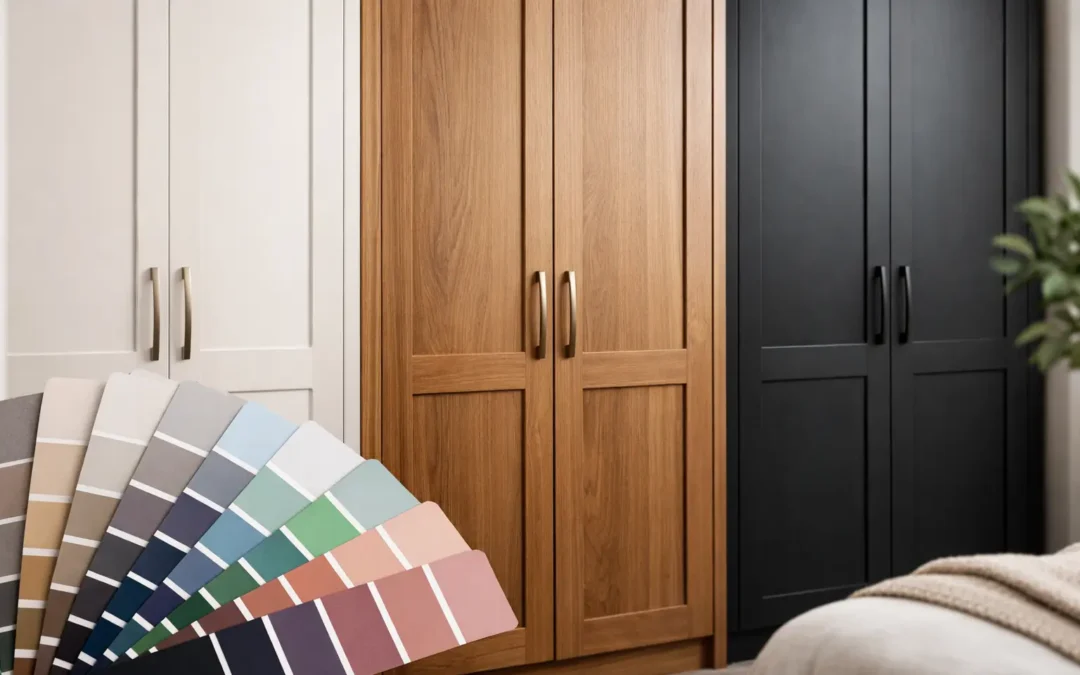
A fitted wardrobe can look beautifully made and still feel wrong if the colour is off. That is why choosing the best colours for fitted wardrobes is not a finishing touch – it is a design decision that affects how spacious the room feels, how well the wardrobe blends in, and whether you still love it in five years.
Unlike freestanding furniture, fitted wardrobes take up real visual space. They often run floor to ceiling, wall to wall, and sit directly within your line of sight every day. Get the colour right and the whole room feels calmer, smarter and more considered. Get it wrong and even excellent craftsmanship can feel heavier than it should.
How to choose the best colours for fitted wardrobes
The right colour usually comes from three things working together: the room size, the amount of natural light, and the look you want overall. There is no single best answer for every home. A wardrobe in a bright Victorian bedroom with high ceilings can take a deeper colour than one in a compact new-build room with limited daylight.
It also matters whether you want the wardrobe to disappear into the room or stand out as a feature. Some homeowners want a clean built-in look, where the cabinetry almost reads as part of the wall. Others want fitted furniture to add character and define the room. Both approaches work, but the colour choice needs to support the intention.
The finish matters too. A warm neutral in a matt painted finish will feel very different from the same shade on a high-sheen surface. In most fitted bedrooms, softer finishes tend to give a more premium, settled look, while very reflective finishes can feel sharper and more modern.
White and off-white wardrobes
White is still one of the best colours for fitted wardrobes for a reason. It keeps a room light, makes ceilings feel higher, and gives fitted furniture a crisp, tailored appearance. In smaller bedrooms or rooms with awkward angles, white helps the cabinetry feel less dominant.
That said, pure brilliant white can sometimes feel too stark, especially in homes with warmer wall colours, timber flooring or traditional detailing. In many cases, off-white works harder. Shades such as chalk, ivory and soft cream give you the same clean effect with a gentler finish.
If you are after a timeless result, off-white is often the safer choice. It pairs well with brushed metal handles, warm lighting and natural textures, and it is less likely to show every mark than a very bright white.
Grey fitted wardrobes
Grey has been popular for years because it is easy to live with. It sits comfortably between classic and contemporary, and it can be adapted to suit everything from period homes to newer interiors. Pale grey works particularly well if you want a neutral that has a little more depth than white.
Mid-grey can look smart and architectural, especially on shaker-style doors or clean handleless designs. It gives definition without becoming too dark. In larger bedrooms, deeper greys can create a more cocooning feel, but they need decent light to avoid making the room feel closed in.
The key with grey is undertone. Some greys lean blue and can feel cold. Others carry warmth and sit more comfortably with beige carpets, oak flooring and softer wall colours. This is where sample boards and in-room viewing make a real difference.
Beige, taupe and greige
If you want fitted wardrobes to feel calm, expensive and easy to style, these shades are hard to beat. Beige, taupe and greige have moved well beyond trend status and are now go-to choices for homeowners who want warmth without going too yellow or too brown.
These colours are especially effective in bedrooms because they soften the overall look of the space. They work well with upholstered headboards, textured curtains and layered neutral schemes. They also flatter both natural and artificial light better than cooler tones in many UK homes.
Greige is particularly useful because it bridges warm and cool elements. If your room includes grey flooring, cream walls and oak furniture, greige helps tie everything together. It is one of the most versatile options for bespoke wardrobes because it does not fight with the rest of the room.
Dark blue, navy and inky tones
For homeowners who want more impact, dark blue is one of the strongest choices. Navy fitted wardrobes can look striking, polished and very high end, particularly in larger bedrooms with good light. They add depth and character without feeling as harsh as black.
Blue works well in both modern and classic schemes. A deep navy shaker wardrobe with brushed brass handles can look elegant and established. A flatter, darker blue on a sleek slab door can feel more contemporary. Either way, it creates a sense of purpose in the room.
There is a trade-off. Darker wardrobes show dust, fingerprints and surface marks more readily, and in small or poorly lit rooms they can feel heavy if the rest of the design does not compensate. Used well, though, darker blue shades make fitted furniture feel properly bespoke rather than purely practical.
Green wardrobes
Green has become a favourite for fitted interiors because it brings colour without being difficult to live with. Soft sage, olive and muted eucalyptus tones all work especially well in bedrooms. They feel restful, natural and slightly more individual than standard neutrals.
Softer greens are a smart choice if you want a wardrobe colour with personality that still feels safe long term. They sit well with timber accents, warm whites and natural fabrics. In homes across Kent and the South East, where many properties combine traditional features with updated interiors, green often bridges old and new very well.
Darker greens can also be beautiful, especially in master bedrooms with more generous proportions. Forest and heritage greens create richness, but as with navy, they need balanced lighting and careful coordination with flooring, wall colour and hardware.
Black and very dark fitted wardrobes
Black wardrobes can look exceptional in the right room. They give a sharp, tailored finish and work particularly well in contemporary spaces, dressing rooms or bedrooms with plenty of daylight. When paired with lighter walls and flooring, black creates contrast and structure.
But black is not forgiving. In the wrong room it can overpower the space, and it shows dust and hand marks quickly. For that reason, we usually see the best results when black is used with intent rather than chosen for drama alone.
If you like the look but want something more liveable, consider charcoal, graphite or a very deep brown-black instead. You still get the depth, but with a slightly softer result.
Should fitted wardrobes match the walls?
Often, yes. If your goal is to make the room feel bigger and calmer, matching or closely coordinating the wardrobe colour with the wall colour is a smart move. This reduces visual interruption and helps fitted furniture feel like part of the architecture.
This works particularly well in smaller bedrooms, loft rooms and spaces with sloping ceilings, where too much contrast can make every angle feel more obvious. A painted fitted wardrobe in a similar tone to the walls can make the whole room feel more resolved.
That said, contrast can be equally effective when you want the wardrobe to add character. If the room itself is fairly plain, a stronger wardrobe colour can give it identity. The best choice depends on whether you want the cabinetry to recede or lead.
What colour works best in small bedrooms?
Light and mid-tone colours usually perform best in smaller rooms. White, off-white, pale grey, soft greige and muted sage all help reflect light and reduce visual bulk. They make fitted wardrobes feel neater and less imposing, especially when the design runs to the ceiling.
A common mistake is choosing a dark fashionable colour without considering room size, window position or ceiling height. Deep tones can still work in a small bedroom, but they need more control around lighting, wall colour and door style. If the aim is to make a compact room feel bigger, lighter shades are generally the safer option.
The role of handles, trim and finish
Colour does not work on its own. The details around it shape the final result. Brass or bronze handles warm up cooler shades like grey or navy. Chrome and black hardware sharpen the look and feel more modern. Panelled doors add shadow and depth, which can make colours appear richer. Flat doors keep the effect cleaner and more understated.
This is why bespoke design matters. A wardrobe is not just a box in a certain shade. The proportions, mouldings, finish and fittings all influence how the colour reads in the room. At WOW Interior Design, we see first-hand that the same paint shade can feel completely different depending on the door style and setting.
Choosing a colour you will still like later
The safest route is not always plain white, and the boldest route is not always a mistake. The best fitted wardrobe colour is usually the one that suits your room properly and reflects how you want the space to feel day to day.
If you want longevity, lean towards muted, balanced shades rather than anything too bright, icy or fashion-led. Think about morning light, evening light, flooring, wall colour and how much of the wardrobe you will actually see from the bed or doorway. A fitted wardrobe should earn its place every day, both practically and visually.
Choose a colour that makes the room feel better the moment you walk in, and the wardrobe will do more than store your clothes – it will help the whole space work harder.