

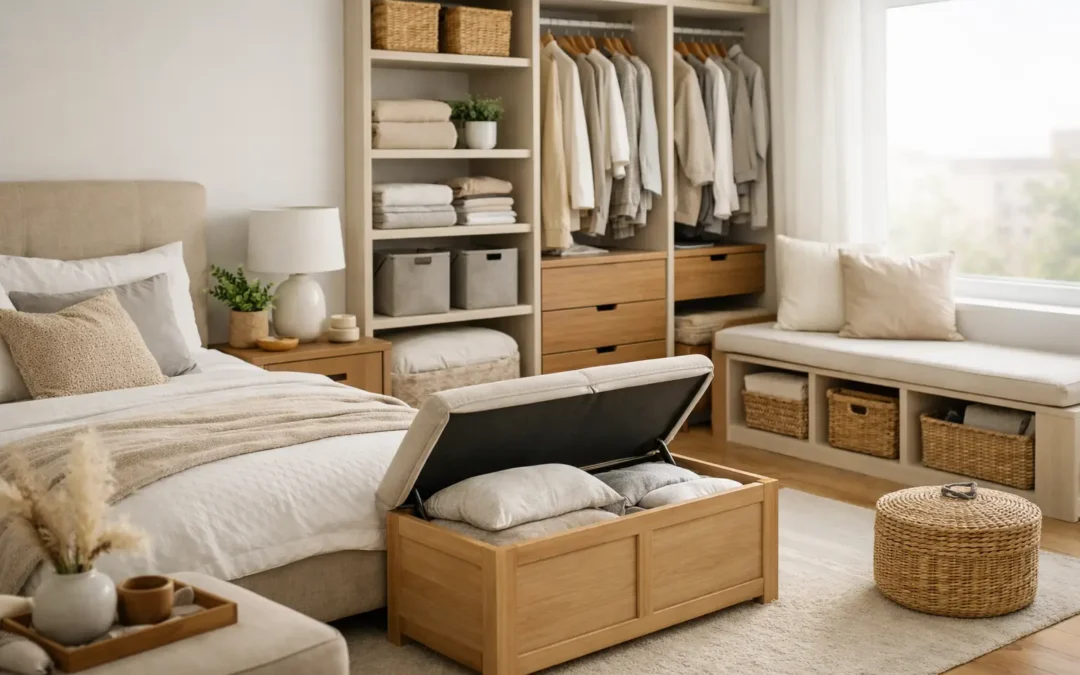
A bedroom should not feel like the place where clean washing waits to be folded, suitcases gather dust and clothes spill out of every drawer. The best bedroom storage ideas do more than hide clutter. They make busy mornings easier, protect the clothes and belongings you value, and give the whole room a calmer, more finished feel.
For most homes, the answer is not simply adding another chest of drawers. It is using the full shape of the room properly: the height above eye level, the depth beside a chimney breast, the space below a window and the corners that standard furniture rarely fits. A well-planned fitted solution can turn those overlooked areas into useful storage without making the bedroom feel crowded.
Best bedroom storage ideas that use every inch
1. Take wardrobes to the ceiling
The gap above a freestanding wardrobe is often wasted space and a magnet for dust. Floor-to-ceiling wardrobes give you a clean built-in appearance while creating room for seasonal bedding, holiday luggage and less frequently used items at the top.
The key is to divide the inside according to how you live. Everyday clothes should sit within easy reach, while upper cupboards can handle the items you only need a few times a year. In rooms with high ceilings, a fitted wardrobe makes far better use of the height than a standard retail unit ever could.
2. Design the inside before choosing the doors
A wardrobe can look impressive from the outside and still be frustrating every morning if the interior is poorly organised. Before deciding on colours, handles or door style, consider what needs to live inside it: long dresses, suits, folded knitwear, shoes, bags, jewellery, laundry and perhaps a vacuum cleaner.
A practical layout usually combines double hanging for shirts and trousers with a full-height section for longer garments. Drawers keep smaller items contained, adjustable shelves allow for changing needs, and pull-out shoe storage stops footwear taking over the floor. Bespoke interiors are valuable because the proportions can be built around your actual wardrobe rather than an assumed one.
3. Build storage around awkward architecture
Sloping ceilings, alcoves, chimney breasts and uneven walls can make a bedroom feel difficult to furnish. They are also where fitted furniture earns its keep. A made-to-measure wardrobe can follow the line of an eave, fill an alcove precisely or create useful depth either side of a chimney breast.
This approach avoids the familiar compromise of buying a unit that is almost right, then losing valuable inches around it. It also makes the room look more intentional. Rather than treating an awkward feature as a problem to work around, it becomes part of a cohesive storage wall.
4. Use the space beneath the bed properly
Under-bed storage is one of the simplest ways to gain capacity in a smaller bedroom, particularly when wardrobes are already full. Ottoman beds provide a large concealed compartment for spare duvets, pillows and out-of-season clothing. Divan bases with drawers can be useful too, although the drawers need enough clearance to open comfortably.
A fitted bed surround can take this further, with integrated drawers or lift-up storage designed to suit the room. The trade-off is access: items stored beneath the bed should be things you do not need every day. Keep regular-use belongings elsewhere so the room remains easy to manage.
5. Add a window seat with hidden storage
A window seat can turn an unused stretch of wall into a useful feature, especially in a bay window or beneath a wide sill. With hinged lids or drawers below, it becomes a practical home for extra blankets, books, children’s toys or spare linen.
It also offers something freestanding furniture cannot always provide: a place to sit without sacrificing floor space. Finish it with a made-to-measure cushion and it can soften the room while adding valuable storage in plain sight.
Storage ideas that make a bedroom feel larger
6. Choose sliding doors where space is tight
Hinged wardrobe doors need room to open, which can be inconvenient in narrow bedrooms or where the bed sits close to the wardrobe. Sliding doors keep the walkway clear and can create a sleek, uninterrupted finish across a long wall.
Mirrored panels can help reflect light and remove the need for a separate full-length mirror. However, they are not the right choice for every room. Hinged doors allow you to see the entire wardrobe interior at once and often offer more freedom for internal fittings on the back of the door. The best option depends on the room’s layout and how you prefer to use the space.
7. Create a fitted dressing area
A dressing table, drawer unit and wardrobe do not need to be separate pieces competing for space. A fitted dressing area can combine a seated vanity, well-lit mirror, jewellery drawers and surrounding wardrobe storage in one continuous design.
This is particularly useful in a main bedroom where surfaces tend to collect skincare, accessories and everyday items. Purpose-built drawers with dividers keep those smaller belongings orderly, while a dedicated dressing area stops the bedside table becoming a catch-all.
8. Fit shelves into alcoves
Open shelving in an alcove can bring character to a bedroom, giving books, framed photographs and carefully chosen decorative pieces a proper home. Lower cupboards or drawers beneath the shelves provide the concealed storage needed for less attractive essentials.
Balance matters here. Too many open shelves can make a bedroom feel busy, especially if they become a dumping ground. Use them for a limited number of items you genuinely enjoy seeing, and allow closed storage to do the harder work.
9. Make use of the wall behind the bed
The wall behind the bed is often left bare apart from a headboard, yet it can support a surprising amount of useful storage. A fitted headboard wall might include shallow bedside cabinets, integrated reading lights, shelving and overhead cupboards, all designed around the bed position.
This works best when the design stays proportionate. Deep cabinets over the bed can feel imposing, whereas shallower units, carefully positioned, provide storage without overwhelming the sleeping area. A painted finish in the same colour family as the walls can help the furniture sit quietly within the room.
10. Replace mismatched furniture with one fitted run
Bedrooms often become cluttered because storage has been added piece by piece: one wardrobe, then a chest, then another drawer unit, then storage boxes. The result can be plenty of furniture but poor capacity and little sense of order.
A single fitted run can combine wardrobes, drawers, shelving and a dressing table along one wall. It creates more usable internal storage because there are no wasted side gaps, while the clear floor space makes the room appear larger. It is a considered investment, but for a long-term home it can offer far more value than repeatedly replacing furniture that never quite fits.
Details that make storage work harder
11. Plan for laundry, linen and the everyday overflow
The most successful bedrooms account for real life, not just hanging space. Include a pull-out laundry basket if clothes tend to collect on the floor, and reserve a shelf or cupboard for fresh bedding rather than storing it in another room. A narrow vertical compartment can accommodate an ironing board, while a dedicated drawer for chargers and cables keeps bedside areas tidier.
Think about the journey of an item through the room. If getting dressed, undressing and putting washing away each require several steps, clutter will return. Storage should support your routine, not ask you to change it.
12. Use colour and finishes to create calm
Storage has a major visual presence, so its finish matters as much as its capacity. Soft painted tones can make a larger wardrobe feel integrated with the walls, while warm wood finishes add depth and texture. Handleless doors suit a more contemporary scheme; framed doors and considered handles can bring a classic look to a period property.
A bespoke finish also gives you the freedom to match existing décor rather than settling for a limited showroom range. The aim is not to make every surface disappear, but to ensure the storage belongs to the room.
Start with the room, not the furniture
Before buying anything, measure the room carefully and note radiators, plug sockets, window openings, skirting boards and door swings. More importantly, take stock of what you need to store. Most people underestimate how much space is lost to bulky bedding, shoes, long clothing and the items that have no designated home.
At WOW Interior Design, we plan fitted bedrooms around those practical details as well as the finished appearance. A free design visit provides the opportunity to assess the room properly, discuss finishes and develop storage that suits the way your household lives.
The right bedroom storage should feel almost effortless once it is in place. When every item has a sensible home and the furniture fits the room exactly, a calmer start and end to the day follows naturally.