

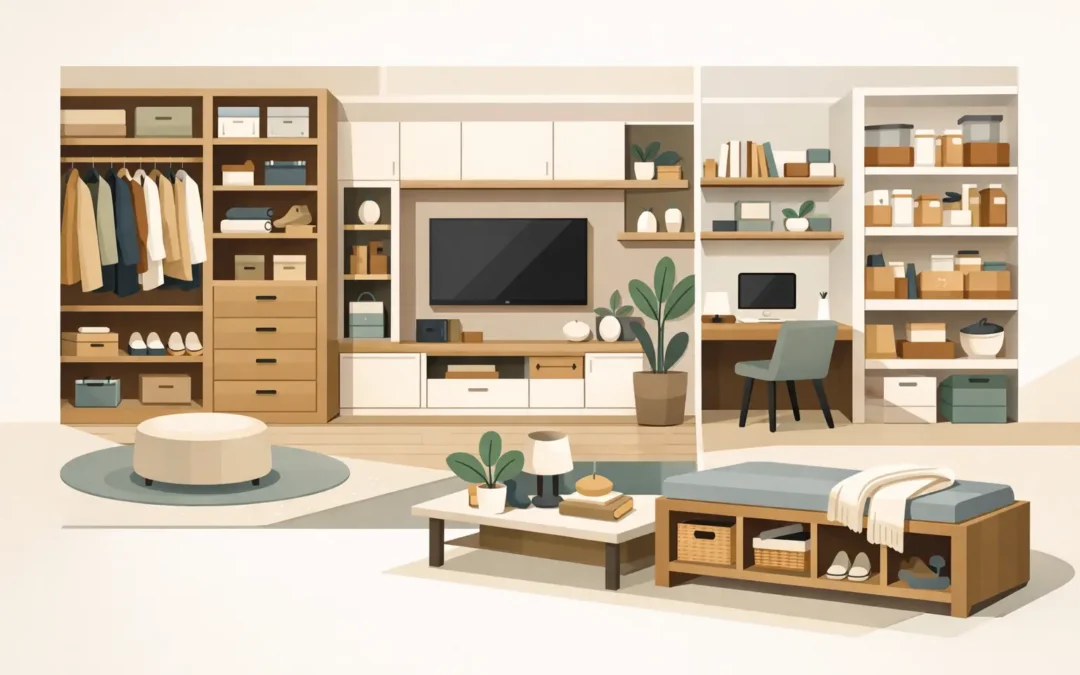
The problem with most storage is not that there is too little of it. It is that it is the wrong shape, the wrong depth, or sitting in the wrong place. A good bespoke storage solutions guide starts there – with the reality of how people live in their homes, and how fitted design can turn wasted corners, awkward alcoves and cluttered rooms into practical, well-finished spaces.
Off-the-shelf furniture has its place, but it asks you to adapt your room around fixed sizes and standard layouts. That is fine until you are dealing with sloping ceilings, chimney breasts, uneven walls or a bedroom that needs to work far harder than a simple chest of drawers ever will. Bespoke storage does the opposite. It is built around the room, the household and the way you actually use the space.
What bespoke storage really means
Bespoke storage is not just shelving cut to size. Done properly, it is a tailored design solution that balances capacity, access, finish and visual impact. It should solve a practical problem first, then improve the room as a whole.
That might mean a fitted wardrobe that uses the full height of the ceiling, a home office wall that hides paperwork and cables, or living room cabinetry that frames a media area without feeling bulky. In some homes, the biggest win is simple organisation. In others, it is creating a calmer, more polished interior where everything has a place.
The benefit is precision. A bespoke unit can be made deeper where you need bulk storage, shallower where circulation matters, and finished to match the character of the room. You are not buying around compromise. You are removing it.
A bespoke storage solutions guide to planning properly
The most successful projects begin with honest questions, not catalogues. Before thinking about door styles or paint colours, it helps to look at what is not working now.
Are clothes split between three rooms because wardrobe space is poor? Is the spare bedroom doing too many jobs at once? Are toys, paperwork or household items creeping into every visible corner? These are not small frustrations. They tell you exactly where a fitted solution will earn its keep.
Then consider the room itself. Ceiling height, natural light, access routes and architectural features all matter. A unit that looks generous on paper can feel heavy in a narrow room if the proportions are wrong. Equally, a wall of storage can look elegant and intentional when it is designed to sit neatly within the architecture rather than fighting it.
This is where design experience matters. Good bespoke storage is not about adding as many cupboards as possible. It is about knowing where open shelving will lighten the look, where closed storage will keep things calm, and how to make the whole room feel more usable.
Start with use, not appearance
It is easy to focus on style too early. Painted finishes, handles and panel details are important, but they come after function. The right internal layout will depend on what is being stored and who needs daily access to it.
A wardrobe for one person may need more hanging space than drawers. A family hallway may benefit more from concealed shoe storage, charging points and a bench than from decorative shelving. A home office may need a combination of filing, printer housing and display space that keeps work practical without making the room feel too corporate.
When function leads, the final design tends to look better as well. Rooms feel calmer when the storage works hard in the background.
Think about the room in five years, not five weeks
One of the biggest advantages of fitted storage is longevity. Because it is made for the space, it should continue to work as needs change. Children grow, working patterns shift, and spare rooms often become multi-use spaces.
That does not mean trying to predict every future detail. It means avoiding layouts that are too narrow in purpose. Adjustable shelving, a sensible mix of hanging and folded storage, and cabinetry that can adapt to changing routines usually give better value over time than a highly specific design that dates quickly.
Where bespoke storage makes the biggest difference
Bedrooms are the obvious place to start, particularly where freestanding wardrobes leave dead space above and at the sides. Fitted wardrobes use the full footprint properly and can include a far better mix of rails, drawers, shelving and hidden compartments than most standard pieces.
Alcoves are another common opportunity. They often end up with mismatched furniture because standard sizes rarely fit neatly. Purpose-built cabinetry can turn them into useful storage while making the room feel balanced.
Home offices are now one of the most rewarding spaces to get right. People do not just want a desk pushed against a wall. They want a room that supports work, keeps equipment organised and still feels like part of the home. Bespoke joinery can hide cables, provide proper storage and maintain a polished look.
Hallways, utility areas and under-stairs spaces also deserve more attention than they usually get. These are the pressure points of a home, where clutter builds quickly. A fitted solution here often has an outsize impact on daily life because it solves practical mess at source.
Materials, finishes and why they matter
A bespoke design should look good on installation day, but it also needs to stand up to real use. Material choice affects durability, appearance and budget, so this is one area where practical guidance matters.
Painted finishes are popular because they offer flexibility and a tailored look. When done well, they can tie storage into the wider room scheme rather than making it feel like an afterthought. The ability to choose any colour also helps when matching period details or creating a softer, more architectural feel.
Woodgrain finishes, textured panels and mixed materials can work beautifully too, especially in studies, dressing rooms or contemporary living spaces. The right choice depends on the room, the amount of natural light and how formal or relaxed you want the space to feel.
There are trade-offs. High-gloss finishes can reflect light well in darker rooms, but they show marks more readily. Deep colours can look striking, but in small rooms they need careful balancing with proportion and lighting. Premium materials cost more, yet they usually reward that investment in lifespan and finish quality.
Why measuring and installation are not small details
Many storage projects look straightforward until walls, floors and ceilings prove otherwise. Very few homes are perfectly square, and older properties in particular can hide plenty of quirks. That is why accurate measuring and experienced installation are central to the result, not an add-on.
A well-made fitted unit should sit cleanly, open properly and feel integrated into the room. Gaps, misaligned doors and awkward finishes spoil the look quickly. Professional fitting also keeps disruption under control. For homeowners, that matters just as much as the final appearance.
A tidy, courteous team with a clear process gives confidence from the first visit to the last adjustment. It means fewer surprises, better detailing and a finish that looks considered rather than pieced together.
How to judge whether bespoke storage is worth it
The honest answer is that it depends on the room and on what is frustrating you now. If a cheap freestanding unit will solve the issue, there is no need to overcomplicate it. But where space is awkward, storage demand is high, or the room needs to look cohesive, bespoke usually gives a far stronger result.
It is worth weighing more than the initial cost. Consider how much floor space you are losing to furniture that does not fit, how much visual clutter the room carries, and whether poor storage is affecting daily routine. In many cases, fitted solutions add value because they improve both function and finish at the same time.
For homeowners planning longer-term upgrades, bespoke storage also tends to sit better with the property. It feels intentional. It belongs there.
Choosing the right design partner
A good supplier should be able to do more than offer attractive ideas. They should understand construction, proportion, installation and the practical demands of the household. That combination matters because the best fitted interiors are creative and disciplined in equal measure.
Look for a process that includes design consultation, home measuring, clear quotations and professional installation. Ask how the internal layouts are developed, how finishes are chosen and what happens if site conditions change. Straight answers are a good sign.
If you are investing in a tailored solution, the service should feel tailored too. That is where an experienced company such as WOW Interior Design stands apart – not simply by making furniture to fit, but by shaping each project around the room, the client and the standard of finish expected in a well-cared-for home.
The right storage does more than hide clutter. It changes how a room works, how it feels to use, and how confidently it supports everyday life. If a space in your home is underperforming, that is usually the cue to stop forcing standard furniture to cope and start designing something that fits properly.