

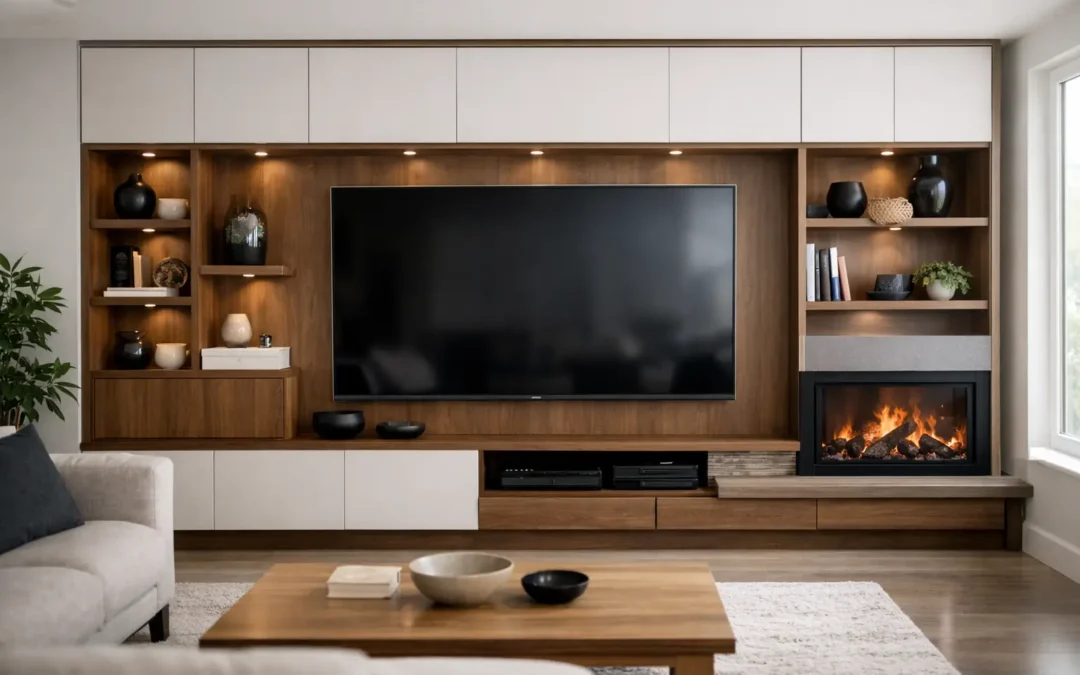
A television wall can easily become the busiest part of the room for all the wrong reasons. Cables creep into view, consoles pile up, remotes go missing and shelves end up carrying everything except what you actually want to display. Bespoke media wall storage solves that problem properly by giving each item a planned home, while turning the whole wall into a feature that looks considered rather than improvised.
For many homeowners, the real appeal is not just the television itself. It is the chance to make the room calmer, smarter and easier to live with. A well-designed media wall should do more than hold a screen. It should support how you use the room every day, whether that means family film nights, neat storage for games and tech, or a more refined living space that does not feel dominated by black boxes and trailing wires.
Why bespoke media wall storage makes such a difference
Off-the-shelf furniture usually asks you to work around it. A bespoke fitted design does the opposite. It is built around your room dimensions, your technology, your storage needs and the style of your home.
That matters more than people often expect. Alcoves are rarely perfectly even. Chimney breast walls can leave awkward side spaces. New-build homes may need a cleaner, more architectural look, while period properties often suit something softer and more in keeping with existing features. Standard units do not respond well to any of that. They fill part of the space, waste the rest and often leave the wall looking disconnected.
With bespoke storage, every section has a job. The television can sit at the right height for comfortable viewing. Shelving can be balanced around it. Cupboards can hide routers, boxes and everyday clutter. Drawers can be sized for specific items rather than whatever happened to fit the carcass of a shop-bought unit. The finished result feels built into the room because it is.
What should a bespoke media wall storage design include?
The best answer is: only what you need. Some media walls are highly decorative, with open shelving, display lighting and statement finishes. Others are deliberately understated, with clean lines and hidden storage doing most of the work. Neither approach is better by default. It depends on the room and on how you live.
Most successful designs start with a few practical questions. What needs to be stored? Which items should stay accessible? Do you want the television to dominate the wall or sit more quietly within the joinery? Is the aim to create a focal point, or to reduce visual clutter? These decisions shape everything from proportions to door styles.
In practical terms, bespoke media wall storage often combines open shelves, closed cupboards and concealed cable management. If you use a soundbar, games console, streaming box or speaker system, those need to be planned from the outset. Ventilation matters too. Some equipment cannot simply be shut behind a door without airflow being considered.
Lighting can also make a big difference, but it needs a steady hand. Subtle LED lighting inside shelves or around panelling can add warmth and depth. Too much, and the wall starts to feel overworked. A fitted media wall should still feel like part of a home, not a showroom set.
Style matters, but function comes first
The strongest media wall designs do both jobs at once. They look impressive, but they also make daily life easier. That balance is where bespoke work proves its value.
For example, handleless doors can give a streamlined look, but in a busy family room they need to be practical to open and durable enough for regular use. Painted finishes offer enormous flexibility and can be matched to the room beautifully, but some households may be better served by finishes that are more forgiving of fingerprints and knocks. Open shelving looks elegant in a design sketch, yet if you need to hide plenty of everyday items, too much open display space can quickly become another surface to manage.
This is why good design is never just about copying a photo. A media wall has to suit the property, the household and the way the room actually functions. A strong fitted furniture company will guide that conversation rather than simply asking you to pick a style and hope for the best.
Bespoke media wall storage for awkward spaces
Some of the best results come from rooms that are hardest to furnish with standard pieces. Alcoves, sloping ceilings, uneven walls and rooms with limited floor space all benefit from fitted solutions.
A media wall can turn alcoves into useful storage instead of dead space. One side might house books and display shelving, while the other discreetly stores household items that would otherwise live in baskets or on sideboards. In smaller rooms, taking storage vertically can free up floor area and make the space feel less crowded.
There is also a strong case for fitted storage in open-plan layouts. In those rooms, the media wall often needs to do several jobs at once. It may need to anchor the sitting area, soften a large plain wall and provide enough closed storage to keep the whole space feeling tidy. Off-the-shelf furniture rarely gives that level of control.
Materials, finishes and the feel of the room
The material choices behind a media wall affect more than appearance. They influence durability, maintenance and how premium the final installation feels.
Painted cabinetry remains a popular choice because it allows complete freedom on colour. That means the media wall can blend with existing joinery, contrast with wall colours or become a clear design feature in its own right. Woodgrain finishes can bring warmth and texture, while panelling details can add character without making the design feel heavy.
There is always a balance to strike. Dark colours can look striking and sophisticated, especially in larger rooms with good natural light, but they may feel too dense in a compact space. Pale tones can keep a room airy, though they sometimes need extra detailing to avoid looking flat. The right answer depends on the architecture of the room and the atmosphere you want to create.
This is where a made-to-measure approach earns its place. The proportions, shelving widths, frame details and finishes can all be adjusted so the wall feels settled and intentional, not oversized or visually busy.
The value of a professionally planned installation
A media wall may look simple once finished, but getting it right takes proper planning. Measurements need to be exact. The position of sockets and services matters. The specification has to account for the size of the television, future access to wiring and the practical reality of installation in an occupied home.
That is why a full design and fitting service is often the smarter route. It removes guesswork and reduces the risk of expensive compromises halfway through the project. Professional installation also means the finished wall sits neatly, doors align properly and every section works as intended.
For homeowners in Kent and across the South of England, that level of service can make the whole process far more straightforward. Instead of trying to piece together trades, measurements and furniture choices yourself, you get a fitted solution designed around the room from the beginning.
Is bespoke media wall storage worth it?
If all you need is somewhere to place a television, probably not. A simple unit may do the job. But if you want the wall to look polished, store more, hide clutter and make better use of the room, bespoke is a different proposition entirely.
It is an investment in both appearance and function. You are not just buying cabinetry. You are improving how the room works and how it feels to spend time in it. For many households, that pays off every day in a space that stays tidier, looks better and does not rely on makeshift storage elsewhere.
The key is making sure the design is genuinely tailored rather than simply dressed up as bespoke. Good fitted furniture should respond to your room, not force your room to fit a standard formula.
A well-made media wall should look like it belongs there and make the rest of the room feel easier. When storage is planned properly, the technology fades into the background, the clutter disappears and the whole space starts working harder for you. That is usually the point where a living room stops feeling half-finished and starts feeling right.