

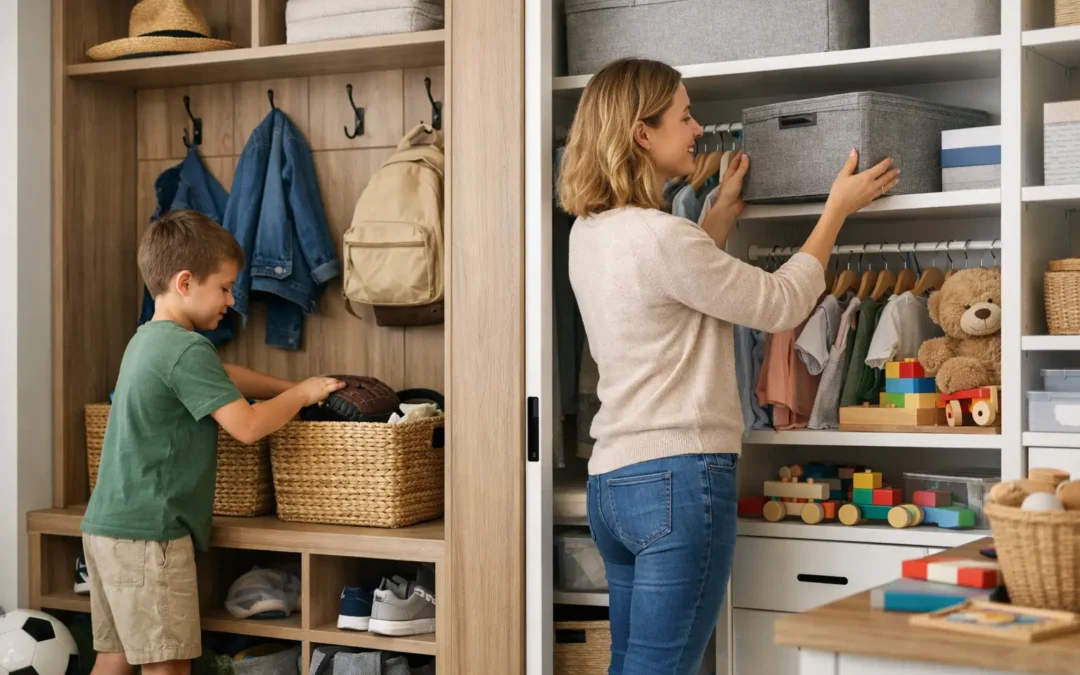
A family home rarely becomes cluttered because there is not enough storage in total. More often, it is because the storage is in the wrong place, difficult to use, or unable to keep pace with changing routines. The most useful custom storage trends for families are not about filling every wall with cupboards. They are about giving everyday items a proper home, making rooms easier to live in and keeping the finished interior calm rather than clinical.
For homeowners investing in fitted furniture, the direction is clear: choose storage that looks considered, works hard and can adapt as children grow, hobbies change or a spare room takes on a new role. A bespoke solution makes this possible because it is designed around the people using it, not around a standard unit size.
Custom storage trends for families: flexibility first
The strongest trend is flexible storage. A child’s bedroom that works perfectly at six will need something different at sixteen. The same applies to a dining room that doubles as a homework station, a guest room that becomes a home office, or a hallway that has to manage school bags, coats, shoes and sports kit every weekday.
Rather than choosing furniture for one fixed moment, families are increasingly asking for layouts with adjustable shelves, a mix of hanging heights and drawers that can be reassigned as needs change. In a fitted wardrobe, for example, lower rails can suit younger children now, then be altered later to create more long hanging space. Deep drawers may begin as toy storage and eventually hold folded clothing, study supplies or bedding.
This does not mean every cabinet needs to be endlessly reconfigured. Too much flexibility can add cost without improving daily use. The right approach is to make the areas most likely to change adaptable, while keeping the core structure strong, neat and tailored to the room.
Rooms with more than one job
Families want their homes to work harder without feeling like every room has become an office or storage cupboard. This has increased demand for fitted interiors that conceal practical functions when they are not needed.
A living room may need a low run of cabinetry for games consoles, books and board games, with cable management built in so the space still feels tidy. A dining area can include a fitted sideboard that stores paperwork, craft materials and serving pieces behind matching doors. In a bedroom, a desk can sit within a run of wardrobes and shelving, creating a dedicated study spot without adding freestanding furniture that crowds the floor.
The key is to plan the use of the room before deciding on the look. Where are bags dropped after school? Does homework happen at the kitchen table, or does it need a quieter corner? Are toys played with downstairs and put away each evening? Honest answers produce far better storage than simply adding more shelves.
The return of the proper family hallway
The hallway is becoming a priority because it is where much of the visible daily clutter begins. A tailored boot-room-style arrangement can turn an awkward entrance, utility room or under-stairs area into an organised arrival point. Tall cupboards keep coats out of sight, while open niches or lower compartments give each family member a place for shoes, bags and the items needed for the next morning.
For busy households, this is less about copying a show-home trend and more about reducing friction. When coats have hooks at the right height and shoes have a defined space, tidying takes seconds rather than becoming another job at the end of the day.
Concealed storage, without losing character
Open shelving has its place, particularly for books, treasured objects and well-used items. But many families are moving away from fully open storage because it demands constant styling and reveals every mismatched toy, charger and pile of papers.
Handleless doors, discreet integrated handles and painted cabinetry are making concealed storage feel lighter and more refined. Full-height fitted cupboards can disappear into the room when finished in the same colour as the walls, while still offering valuable space for household essentials. This is especially effective in alcoves, loft rooms and bedrooms where a collection of freestanding units can make the room feel fragmented.
There is a balance to strike. Completely closed storage can make it harder for children to find and put away their own belongings. A practical family scheme often combines closed cupboards for visual calm with a small number of open cubbies, display shelves or labelled drawers for the items that need easy access.
Storage designed around real belongings
Generic storage usually assumes generic possessions. Bespoke fitted furniture starts with a more useful question: what exactly needs to live here?
For one household, the answer may be bulky pushchairs, dog leads and walking boots. For another, it is musical instruments, craft supplies, Lego collections, suitcases or an impressive amount of sports equipment. Deep drawers work well for toys and folded clothes, but they are not the answer for every item. Long coats need hanging height; cleaning equipment needs a tall narrow cupboard; school papers benefit from shallow drawers or a dedicated filing section.
This detailed planning is where a professional design visit adds real value. Measuring the room matters, but understanding the household matters just as much. A design should account for radiator positions, sloping ceilings, sockets, doors and access, then use the remaining space intelligently. The goal is not simply to fit more in. It is to make the right things easier to reach.
Under-used spaces are earning their keep
Under-stairs storage continues to be one of the most practical upgrades for family homes. A fitted solution can use the changing depth beneath the staircase far more effectively than a single standard cupboard. Depending on the location, it can house coats and shoes, cleaning supplies, a compact study area, pet essentials or pull-out drawers for everyday household items.
Alcoves are another opportunity. Purpose-made cabinetry can turn them into bookcases, media units, wardrobes or shallow cupboards without wasting the depth of the wall. In smaller Kent homes, where every square metre matters, these otherwise overlooked areas can make a noticeable difference to how a room functions.
Softer finishes and furniture that belongs in the room
Family storage no longer needs to look purely functional. Current schemes favour warmer painted finishes, natural wood textures, fluted details and calmer, more layered colour choices. Soft greens, warm neutrals, muted blues and rich earthy tones can make fitted cabinetry feel like part of the architecture rather than an added unit.
The best finish depends on light levels, room size and the wider interior. Darker colours can give a large room depth and character, but may feel heavy in a narrow hallway with little natural light. Pale finishes can brighten a compact bedroom, though an all-white scheme can be less forgiving in a high-traffic family area. Painted bespoke furniture offers useful freedom here, allowing the colour to be selected around the room rather than from a limited retail range.
Durability should sit alongside appearance. Doors, drawers and handles in a busy home are used constantly. Well-made fittings, practical surfaces and professional installation protect the investment and help the room continue to look good after the novelty has worn off.
Make independence part of the design
One of the most effective family storage ideas is also one of the simplest: design some of it for children to use themselves. Low drawers, accessible shelves and clearly divided sections encourage them to put away clothes, books and toys without needing an adult to reach everything.
This does not require a childish-looking room. A well-planned fitted wardrobe or bedroom unit can include lower storage for everyday use and higher cupboards for seasonal clothing, spare bedding or items that need adult supervision. As children get older, the layout remains useful rather than needing to be replaced.
Choose tailored storage over a passing look
Trends can be helpful when they solve a genuine problem, but they should not dictate every decision. A dramatic finish may look impressive online yet be wrong for a dark room. Open shelving may suit a carefully curated library, but not a family space where life happens quickly. The best custom storage is always the solution that matches the room, the routine and the people who use it.
At WOW Interior Design, the process begins with understanding how a household lives before developing a fitted solution that makes the most of the available space. With thoughtful planning, quality materials and a finish chosen for your home, storage can bring order to the busiest rooms without taking away their warmth. The most successful scheme is the one that makes everyday family life feel just that little bit easier.