

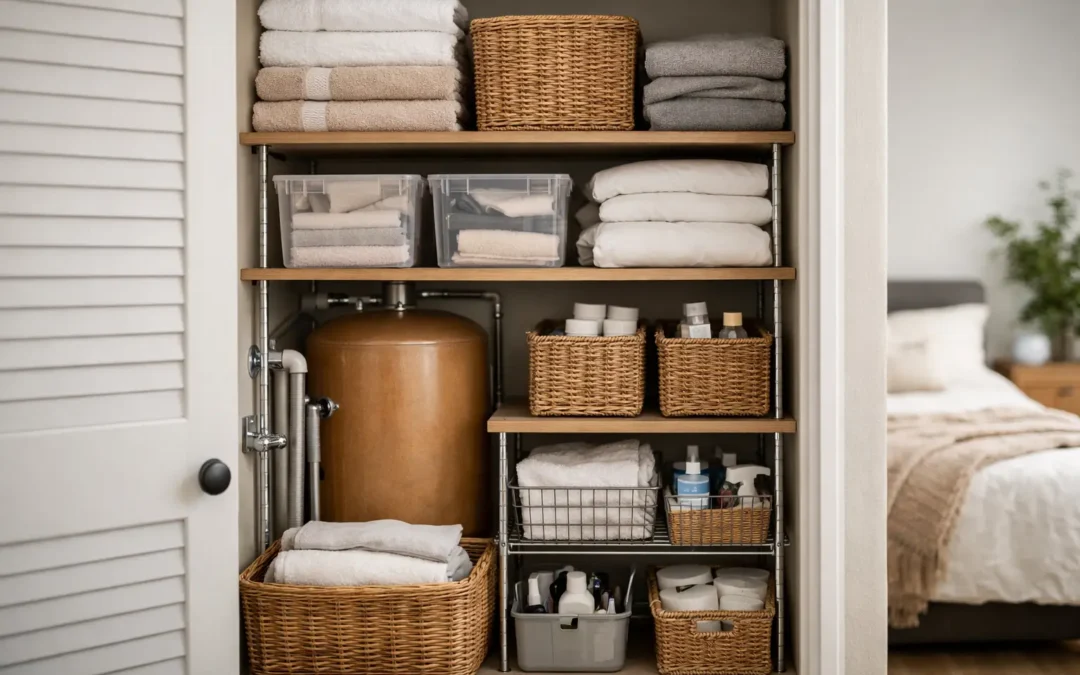
An airing cupboard can become the place where clean linen disappears behind a leaning stack of towels, spare duvets and half-used toiletries. The right top airing cupboard storage approach changes that completely, turning a warm but awkward service space into an orderly part of the home without compromising access to pipes, tanks or controls.
The best solution is rarely a case of adding more shelves wherever they will fit. Airing cupboards vary hugely, particularly in older Kent homes, and their contents matter. A cupboard housing a hot-water cylinder needs a different design from one containing a modern boiler or simply a useful run of warm shelving. Careful measuring, sensible zoning and made-to-measure joinery create storage that works around the services rather than fighting them.
Start with safety, access and ventilation
Before choosing baskets, shelves or cabinetry, establish what the cupboard contains and what must remain clear. Boilers, cylinders, valves, pumps, electrical controls and pipework must be easy to reach for servicing or in an emergency. They also need the clearances and ventilation specified by their manufacturer and installer.
This is why a fully enclosed fitted unit is not automatically the right answer. In some cupboards, open shelving around the perimeter is the most practical layout. In others, a removable or neatly designed access panel can conceal pipework while keeping it available. The aim is a smart, finished look that never makes maintenance difficult.
Heat is another consideration. While gentle warmth suits towels and bedding, it is not ideal for every item. Avoid storing aerosols, candles, batteries, delicate electronics, medicines or cleaning products that may be affected by heat. If a cupboard is very warm, breathable cotton or wire storage is usually preferable to sealed plastic boxes, which can trap moisture and create a stale smell.
If you are unsure what is safe to store, ask a qualified heating engineer about the appliance and then plan the storage around their advice. Good design begins with respecting the practical limits of the space.
Measure the cupboard you actually have
Airing cupboards often look straightforward until you measure them. A cylinder may project into the centre, pipes may run down one wall, and the door opening can be much narrower than the cupboard itself. Record the internal width, depth and height, but also note the door swing, skirting, any shelves you want to retain, and the usable space either side of the equipment.
Do not overlook the upper section. The area above a cylinder or boiler enclosure can be exceptionally useful for bulky, low-use items, provided safe access and required clearances are maintained. Deep duvets, guest bedding and seasonal towels belong here far more naturally than the everyday bath sheets you reach for twice a week.
A bespoke survey is particularly valuable where walls are uneven, ceilings slope or pipework prevents standard furniture from sitting square. Rather than losing valuable inches to gaps and compromises, fitted storage can be shaped to the room and finished to match the rest of your interior.
Top airing cupboard storage ideas that work harder
The most successful cupboards use zones. Everyday linen should sit between waist and eye level, where it can be lifted out without disturbing the whole stack. Reserve the lowest area for heavier items and the highest shelves for occasional use. This simple arrangement makes a modest cupboard feel calmer from the first day.
Adjustable shelves for changing household needs
Fixed shelves can be useful, but adjustable shelving offers more long-term value. Household storage changes with children, guests, hobbies and seasons. A shelf height that suits neatly folded towels today may not work when you add thick winter bedding or a larger family laundry supply.
Shallower shelves are often better than one very deep shelf. They prevent towels being pushed to the back and forgotten, while making each pile easy to see. Where depth cannot be avoided, pull-out baskets or labelled fabric containers bring contents forward without the visual heaviness of a large plastic crate.
Pull-out baskets for laundry and linen
Ventilated pull-out wire baskets are a practical choice for face cloths, pillowcases and smaller items that do not stack well. They make use of narrow areas beside a cylinder and allow air to circulate. Soft-lined pull-outs can offer a more refined look for spare toiletries or cleaning cloths, but should only be used where heat and humidity are suitable.
For a family bathroom arrangement, consider separate baskets for each person’s towels or for clean and ready-to-wash linen. It removes the need to rummage and makes putting laundry away quicker. The small improvement is often what keeps a cupboard organised after the initial clear-out.
A dedicated tall section for ironing essentials
An ironing board, drying rack, vacuum attachments or mop handles can make an airing cupboard feel impossible to manage. A slim vertical bay with a secure retaining strap provides a proper home for these pieces, rather than balancing them against shelves. It is especially helpful in homes without a utility room.
This section needs thoughtful positioning. Keep it away from controls, avoid blocking access routes and ensure that the door can close without catching handles or hinges. A made-to-measure design allows the tall bay to be only as wide as it needs to be, leaving more room for useful shelves.
Doors that make a busy cupboard look settled
If the airing cupboard opens onto a hallway or landing, a well-finished door makes a real difference. A plain, tired door can be replaced or complemented with a style that matches fitted wardrobes, bedroom furniture or wall panelling nearby. Internally, the joinery does the hard work; externally, the cupboard becomes part of a considered home rather than a necessary eyesore.
However, attractive doors should never conceal a poor layout. If access is tight, bi-fold or carefully specified hinged doors may be more practical than a single door that blocks a landing. This is one of those details where the right choice depends on the room, not a standard product range.
Choose materials that suit warmth and everyday use
Airing cupboard shelving has a hard-working life. Towels are heavy, bedding is bulky and humid air can be a factor. Use durable, properly supported shelving rather than thin boards that bow over time. Quality edging and a wipe-clean interior finish also help the space stay fresh and easy to maintain.
Colour can be used quietly but effectively. A pale painted interior brightens a deep cupboard and makes finding white linen easier, while a darker basket or shelf trim can create useful visual definition. For homeowners investing in several fitted areas, matching the cupboard’s finish to a bedroom or utility scheme creates a more cohesive result.
There is a balance to strike between maximum storage and airflow. Filling every gap with tightly packed cabinetry may look efficient on a plan, but can make everyday use frustrating and may be unsuitable around heating equipment. The best designs leave room to reach, clean and maintain what sits behind the shelves.
Avoid the common airing cupboard mistakes
Overloading shelves is a frequent problem. Linen looks light, but several piles of bath towels soon add substantial weight. Use sensible shelf spans and adequate supports, particularly on wide runs. It is also worth resisting the temptation to store everything there simply because the cupboard is warm.
Another mistake is relying on identical storage boxes for every category. Uniform containers can look neat, but a deep lidded box is inconvenient for towels used daily. Open baskets, folded stacks and labelled boxes each have a place, depending on how often the contents are needed.
Finally, do not permanently box in services without a clear access plan. A heating engineer should not have to dismantle your storage to carry out a routine visit. Purpose-designed removable panels and considered clearances protect both the look of the cupboard and the practical running of your home.
When bespoke storage is worth considering
Off-the-shelf shelving is an affordable answer for a simple, empty recess. But if the cupboard has awkward pipework, an unusual depth, a boiler, a cylinder or a narrow entrance, standard units often waste the most useful space. They can also make access harder rather than easier.
Bespoke fitted storage is worthwhile when you want every section to have a purpose: shelves sized for your own linen, pull-outs placed around obstructions, a tall bay for household equipment and a finish that belongs with the rest of the room. At WOW Interior Design, the process starts with an in-home design visit, so the layout can respond to the real conditions behind the door, not an assumed standard size.
A well-planned airing cupboard should make the everyday jobs feel lighter. When towels are visible, bedding is easy to reach and essential services remain accessible, the cupboard stops being a dumping ground and becomes one of the most useful storage spaces in the house.