

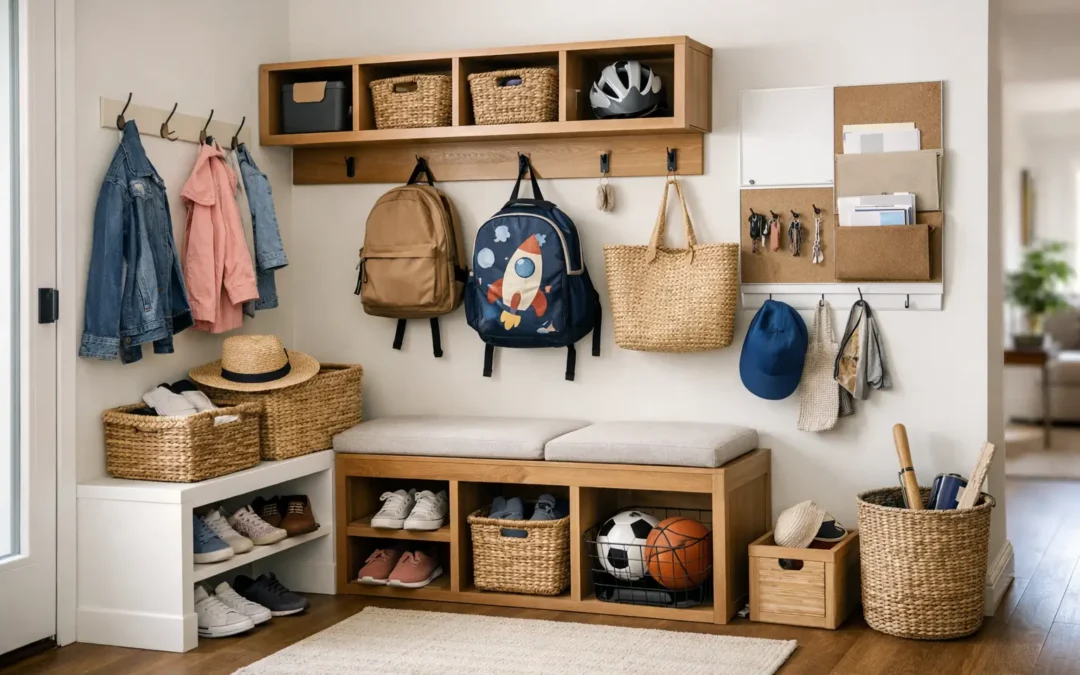
The hallway is where family life tends to land first. School bags are dropped beside the door, shoes gather in pairs and singletons, coats multiply on hooks, and post ends up on the nearest surface. This family hallway organisation project example shows how a fitted storage scheme can turn that daily bottleneck into a calm, useful and smart-looking entrance to the home.
Rather than trying to hide everything in one oversized cupboard, the best result came from giving each type of item a considered place. The hallway needed to work for rushed weekday mornings, muddy weekend walks, guests arriving for dinner and the reality of a family that does not always put everything away perfectly.
The brief: make a narrow hallway work harder
This project concerned a typical family hallway with limited floor space, a busy front door and an underused wall that had previously held a freestanding shoe rack, a coat stand and a small console table. None of the pieces matched, and none provided enough enclosed storage.
The homeowners wanted a more refined look, but practicality came first. They needed room for everyday coats, several pairs of shoes per person, bags, umbrellas, dog-walking essentials and the small items that otherwise disappear when it is time to leave the house. They also wanted a seat for putting shoes on, plus a solution that would not make the passage feel narrower or darker.
The answer was a full-height bespoke hallway unit, designed around the proportions of the space rather than the dimensions of a standard retail cabinet. By using the available wall from floor to ceiling, the storage capacity increased substantially without spreading clutter further into the walkway.
Start with the family routine, not the furniture
A successful hallway is organised around behaviour. Before choosing doors, handles or paint colours, it helps to look closely at what happens between the front door and the rest of the home.
In this case, the household’s items fell into three groups. The first was daily-use storage: coats, school bags, trainers, keys and lunch bags. The second was occasional storage: smarter shoes, spare umbrellas, hats, scarves and shopping bags. The final group was household overflow, including parcels waiting to be returned, batteries, reusable bags and paperwork that needed sorting.
Trying to keep all of these in the same open area would have recreated the original problem. Instead, the design separated them according to how often they were used. The items needed every morning stayed easy to reach. Less attractive or less frequently used belongings went behind closed doors and higher shelves.
This simple distinction is one of the most useful lessons in any family hallway organisation project. Organisation is not about making every item invisible. It is about making the right items accessible while keeping visual noise under control.
The fitted storage layout
The finished design combined tall cupboards, a central bench area and lower shoe storage in one continuous run. It created the appearance of purposeful joinery rather than several separate pieces competing for space.
Tall coat cupboards for seasonal order
At one end, full-height cupboards provided hanging space for the coats not needed that day. Adjustable shelving above and below made room for hats, gloves, waterproofs and out-of-season footwear. Tall doors were especially useful here because they hid bulky items that can quickly make a hallway look untidy.
For families, internal flexibility matters. Children grow, coats get longer, and storage needs change with the seasons. A fixed arrangement can look neat at first but become restrictive later. Adjustable shelves and a sensible mix of hanging space allow the furniture to keep working over time.
An open section for the everyday rush
The centre of the unit included a recessed seating nook with a built-in bench. Open hooks above it gave each family member a practical place for their current coat or bag, avoiding the need to open a cupboard door when everyone is trying to leave at once.
This is a trade-off worth making. Open storage can look less formal than fully enclosed cabinetry, but it is often more realistic for everyday family use. The key is to limit it. A defined recess with a small number of hooks looks deliberate, while hooks scattered across every wall create the impression of permanent overflow.
The bench also gave younger children somewhere stable to sit while changing shoes. Beneath it, deep pull-out drawers held the most frequently worn footwear. Drawers are often more effective than fixed shelves for shoes because the contents can be seen from above, rather than lost at the back of a dark cupboard.
Closed storage for the clutter that builds up
Additional lower cupboards were allocated to bags, umbrellas and dog leads, while a shallow drawer near the entrance became a dedicated home for keys, sunglasses and post. This small detail made a noticeable difference. The hallway no longer relied on a tabletop as a holding area for everything that needed attention.
Where space allows, a charging drawer can also be a useful addition for phones, tablets and portable lights. It depends on the household. Some families prefer devices out of the hallway altogether, while others benefit from one agreed place to charge and collect them before leaving.
Choosing finishes that suit a working hallway
A family entrance needs finishes that look good but can also handle regular contact. Painted fitted furniture offers enormous flexibility, particularly when it is matched to existing wall colours, panelling or joinery elsewhere in the house. For this scheme, a soft neutral tone kept the long unit visually quiet and helped reflect light through the narrow space.
Darker colours can be equally effective, especially in a larger hall with good natural light. They can add depth and make the furniture feel more architectural. In a compact or dim hallway, however, deep shades need balancing with lighter walls, warm lighting or a pale floor so the room does not feel enclosed.
Durable handles, wipeable surfaces and carefully chosen hooks matter as much as the colour. This is not a room for delicate finishes that require constant care. A professional fitted design should account for wet coats, muddy shoes, bags scraping past corners and the occasional rushed departure.
Lighting and details that make it feel considered
Storage solves the practical issue, but the details determine whether the hallway feels welcoming. Integrated lighting within the bench recess or along selected shelves can make the space easier to use on dark winter mornings. It also gives the joinery depth in the evening, rather than leaving a large run of cabinetry looking flat.
A mirror placed above or alongside the bench helps with last-minute checks before heading out. It can also bounce daylight around a confined hall. If the property has period features, the cabinetry can be designed to sit comfortably with them through door style, skirting details and sympathetic panelling. In a more contemporary home, clean lines and discreet handles can create a crisp, understated finish.
The important point is that the storage should feel part of the house. A hallway is the first room residents and visitors experience, so its furniture deserves the same attention as a fitted bedroom or living-room library.
Why bespoke furniture made the difference
Off-the-shelf hallway furniture can be useful in some homes, particularly when a quick or temporary solution is needed. But it often leaves wasted space above, beside or behind the unit, and its internal layout may not suit the items a particular family owns.
Bespoke fitted storage uses the dimensions of the actual hallway, including uneven walls, alcoves, high ceilings and awkward corners. It also allows the balance of drawers, cupboards, shelves and open areas to be decided around the family rather than imposed by a product range.
For homeowners who want a managed result, WOW Interior Design can take that process from an in-home design visit through measuring, design development and professional installation. The aim is not simply to fit more cupboards into a hallway. It is to create storage that looks considered, performs properly and makes the start and end of each day less hectic.
A hallway that stays organised after installation
The furniture provides the framework, but a few household rules help it stay effective. Keep the open hooks for current-use items only, return seasonal coats to the tall cupboards, and reserve the bench drawers for footwear that is genuinely worn each week. A small tray in the key drawer can stop loose change and receipts from taking over.
It is also sensible to leave a little spare capacity. A hallway packed to its absolute limit will quickly overflow when guests arrive, children bring home extra kit or the weather changes. Good organisation allows for real life, rather than demanding perfect behaviour from everyone who walks through the door.
A well-planned hallway gives a family more than a tidy first impression. It gives every departure a calmer start, every homecoming an easier landing place, and the rest of the home a better chance of staying clear.