

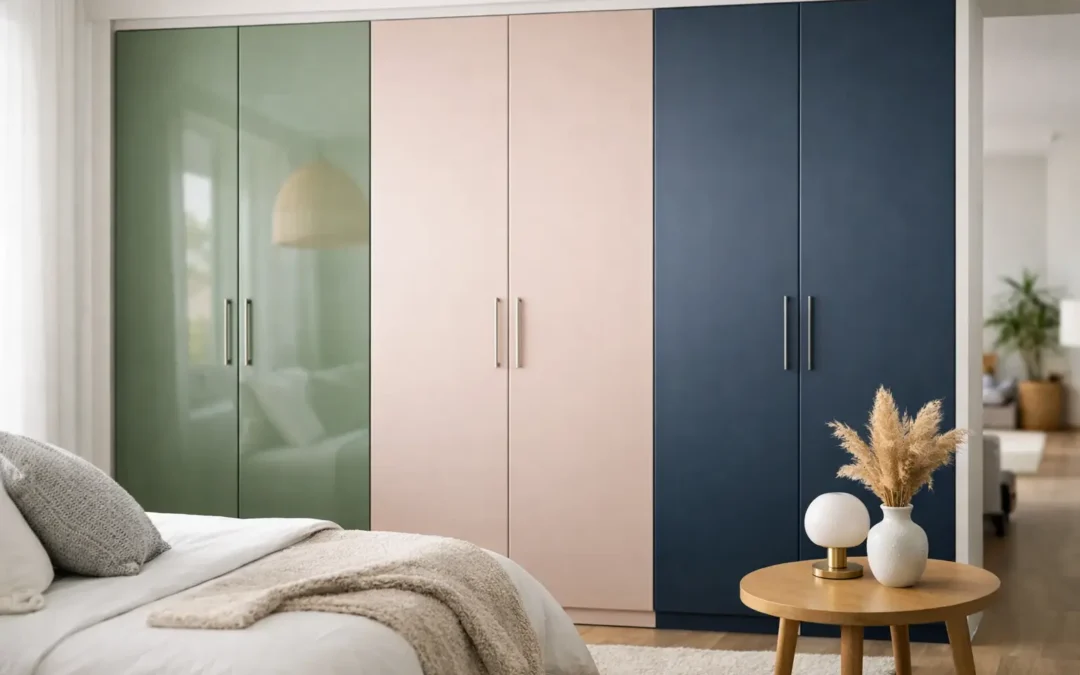
A wardrobe can take up most of a bedroom wall, so its finish has a major say in how the room feels. Custom colour wardrobe doors give you the freedom to make that wall disappear into a calm scheme, add a considered contrast, or tie together colours already used in panelling, fabrics and paintwork. More importantly, a fitted wardrobe can be designed around the way you actually live, rather than asking you to adapt to a standard unit.
For homeowners investing in a bedroom upgrade, colour is not a last-minute decorative choice. It works alongside door style, handles, room proportions and internal storage to create a result that feels properly built for the space.
Why colour makes such a difference in fitted wardrobes
Off-the-shelf wardrobes tend to offer a narrow range of whites, greys and wood effects. Those finishes can work well, but they may not sit comfortably with an existing room. A bespoke painted finish means the wardrobe can complement the exact tone on your walls, pick up a colour from a favourite curtain fabric, or bring definition to an otherwise neutral bedroom.
The practical benefit is just as valuable. A full-height wardrobe is visually substantial. Choosing the right colour helps control that visual weight. In a compact bedroom, doors painted close to the wall colour can make fitted storage feel less dominant, especially when paired with simple shaker or flat-panel fronts. In a large room, a darker blue, green, charcoal or warm earth tone can give the wardrobe real presence and make the room feel more settled.
There is no single best colour. The right choice depends on the available light, the size of the room, the style of the property and whether you want the wardrobes to blend in or become a feature.
Choosing custom colour wardrobe doors with confidence
A paint chart offers plenty of possibilities, which is exciting but can make the decision harder. Start with the role you want the wardrobes to play. Are they there to create a quiet, uncluttered backdrop, or should they add personality to a plain room? Once that is clear, the choice becomes far more straightforward.
Match the walls for a calm, built-in look
Painting wardrobe doors in the same colour as the walls is one of the most effective ways to make a room feel considered and spacious. The doors still deliver valuable storage, but the eye reads the whole wall as one finish rather than a separate piece of furniture.
This approach suits smaller bedrooms, loft rooms and spaces with awkward angles. It can also work beautifully in period homes where you want fitted furniture to look like it belongs to the architecture. A slight change in sheen can retain definition: for example, matt walls with a more durable eggshell-style finish on the doors.
The trade-off is that an exact match requires care. Wall paint and furniture finishes behave differently, and light changes throughout the day. A professional designer will use samples in the room itself rather than relying solely on a small paint card.
Use contrast to give the room structure
A contrasting wardrobe colour can frame a bed wall, anchor a generous bedroom or make a dressing area feel more purposeful. Deep forest green, navy, muted black and rich clay shades are popular for good reason: they bring depth without looking overly decorative when balanced with clean lines and quality materials.
Contrast does not always mean dark. Soft blue-grey against warm white walls, a gentle sage beside natural oak flooring, or a dusty pink in a child’s room can all create a clear but refined distinction. The key is to consider the undertone. A cool grey can look harsh alongside creamy walls, while a warm neutral may clash with bright white trim.
If you are unsure, use the wardrobe colour elsewhere in small amounts. A lampshade, cushion, headboard or painted bedside table can help the finish feel connected to the room rather than isolated on one wall.
Consider natural and artificial light
The same painted doors can look quite different in a north-facing bedroom and a sunny room with large south-facing windows. North-facing spaces often benefit from warmer off-whites, soft greens and colours with a little depth, while very bright rooms can carry cooler tones and richer shades more easily.
Artificial lighting matters too. Warm bulbs can make some greys look beige or mauve, while cooler lighting may flatten warmer colours. View larger samples in daylight and again after dark with your usual bedroom lights on. This simple check avoids an expensive surprise once the doors are in place.
Door design and finish should work together
Colour does not sit apart from door style. It changes how every groove, edge and handle reads. Shaker doors add detail and work especially well in traditional homes, cottage-style rooms and interiors that need a little texture. A painted finish allows those panels to become a subtle architectural feature without overwhelming the space.
Flat doors offer a cleaner, more contemporary look. They are often a strong choice for compact rooms, minimalist interiors and floor-to-ceiling wardrobe runs where you want the lines to stay calm. A bold colour on flat doors can look striking, while a wall-matched finish can make them almost disappear.
Handles deserve the same attention. Brushed brass brings warmth to blue, green and deep neutral doors. Black handles give a crisp, modern result, particularly on lighter finishes. Knobs, pulls and discreet integrated options each create a different feel. It is worth seeing the chosen handle against the actual door sample before committing.
A bespoke wardrobe should solve storage problems too
Beautiful doors are only half the job. The real value of fitted wardrobes is the space behind them. Custom-made interiors can be planned around long hanging clothes, shelves for knitwear, drawers for smaller items, shoe storage, laundry baskets and difficult corners that standard furniture wastes.
This is where a design visit makes a practical difference. Measurements can account for skirting boards, chimney breasts, sloping ceilings, sockets and uneven walls. Instead of leaving a dust-catching gap above a freestanding wardrobe, the cabinetry can run neatly to the ceiling and use the full height available.
Think honestly about what needs storing before the design is finalised. Couples often need different hanging heights. Children’s rooms may need flexible shelves that can change as they grow. A guest room might work harder with a combination of wardrobe space, drawers and room for bedding. Door colour gives the outside its character, but internal planning is what keeps the room organised long after installation day.
Painted wardrobe doors: what to expect over time
A quality painted finish is designed for everyday use, but wardrobes are not completely maintenance-free. Doors near windows, radiators or busy family areas can pick up marks, and pale colours may show them more readily than mid or dark tones. Usually, a soft damp cloth and mild cleaning method are enough. Harsh abrasive cleaners are best avoided, as they can dull the surface.
Darker colours are forgiving of some marks but may show dust, fingerprints or fine scratches more clearly, particularly on very matt finishes. This does not mean avoiding dark doors. It simply means choosing with your household in mind. In a family bedroom or a frequently used dressing room, a durable finish and sensible handle choice will help keep the doors looking their best.
Painted furniture also offers an advantage over fixed foil finishes: if your tastes change years later, repainting may be possible depending on the material and condition. It is a useful option for homeowners who want a long-term fitted solution without locking themselves into one look forever.
Getting the detail right before installation
The most successful fitted wardrobes are planned as part of the room, not added at the end. Bring paint samples, flooring photographs and a clear idea of how you use the space to your design consultation. Discuss whether you want matching bedside units, a dressing table, over-bed storage or wall panelling, as these elements can be coordinated for a more complete result.
At WOW Interior Design, the process starts with understanding the room, the storage requirement and the finish you have in mind. From there, bespoke furniture can be designed, measured and professionally fitted to suit the home rather than a standard catalogue size.
A well-chosen wardrobe colour should still feel right when the bed is unmade, the curtains are closed and everyday life is happening around it. Choose a finish you genuinely enjoy, then let the fitted design do the hard work of making the room calmer, smarter and easier to use.