

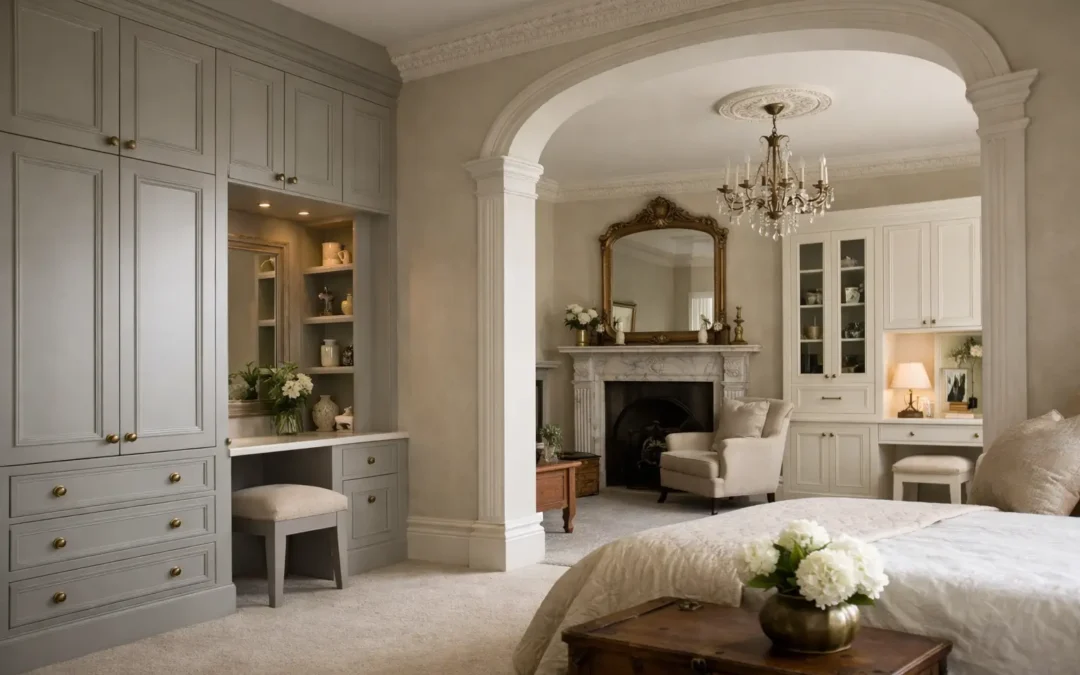
A Victorian alcove is rarely square. A Georgian bedroom may have a chimney breast exactly where a standard wardrobe ought to sit. In a cottage, a low ceiling beam can turn an otherwise useful corner into wasted space. So, can fitted furniture suit period homes? Absolutely – provided it is designed around the building, not imposed upon it.
The best fitted furniture does not try to make an older property look newly built. It takes the awkward proportions, original features and everyday storage needs seriously, then creates a practical answer that feels settled in the room. Done well, it can look as though it has always belonged there while making life considerably easier.
Can fitted furniture suit period homes without hiding character?
Yes, but character must lead the design. Period homes earn their appeal through proportion, detail and a sense of history: picture rails, cornices, fireplaces, panelled doors, deep skirting boards, window shutters and irregular walls all contribute. A fitted solution that ignores these features can quickly make a room feel boxed in or overly modern.
A bespoke approach allows the furniture to work around those details. Rather than fitting a tall, flat-fronted run of units from wall to wall, cabinetry can stop below a picture rail, step around a chimney breast or follow a sloping ceiling. Existing skirting may be retained, or carefully matched where a continuous built-in appearance is wanted. The result should preserve the room’s rhythm, not interrupt it.
This is where off-the-shelf furniture often falls short. Standard sizes leave gaps that collect dust, fail to use awkward recesses and can look temporary beside original joinery. Fitted furniture earns its place in a period home when it is measured, designed and finished for that individual space.
Start with the features worth keeping
Not every old feature needs to be copied, but the important ones need to be respected. Before planning storage, look at what gives the room its identity. In some homes it is a marble fireplace and symmetrical alcoves. In others, it is a run of original panelling, exposed timber or a beautifully shaped sash window.
A good design makes these features more visible, not less. Alcove cupboards can frame a fireplace rather than compete with it. Bespoke bookcases can be sized around a chimney breast, leaving clear space for artwork or a mirror above. A window seat can add useful storage without blocking the light or covering the lower section of a traditional window.
There are practical decisions here too. If a period home has original coving or ornate cornice, taking cabinetry all the way to the ceiling may not be right. Stopping just beneath the cornice protects the detail and gives the piece a more considered, furniture-like finish. In a plainer room, a full-height wardrobe may be the best way to remove visual clutter and make a compact bedroom work harder.
It depends on the room and the feature. The aim is not to turn every space into a museum, but to avoid removing the details that made you choose the property in the first place.
Choose a style that belongs in the room
Traditional does not have to mean dark wood and elaborate decoration. Many period homes suit clean, painted fitted furniture exceptionally well. Shaker-style doors, framed fronts, beading, simple cornice detailing and well-proportioned handles can all echo traditional joinery without becoming fussy.
Painted finishes are particularly useful because colour can tie fitted furniture into existing architecture. A warm off-white may sit comfortably with original plasterwork, while a muted green, blue or charcoal can create depth in a study, library or bedroom. With bespoke painted items available in any colour, the furniture can complement the home rather than forcing the room to work around a limited range of finishes.
For a more contemporary look, the contrast needs to be deliberate. Sleek handleless units can work beautifully in a Victorian or Edwardian house, especially in a converted loft, dressing room or home office. The key is to keep the proportions calm and use materials that feel considered. A stark glossy finish beside ornate mouldings can look disconnected; a matt painted finish or warm timber texture is often more convincing.
Hardware matters more than many people expect. Knobs, pulls, hinges and even the profile of a door edge change the feel of a fitted piece. A carefully chosen antique brass, nickel or black iron handle can provide the small but important link between new furniture and older fittings elsewhere in the house.
Make awkward architecture useful
Period properties are full of spaces that are charming but inefficient. Alcoves vary in depth, floors may be uneven and walls can run out of true. These are precisely the situations where fitted furniture has the greatest advantage.
A made-to-measure wardrobe can be cut around a sloping ceiling, beam or boxed-in pipework, with every internal section planned for the way you actually use it. That may mean double hanging for shirts and jackets, lower drawers for knitwear, shelves for bags, or a full-height compartment for coats and occasionwear. Externally, the wardrobe can follow the lines of the room; internally, it can be organised to remove the daily frustration of cramped storage.
In a reception room, alcove cabinetry can hide media equipment, files, toys or board games while keeping the fireplace as the focal point. In a period terrace, a shallow under-stairs unit can transform a neglected area into shoe storage, a utility cupboard or a compact home office. These are not dramatic structural changes, but they can have a major effect on how calmly a home functions.
The important point is to measure the real room, rather than rely on assumptions. Older properties often reveal surprises once fitting begins. An experienced team will allow for uneven walls, access constraints and existing features at the design stage, so the installation feels controlled rather than improvised.
Avoid making the room feel too heavy
The biggest risk with fitted furniture in a period home is not that it is modern. It is that it is too much. Large banks of dark cabinetry, oversized doors or excessive decorative detailing can reduce light and make a well-proportioned room feel smaller.
Balance is usually the answer. In a bedroom with high ceilings, full-height wardrobes may be entirely appropriate, but lighter colours, slim frames and considered door divisions will stop them from becoming overwhelming. In a narrow room, a combination of closed storage below and open shelving above may feel lighter than floor-to-ceiling cupboards.
Depth also deserves attention. A standard wardrobe depth is useful for hanging clothes, but not every fitted unit needs to be that deep. Shallow cabinetry can make a hallway, landing or study far more usable without stealing valuable floor space. Bespoke design gives you the freedom to build only as deep as the storage requires.
A practical design process makes the difference
The success of a period-home project is often decided before anything is made. A proper design visit should consider room dimensions, access, existing joinery, natural light and how the space needs to work day to day. It should also be an honest conversation about budget and priorities.
Perhaps the original fireplace must remain untouched, but the alcoves are available for storage. Perhaps a growing family needs wardrobes that hold far more than the current freestanding furniture can manage. Or perhaps the home office needs to disappear behind doors once the working day is over. These details shape the design far more effectively than choosing a door style first.
At WOW Interior Design, the process begins with an in-home design consultation and accurate measuring, allowing the proposal to respond to the home as it really is. From there, finishes, internal layouts and exterior details can be developed into a clear quotation before professional installation takes place. That approach is especially valuable in Kent’s varied housing stock, where an Edwardian semi, a village cottage and a converted period flat can all present very different challenges.
When fitted furniture may not be the right answer
Bespoke fitted furniture is a long-term improvement, which is exactly why it needs careful thought. If you are planning extensive building work shortly, it may be sensible to wait until layouts, electrics and plasterwork are finalised. Likewise, if a room needs maximum flexibility for frequent changes of use, a combination of selected freestanding pieces and smaller fitted elements may be more suitable.
Listed buildings and homes in conservation areas can require extra care. Internal fitted furniture does not always need consent, but work affecting protected historic fabric, fireplaces, panelling or built-in joinery may do. Where there is any uncertainty, take advice before committing to a design.
For most homeowners, though, fitted furniture is not about making a period property less authentic. It is about making it easier to live in. When the details are right, your storage can quietly do its job while the architecture continues to tell the story of the house.