

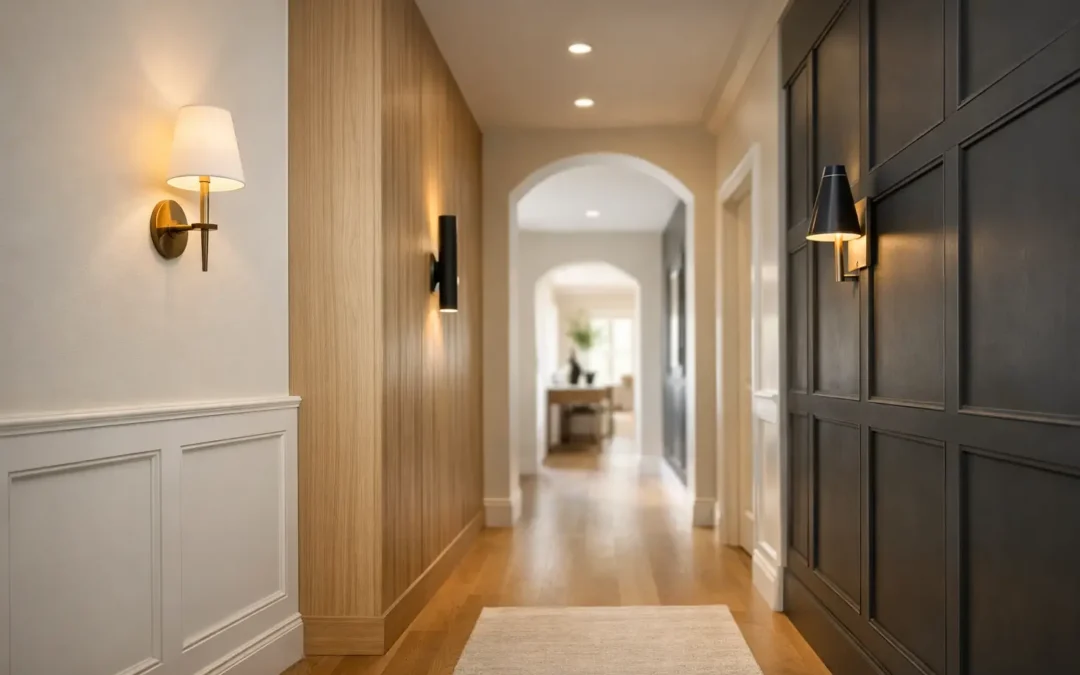
Hallways do more work than they get credit for. They catch coats, shoes, bags, muddy paws and the first impression of your home – all while often being narrow, dark or awkwardly proportioned. That is exactly why the best wall panelling styles for hallways are the ones that do two jobs at once: they improve the look of the space and help it stand up to daily life.
A good hallway scheme should feel intentional, not decorative for the sake of it. Panelling can add structure, protect walls from knocks, and make an entrance feel more polished from the moment you open the door. The right style depends on the age of the property, the width of the hall, ceiling height, natural light and how hard the space is used.
What makes the best wall panelling styles for hallways?
In a hallway, proportion matters more than almost anywhere else in the home. A style that looks balanced in a large sitting room can feel overdone in a tight entrance. Likewise, panelling that is too shallow or too delicate can disappear once coats, mirrors and console tables are added.
The best options usually share a few qualities. They bring visual order, they are tough enough for high traffic areas, and they suit the architecture of the house rather than fighting against it. In practical terms, that often means choosing profiles that are clean, durable and easy to paint, with heights and spacing tailored to the room rather than copied from a photo.
Shaker-style panelling
If you want a safe choice that still looks smart and considered, shaker-style panelling is often the strongest option. It uses clean rectangular frames and works well in both period and modern homes. In hallways, that simplicity matters. It adds detail without making the walls feel busy.
This style is especially useful where you want a neat, tailored finish that complements fitted storage, under-stairs cupboards or a built-in bench. It can be taken to dado height for a practical, protective lower section, or extended higher for a more architectural feel. The trade-off is that spacing has to be right. In a narrow hallway, panels that are too wide can feel clumsy, while panels that are too small start to look fussy.
For many homes, shaker panelling painted in a soft neutral, deep green, blue-grey or warm stone shade creates a strong balance between classic and current. It is not trend-led in a way that will date quickly, which makes it a solid long-term investment.
Traditional dado and moulding combinations
In period homes, a more traditional panelled look can suit the building better than very plain styles. A dado rail with moulded panels below brings character and can restore a sense of proportion to an older entrance hall. If the property already has original features, this approach can help the hallway feel as though it belongs to the house rather than being a later add-on.
That said, this style needs a careful hand. In smaller or lower-ceilinged hallways, heavy mouldings can crowd the space. The answer is not to avoid traditional panelling altogether, but to scale it properly. Slimmer mouldings, fewer panel divisions and a considered paint finish usually work better than anything overly ornate.
This is a style that rewards bespoke design. Small adjustments to rail height, panel width and moulding depth make a significant difference once installed.
Tongue and groove panelling
Tongue and groove is one of the most practical hallway choices, particularly in family homes. It has a straightforward, honest look and gives walls a bit more resilience in spaces where shoes, school bags and umbrellas are in constant rotation. It is also versatile. Depending on the finish, it can lean classic country, coastal, modern cottage or even slightly contemporary.
Used to half height, tongue and groove helps break up long plain corridors and creates a useful line for styling with mirrors, artwork or hooks above. Full-height versions can work too, but only if the hallway has enough light and width to carry it. Otherwise, it can make the space feel enclosed.
The strength of this style is that it does not try too hard. It feels practical and polished, which is exactly what many homeowners want from an entrance area.
Slatted wall panelling
For newer homes or interiors with a cleaner, more modern direction, slatted panelling can look striking in a hallway. Vertical slats draw the eye upward, which helps lower ceilings feel taller. They also introduce texture without relying on decorative moulding.
This style suits feature walls particularly well, perhaps along one side of a wider entrance or around a built-in seating or storage area. In a very narrow hallway, though, slatted panelling on every wall can be too visually repetitive. It depends on the spacing, depth and material finish. Timber tones can bring warmth, while painted slats often feel more integrated and calm.
There is a practical point to consider here. Slatted designs can collect more dust than flatter panelled surfaces, and deep grooves are less forgiving in busy family spaces. If you love the look but need easier upkeep, a simplified slatted profile is often the better choice.
Board and batten styles
Board and batten panelling uses wider vertical sections with narrower battens over the joints, creating a more defined linear pattern. In hallways, it can be a clever way to add height and rhythm, especially in plain new-build spaces that need more character.
It sits somewhere between shaker and tongue and groove in terms of look. It has more structure than the latter, but feels less formal than a moulded traditional design. That makes it useful if you want something with presence that still feels relaxed.
This style works best when the scale suits the hallway. Wider spacing tends to feel calmer and more expensive. If the battens are too close together, the wall can end up looking striped rather than panelled.
Full-height panelling versus half-height
One of the biggest decisions is not just the style but how high it should go. Half-height panelling is the most flexible option for hallways because it protects the area most likely to get knocked while keeping the upper walls light and open. It also gives you room to use wallpaper, paint contrast or artwork above if you want more personality.
Full-height panelling creates more impact and can make an entrance feel highly finished, particularly in taller spaces. It can also help when a hallway feels too plain or boxy. But it is not automatically better. In tighter halls with limited natural light, full-height panelling in a dark shade can feel heavy unless the design is very simple and the lighting is handled properly.
As a rule, if the hallway is modest in size, half-height usually gives you more balance. If it is spacious, well lit and part of a more open-plan layout, full-height can look superb.
Choosing colour and finish
Colour does a lot of the heavy lifting once the panelling is installed. Lighter shades can open up narrow halls, but that does not mean everything has to be white. Warm neutrals, soft taupes, muted greens and stone tones often give a more refined result while still keeping the space bright.
Darker colours can be very effective, especially in period properties or larger hallways where you want drama. Deep navy, charcoal or forest green can make the panelling feel substantial and elegant. The key is confidence. If you go dark, it needs to look deliberate, supported by good lighting and finishes that tie the scheme together.
For durability, a hard-wearing painted finish is usually the sensible choice. Hallways take more scuffs than most rooms, so the finish should be easy to wipe and touch up when needed.
Getting the proportions right
This is where many hallway panelling projects succeed or fail. Good panelling should look like it was made for the space, because ideally it was. Ceiling height affects rail levels. Door positions affect panel widths. Radiators, stairs and alcoves all need to be worked into the design so the final result feels ordered.
Off-the-shelf ideas rarely account for those details. That is why a bespoke approach tends to produce a cleaner, more convincing finish. At WOW Interior Design, we see this often – the difference is not just in the materials, but in getting every measurement, line and finish to suit the property properly.
So which style is best?
If you want the broadest appeal and the least risk of dating, shaker-style panelling is hard to beat. If your home has period character, traditional moulded panelling may be the better fit. If practicality comes first, tongue and groove is a dependable choice. If your interior is more contemporary, slatted or board and batten designs can bring the right edge.
The best answer is usually the one that suits your house and how you live in it, rather than the one getting the most attention online. Hallways are hard-working spaces. When the panelling is properly designed, it does more than decorate the walls – it makes the whole entrance feel calmer, smarter and better put together.
If you are planning a hallway update, start by looking at the bones of the space rather than the latest trend. The right panelling should feel like it has always belonged there.