

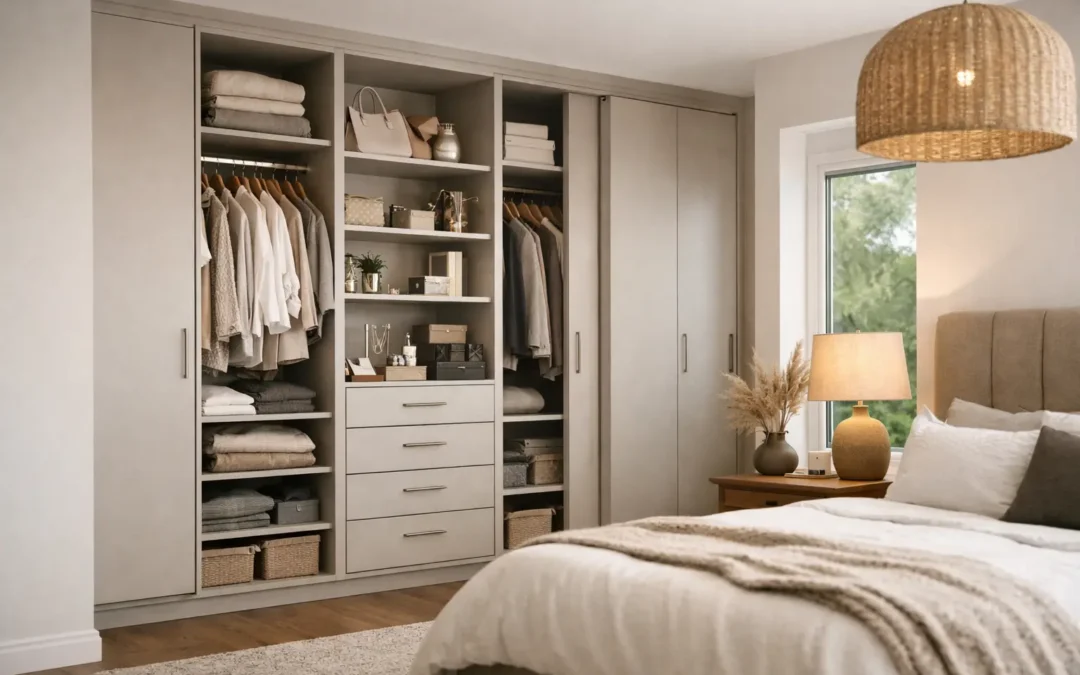
A freestanding wardrobe can fill a wall. It rarely fills the space properly. That is why built-in wardrobes Kent homeowners invest in tend to be less about furniture and more about fixing a room that never quite worked – awkward alcoves, sloping ceilings, wasted corners or simply not enough usable storage for real life.
The difference is not just visual, although that matters. A well-designed fitted wardrobe gives you more hanging space, better access, cleaner lines and a finish that belongs in the room rather than sitting in it. If you are improving a main bedroom, a guest room or a dressing area, the value comes from how the wardrobe is planned, made and installed around your home and your routines.
Why built-in wardrobes in Kent make more sense than off-the-shelf options
Most bedrooms are not as straightforward as showroom furniture suggests. Chimney breasts interrupt the run of a wall, ceilings slope, skirting boards project and door swings steal usable width. Standard wardrobes force you to work around their limitations. Built-in furniture does the opposite.
That matters in period homes, extensions and modern properties alike. In many Kent homes, space is available, but not in neat retail sizes. A fitted wardrobe uses the full height and width of the room, closing up dead space at the top, side and back. You gain storage that you would otherwise lose, and the room feels calmer because every line looks intentional.
There is also a practical point that often gets overlooked. Freestanding units can be deep where you do not need them and shallow where you do. With bespoke fitted wardrobes, internal storage can be shaped around what you actually own – long dresses, tailored suits, shoes, folded knitwear, bags, luggage or children’s clothing that changes by the season.
What good built-in wardrobes Kent projects get right
A successful wardrobe is rarely about the doors alone. The finish catches the eye first, but day-to-day satisfaction comes from the internal design and the quality of the fit.
The first thing to get right is the layout. Double hanging works well for shirts, jackets and shorter items, while full-drop hanging is better for dresses and coats. Drawers are useful, but only if they are sized properly and placed where they are easy to use. Shelving can be brilliant for knitwear and accessories, but too much open shelving quickly becomes cluttered. This is where experience matters. Good design balances visible storage and hidden storage so the wardrobe still works when life gets busy.
The second is proportion. Wardrobes should suit the scale of the room. In a compact bedroom, bulky framing and oversized handles can make the space feel tighter. In a larger main suite, a plain flat run may look underpowered unless it is broken up with panels, mirrored sections or a more architectural finish. Bespoke work gives you room to make those decisions properly instead of settling for what is available.
The third is the finish. Painted wardrobes can be matched to existing joinery, contrast with wall colour or become a feature in their own right. Woodgrain and textured finishes can suit more contemporary interiors. Neither is automatically better. It depends on the property, the light in the room and whether you want the wardrobes to stand out or blend in.
Hinged or sliding doors?
This is one of the most common choices, and there is no universal answer. Hinged doors give full access to the interior, which is often better if you want to see everything at once. They also suit more classic bedroom styles and can accommodate detailed panel designs.
Sliding doors are useful where clearance is tight, especially in narrower rooms or where the bed sits close to the wardrobe. They can create a cleaner, more modern look and work well with mirrored or minimalist finishes. The trade-off is that you only access part of the wardrobe at a time. For some households, that is not an issue. For others, particularly if two people are using the wardrobe together, hinged may prove more practical.
The value of bespoke design over standard fitting
There is a big difference between made-to-measure and truly bespoke. Made-to-measure often means adapting a fixed product range to your room dimensions. Bespoke means the design begins with your room, your storage needs and your preferred style, then everything is built around that.
That approach usually produces a better result because the details are considered earlier. Where will the bedside units sit in relation to the wardrobe run? Should the storage include a bridging section over the bed? Is there space for integrated drawers, a dressing table or a media unit to create a more complete fitted bedroom? These decisions shape how the room works as a whole.
For homeowners who want a polished result without the project becoming a headache, a full design and installation service also removes guesswork. Accurate measuring, design development, clear quotations and professional fitting all matter. A fitted wardrobe should not look fitted as an afterthought. It should look as if the room was always meant to be that way.
How to plan a wardrobe that suits daily life
The best wardrobe designs start with behaviour, not brochures. Before choosing finishes, it helps to think honestly about how you use the space.
If your clothes live in several rooms because the bedroom storage is not coping, you need capacity first and appearance second. If the room already functions reasonably well but lacks a refined finish, the design focus may shift towards cleaner lines, integrated mirrors or a more tailored colour palette. Families often need flexibility, while couples may want clearly divided sections so morning routines run smoothly.
It is also worth considering what the room may need in a few years. A child’s bedroom, for example, benefits from adjustable shelving and a layout that can adapt over time. A main bedroom may need more drawer space than you first expect. A loft conversion often calls for careful planning around eaves and reduced ceiling height. Good fitted furniture should answer the room you have now, but it should not become awkward as life changes.
Materials, fitting quality and long-term value
This is where cheaper quotes can look tempting and then disappoint. Wardrobes are opened, closed, loaded and lived with every day. Poor alignment, weak internals and average fitting show up quickly.
Quality materials help the doors stay true, drawers run properly and finishes hold up over time. Just as important is the installation itself. Scribed panels, clean edges, careful levelling and respect for the home during fitting are not small details. They are what separate a sharp, built-in look from something that appears forced into place.
A bespoke wardrobe is an investment, so value is not only about the headline price. It is about how much storage you gain, how well the room improves and how long the installation continues to perform and look right. Paying less for a compromised layout or rushed fitting often costs more in frustration.
Built-in wardrobes Kent homeowners should ask for before committing
When you are comparing options, ask how the design will be tailored to your room rather than simply resized. Ask what happens during the home measure, how finishes are chosen and whether the internals are customised around your storage needs. It is also reasonable to ask who carries out the installation and how the property will be looked after during the work.
A strong fitted furniture company should be able to talk confidently about awkward spaces, design trade-offs and material choices without hiding behind jargon. They should also make the process feel straightforward. That includes a proper consultation, practical advice and an honest explanation of what will work best in your room and what may not be worth doing.
For homeowners in Kent, local knowledge can help too. Different properties bring different challenges, from compact new-build bedrooms to older homes with uneven walls and original features. A team used to designing around those realities is far more likely to produce a wardrobe that feels right first time.
WOW Interior Design works in exactly that hands-on way – tailored design, measured properly, fitted professionally and built to make the room work harder without losing sight of the finish.
A built-in wardrobe should do more than hide clutter. It should give you a room that feels better every morning and easier every evening, which is usually the best sign you chose well.