

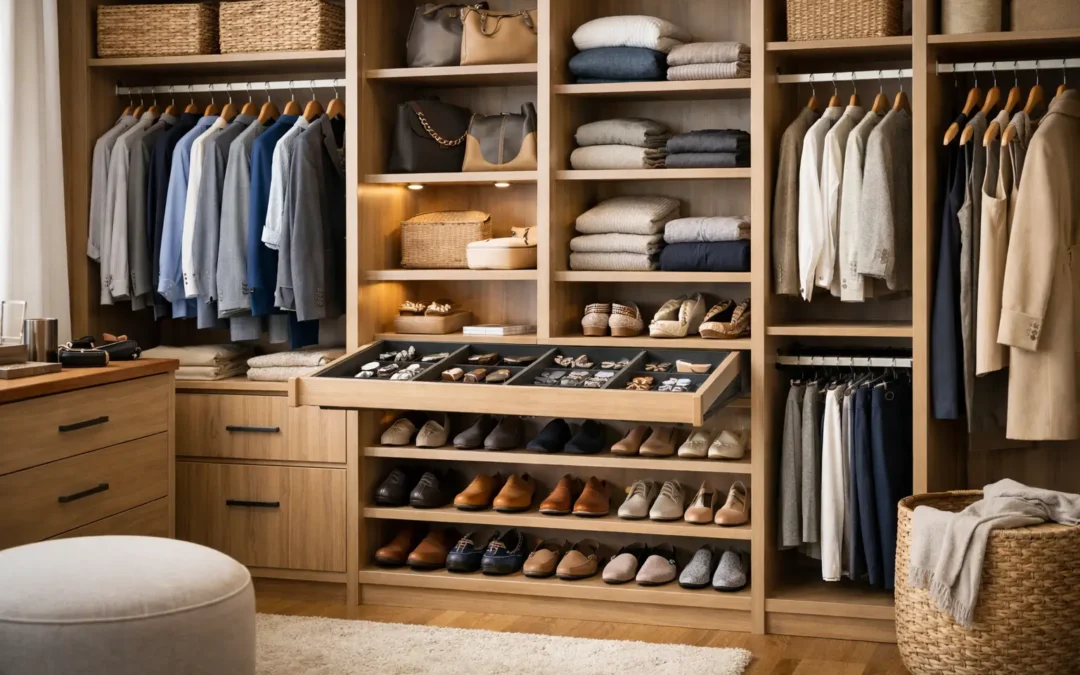
Open a standard wardrobe and the problems usually reveal themselves straight away. One rail, one shelf, dead space above, shoes piled at the bottom and clothes crammed wherever they fit. Custom wardrobe interiors solve that by shaping the storage around your room, your routine and the way you actually live.
That is the real difference between fitted storage that looks good in a brochure and fitted storage that earns its keep every day. A wardrobe interior should not just hold clothes. It should make mornings easier, protect the items you have invested in and use every inch of available space properly.
Why custom wardrobe interiors make such a difference
Most bedrooms have at least one awkward feature. It might be a sloping ceiling, a chimney breast, an alcove, a shallow recess or a wall that is not as straight as it looks. Off-the-shelf furniture rarely handles these details well, which is why so much potential storage is wasted.
With custom wardrobe interiors, the internal layout is built around the exact dimensions of the room and the items you need to store. That means no pointless gaps at the sides, no inaccessible top shelves and no compromise because a standard carcass was never designed for your space in the first place.
The practical gain is obvious, but the visual gain matters too. A well-designed interior supports a calmer room. When everything has a place, the whole bedroom feels more ordered. That affects how the space looks, but also how it functions day after day.
Start with what you need to store
The best wardrobe interiors do not begin with finishes or accessories. They begin with a proper assessment of what needs to go inside. Long dresses need different clearance from folded knitwear. Work shirts, occasion wear, handbags, boots, jewellery and spare bedding all ask for different types of storage.
This is where a bespoke approach earns its value. Some clients need more double hanging for everyday clothing. Others benefit from generous shelving, deep drawers or dedicated compartments for shoes and accessories. Families often want a mix of easy-reach storage and higher sections for less frequently used items. A couple sharing one run of wardrobes may need each side planned very differently.
There is no single correct layout. The right interior depends on your lifestyle, your wardrobe and how tidy or untidy you are by nature. Good design works with those habits rather than pretending they do not exist.
The core elements of custom wardrobe interiors
Most successful layouts use a combination of hanging space, shelving and drawers, but the balance is what matters. Too much hanging and the interior becomes inefficient. Too many shelves and the wardrobe can feel cramped and fussy.
Hanging space
Full-length hanging is essential for dresses, coats and longer garments, but it is often overused. In many wardrobes, a large section of hanging height is simply empty air. Double hanging can be a far better use of space for shirts, jackets, skirts and trousers. It effectively doubles storage without increasing the footprint.
Shelves
Shelves work well for knitwear, jeans, bags and storage boxes, but they need the right spacing. If shelves are too deep or too high apart, items get stacked into untidy piles and disappear at the back. A bespoke interior allows shelf depth and spacing to be tailored so items stay visible and easy to reach.
Drawers
Drawers bring structure to smaller items such as underwear, nightwear, accessories and folded basics. They also create a neater finish overall because not everything is on display when the doors open. Soft-close drawers and strong internal runners make a noticeable difference in daily use, especially in a main bedroom wardrobe used constantly.
Shoe and accessory storage
Shoes often become the weak point in any wardrobe. Without dedicated storage, they end up on the floor, under hanging clothes or in separate boxes that are awkward to access. Purpose-built shelving keeps pairs visible and protected. The same applies to belts, watches, jewellery and handbags. If these items matter to you, they deserve a proper place in the design.
Making awkward spaces useful
This is often where fitted interiors outperform freestanding furniture by a long way. Loft rooms, box rooms and older properties rarely offer perfect dimensions, yet they can deliver excellent storage when handled properly.
A wardrobe built into eaves can use lower sections for drawers and shelves while reserving taller parts for hanging. Alcoves can be turned into full-height storage without leaving voids around the edges. Rooms with chimney breasts can be balanced with wardrobes and bridge units that frame the space neatly rather than fighting against it.
There is always a judgement call between maximum capacity and easy access. Cramming storage into every last corner can sound appealing, but if a section is too deep, too high or too awkward to use, it will quickly become wasted space. Good bespoke design is not about forcing more in. It is about making the space genuinely usable.
Internal design should match the room, not fight it
A wardrobe interior is hidden most of the time, but it still needs to support the overall feel of the room. A calm, well-finished bedroom benefits from storage that opens cleanly, works quietly and feels considered inside as well as out.
That means looking at more than storage volume. Door opening widths, drawer positions, lighting and the relationship between the wardrobe and surrounding furniture all matter. In a smaller room, the internal layout may need to reduce door conflict or improve movement around the bed. In a larger principal bedroom, the emphasis may shift towards luxury details and clearer zoning for different categories of clothing.
This is why measured design work matters. It prevents the common mistake of focusing on frontage alone while leaving the interior as an afterthought.
What to think about before you choose a layout
There are a few practical questions worth settling early. Do you fold most of your clothes or hang them? Do you need wardrobe space to absorb linens, luggage or seasonal items as well as clothing? Is one person using the wardrobe, or two with very different storage habits?
It is also worth being honest about future needs. A wardrobe should last for years, so it helps to plan for some flexibility. Adjustable shelving, a sensible mix of hanging heights and room for changing storage habits can keep the furniture useful for much longer.
Budget is another area where clear decisions help. Not every interior needs every accessory available. Pull-out trouser racks, internal mirrors and specialist compartments can be useful, but only if they match the way you live. In many cases, a simpler layout done properly will outperform a feature-heavy design that adds cost without adding much benefit.
Why bespoke installation matters as much as design
Even the best plan can fall short if the fitting is poor. Wardrobe interiors need to be installed square, level and properly finished so drawers run smoothly, doors align well and the whole structure feels solid. In older homes especially, walls, ceilings and floors can all be slightly out, which has to be accounted for during installation.
That is one of the key advantages of a managed fitted service. Design, measuring, manufacture and fitting all need to work together. When they do, the final result looks cleaner, performs better and feels like part of the room rather than furniture that has simply been pushed into it.
For homeowners in Kent and across the South of England, that level of detail often matters just as much as the design itself. A bedroom upgrade should feel straightforward, well handled and worth the investment from the first design visit to the final installation.
Custom wardrobe interiors are an everyday upgrade
People often think about wardrobes in terms of appearance first, but the long-term value sits in daily use. Better organisation saves time. Better layout reduces clutter. Better use of space can remove the need for extra furniture elsewhere in the room.
That is why custom wardrobe interiors are rarely just a cosmetic choice. They are a practical improvement to how the bedroom works. When tailored properly, they bring together storage, presentation and ease of use in a way standard furniture simply cannot match.
If you are planning fitted wardrobes, spend as much time on the inside as you do on the doors. The finish catches the eye, but the interior is what makes the investment pay off every morning after.