

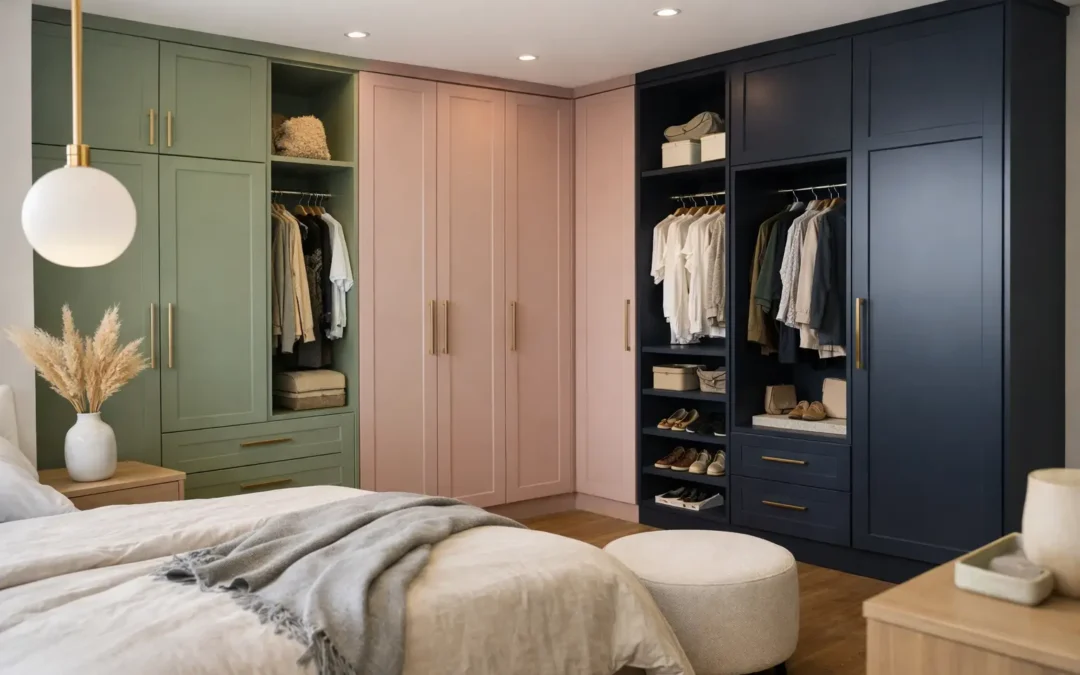
A wardrobe can take up half the room visually and still fail to hold what you actually need. That is why custom colour fitted wardrobes appeal to homeowners who want more than a basic run of doors and rails. When the storage is built around your room, your routine and your preferred finish, the result feels calmer, more useful and far more considered.
Off-the-shelf furniture asks you to adapt to standard sizes, standard layouts and a narrow choice of colours. Fitted furniture does the opposite. It works with the shape of the room, makes use of every workable inch and gives you control over the final look, right down to the shade on the doors and panels.
Why custom colour fitted wardrobes make such a difference
Most people start with storage and end up talking about the whole room. That is because a fitted wardrobe is never just storage. It changes the wall line, the balance of the space, the amount of visible clutter and the overall feel of the bedroom.
Adding a custom colour takes that a step further. Instead of choosing the least-worst neutral from a limited range, you can match the wardrobe to the room scheme, create contrast, or use colour to make the furniture feel built into the architecture. In a period property, that might mean a softer painted tone that sits comfortably with original details. In a newer home, it could mean a cleaner, sharper finish that gives the room more structure.
There is also a practical side to colour choice. Lighter shades can make a compact room feel more open. Deeper tones can add weight and sophistication in a larger bedroom with good natural light. Mid-tones often strike the best balance in family homes because they are more forgiving day to day while still looking refined.
The case for fitted over freestanding
Freestanding wardrobes leave gaps. There is usually wasted space above, awkward dead areas at the sides and a compromise somewhere inside. That may be manageable in a large square room, but many bedrooms are not built that way.
Sloping ceilings, chimney breasts, alcoves and uneven walls are common, especially in older homes across Kent and the South of England. Fitted wardrobes are designed around those realities rather than fighting them. You gain storage where a standard unit would never sit neatly, and the room looks more finished because the furniture belongs there.
This matters even more if you are trying to make a box room work harder, turn a loft bedroom into practical everyday space or bring order to a main bedroom that has gradually become a catch-all for clothing, shoes and spare bedding. Good fitted design removes the usual weak points instead of masking them.
Choosing the right colour is not just about trends
Colour should work with the room you actually have, not just the image you saved months ago. A fashionable shade can look excellent in one property and completely wrong in another. The best decisions usually come from looking at light, flooring, wall colour, ceiling height and the mood you want in the room.
Light changes everything
North-facing rooms can make cool colours feel flatter and more severe, while south-facing rooms often handle stronger colour well because the light is warmer. If a bedroom gets limited daylight, a dark wardrobe finish can still work, but it needs to be handled properly. The balance of wall colour, flooring and door style becomes more important.
Painted finishes offer flexibility
One of the strongest advantages of bespoke fitted furniture is the ability to choose a painted finish in virtually any colour. That opens up far more than a standard white, grey or oak-effect option. It means the wardrobe can echo wall panelling, pick up on a favourite fabric, or quietly match the room so the storage feels less dominant.
That said, more choice does not always make the decision easier. If you are unsure, a well-judged muted tone often has more longevity than a very strong fashion-led colour. It still feels personal, but it is less likely to date quickly.
What should the inside look like?
The exterior gets attention because it is the visible part, but the internal layout is what determines whether the wardrobe genuinely improves daily life. A beautiful finish means very little if you still cannot find anything in the morning.
This is where bespoke design earns its keep. Some people need more full-length hanging space. Others are better served by double hanging, wide drawers, open shelving, shoe storage or discreet compartments for accessories. If two people are sharing one run of wardrobes, the interior often needs to be split around completely different habits.
A common mistake is overloading a design with features that sound useful on paper but do not reflect how the household actually lives. Pull-out trays, specialist sections and display storage can all work well, but only where they are genuinely needed. In many cases, a simpler internal arrangement with the right proportions performs better and feels easier to maintain.
Door styles, handles and detailing matter
When people think about custom colour fitted wardrobes, they often focus purely on the paint shade. In practice, colour works alongside several other design decisions. The profile of the doors, the style of the handles and the surrounding trim all influence the final effect.
A shaker-style door in a soft painted finish gives a classic, structured look and works in a wide range of homes. Slab doors can feel more contemporary and understated. Integrated handles keep the lines cleaner, while a more decorative handle can tie the wardrobe into other furniture in the room.
Small details have a big visual impact because fitted wardrobes usually cover a substantial wall area. If the proportions are off, the colour will not rescue the design. That is why made-to-measure work needs more than a catalogue choice. It needs careful planning, proper measuring and an understanding of how fitted furniture sits within the full room.
Custom colour fitted wardrobes in awkward spaces
This is where bespoke wardrobes prove their value very quickly. A room with a sloping ceiling, low eaves or an uneven alcove can look difficult, but it often contains useful storage potential. The key is to shape the furniture around the architecture rather than trying to force a standard solution into place.
Alcoves and chimney breasts
These spaces can be turned into balanced storage that frames the room neatly. Colour helps here because it can make the wardrobes feel integrated rather than added on afterwards.
Loft rooms and eaves
Lower-level storage, stepped wardrobe sections and smart internal planning can transform awkward roof lines into practical storage. In these rooms, lighter painted finishes are often useful if you want to keep the space feeling open, though deeper colours can work beautifully where there is enough light.
Smaller bedrooms
In a compact room, every design choice has more impact. The wrong door swing, the wrong depth or an overbearing finish can make the room feel tight. Well-designed fitted furniture avoids that by using the space precisely and keeping the visual line cleaner.
What to expect from the design process
A proper bespoke service should make the project feel clearer, not more complicated. It usually starts with a design visit and detailed measuring, followed by layout development, finish choices and a quotation based on the agreed scheme.
This stage matters because it is where practical issues are solved before installation begins. Socket positions, skirting boards, ceiling levels and access all need to be considered. So do the day-to-day details, such as how the doors will open, whether extra drawers are worth adding, and which colour will still look right once the wardrobe is spanning the full wall.
At WOW Interior Design, that practical planning sits alongside the creative side. It is not about pushing a standard range. It is about designing fitted furniture that works properly in your home and looks as though it was always meant to be there.
Is it worth the investment?
If you are comparing bespoke fitted wardrobes with a flat-pack alternative, the upfront cost is obviously higher. But it is not a like-for-like comparison. You are paying for made-to-measure design, better use of space, tailored internal storage, a custom finish and professional installation.
For many homeowners, the value lies in the result lasting and continuing to work. The room feels better organised, more polished and easier to live with. There is less wasted space, less visual clutter and far less compromise.
That does not mean every room needs the most elaborate design. Sometimes the best answer is a simple run of well-proportioned wardrobes in the right colour, fitted properly and planned around real storage needs. Bespoke should not mean overdone. It should mean right for the room.
If you are considering fitted wardrobes, start with how you want the space to function, then choose the colour that helps the room feel complete. Get those two things right and the wardrobe stops being just another piece of furniture. It becomes part of how the room works every day.