

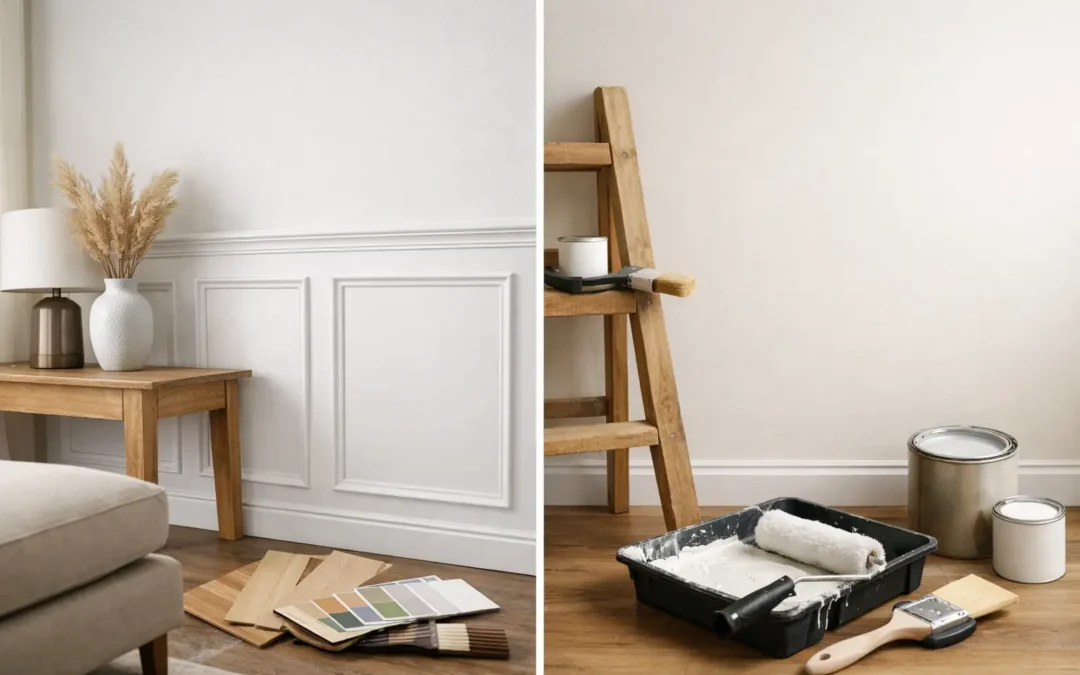
Some rooms tell you what they need the moment you walk in. A bright spare bedroom might suit a crisp painted finish, while a tired hallway with scuffs at every corner often calls for something tougher. When it comes to wall panelling vs painted walls, the right choice is rarely about trend alone. It is about how the room is used, what level of finish you want, and whether you are aiming for a quick refresh or a more considered upgrade.
Homeowners often start with paint because it feels straightforward. It is familiar, relatively fast, and can make a room look cleaner with the right shade. Panelling, on the other hand, tends to come into the conversation when the goal is more than surface decoration. It adds structure, depth and a fitted feel that can change how a room looks and how it performs day to day.
Wall panelling vs painted walls – what is the real difference?
Paint changes colour. Panelling changes the surface itself.
That distinction matters more than it sounds. Painted walls rely on the quality of the plaster beneath them. If the wall is uneven, marked or full of minor imperfections, paint will often show them up rather than hide them. Panelling introduces a new layer, which means it can bring definition, cover inconsistent surfaces and create a stronger architectural look.
This is why the choice is not simply decorative. Painted walls are usually the lighter-touch option. Wall panelling is more of a design decision, and in many homes it becomes part of the room rather than just the finish on it.
Where painted walls work best
There is a reason painted walls remain the default in most homes. Done properly, they are clean, versatile and cost-effective. If you like to redecorate regularly, paint gives you freedom. It is easier to change a colour than rework a fully panelled scheme.
Paint also makes sense in rooms where you want simplicity. Bedrooms, ceilings, utility spaces and newer extensions often benefit from plain painted walls, especially if the architecture already does enough. A soft neutral or deeper heritage shade can still create impact without adding extra detailing.
There is also a practical budget point. If you are renovating several rooms at once, painted walls allow you to refresh the whole house without committing the same level of spend as bespoke wall features. That can be the right call, particularly if your budget is being directed towards fitted wardrobes, cabinetry or a home office where function has to come first.
The drawback is durability. Hallways, staircases and family spaces take knocks. Painted plaster can chip, mark and show wear quite quickly, especially in busy homes with children, pets or lots of daily traffic.
Where wall panelling earns its keep
Panelling comes into its own when you want the room to feel more finished and more intentional. It brings a sense of craftsmanship that paint alone cannot match.
In entrance halls, landings and dining rooms, panelling adds presence. In bedrooms, it can frame a bed beautifully and make the space feel calmer and more tailored. In home offices and libraries, it introduces character and weight, especially when paired with fitted furniture. These are the spaces where plain walls can sometimes feel a little flat, even with excellent paintwork.
There is also a practical gain. Panelling provides a more resilient surface in areas prone to bumps and scuffs. Lower wall panelling in a hallway or along a staircase is not just about style. It helps protect the wall and keeps the room looking smarter for longer.
A bespoke approach makes the biggest difference here. Off-the-shelf decorative strips can look fine from a distance, but proportions matter. Panel size, rail height, spacing and how the design works around doors, sockets and awkward walls all affect the final result. When it is designed properly, panelling looks like it belongs to the house rather than being applied as an afterthought.
Style, character and the look you want
If your aim is a clean, understated interior, painted walls may be enough. They suit modern schemes, lighter spaces and rooms where other features already carry the design. Paint can also help a smaller room feel more open, particularly if you keep the palette soft and consistent.
Panelling gives more visual depth. It introduces shadow lines, framing and rhythm across the wall. That extra detail can make a period property feel restored or help a newer home gain some character it was missing.
This does not mean panelling is only for traditional interiors. Simpler shaker-style layouts, full-height slatted effects and contemporary square-set designs can all work in modern homes. The key is choosing a style that fits the architecture and the room. A grand panel design in a compact box room can feel overworked. Equally, a large lounge with high ceilings may need more than paint to feel complete.
Cost is important, but value matters more
If you compare wall panelling vs painted walls on upfront cost alone, paint will nearly always win. It is the cheaper option in terms of materials and labour, especially if the walls are in good condition.
But cost on day one is only part of the decision. Panelling usually brings more permanence and can add perceived value to the home because it looks bespoke and considered. It can also reduce the need for repeated patching and repainting in hard-working areas.
That said, not every room needs it. A sensible approach is often mixed rather than all or nothing. Use panelling where it adds function and impact, then keep paint for spaces that benefit from simplicity. This gives you a more balanced investment across the home.
For many homeowners, the smartest results come from combining both. Panel the wall that needs emphasis, such as behind a bed or along a hallway, and paint the surrounding walls to keep the room balanced.
Maintenance and day-to-day living
Paint is easy to understand, but not always easy to keep perfect. Dark colours can show dust and scratches. Matte finishes can mark. High-traffic areas often need touch-ups sooner than expected.
Panelling tends to hold up better in practical terms, provided it is made and installed properly. A well-finished panelled wall is solid, durable and easier to live with in busy parts of the house. The surface still needs decorating, of course, but the structure beneath gives it more resilience than plaster alone.
The quality of installation makes a real difference. Poorly fitted panelling can leave visible joints, uneven lines or movement over time. Good workmanship avoids that and gives a cleaner, sharper result that lasts.
How to decide room by room
The best question is not which option is better overall. It is which one suits this room best.
If the room is mainly a backdrop, painted walls are often enough. If the room feels bland, takes daily wear, or needs a stronger focal point, panelling is worth serious thought. Consider the wall condition, the amount of natural light, ceiling height and whether the room already has fitted elements that would benefit from a more cohesive finish.
In a family hallway, practicality and durability might push panelling to the top of the list. In a guest bedroom, paint may be the more proportionate choice. In a principal bedroom or home office, a bespoke panelled feature can often give the polished, fitted look that lifts the whole scheme.
This is where a design-led approach helps. Instead of treating walls as a separate decorating job, it makes sense to view them as part of the room as a whole. Storage, layout, finishes and wall treatment should work together. That is often the difference between a room that looks nice for now and one that feels properly resolved.
When a blended approach works best
Many of the strongest interiors use both. Panelling does not need to cover every wall to be effective. A half-height design in a hallway, a full-height feature behind a bed, or panelled sections built around fitted furniture can all add structure without overwhelming the space.
This is often the most practical route for homeowners who want character without overcomplicating the scheme. It also gives more control over budget, allowing you to invest where the room will benefit most.
If you are unsure, start with the room that frustrates you most. The one that still feels unfinished, marks too easily, or lacks impact even after decorating. That is usually where the answer becomes obvious.
A well-finished room should do more than look smart on completion day. It should still work hard, feel right, and hold its finish months and years later. Whether that points you towards paint, panelling or a mix of both, the best choice is the one that suits the way you actually live.