

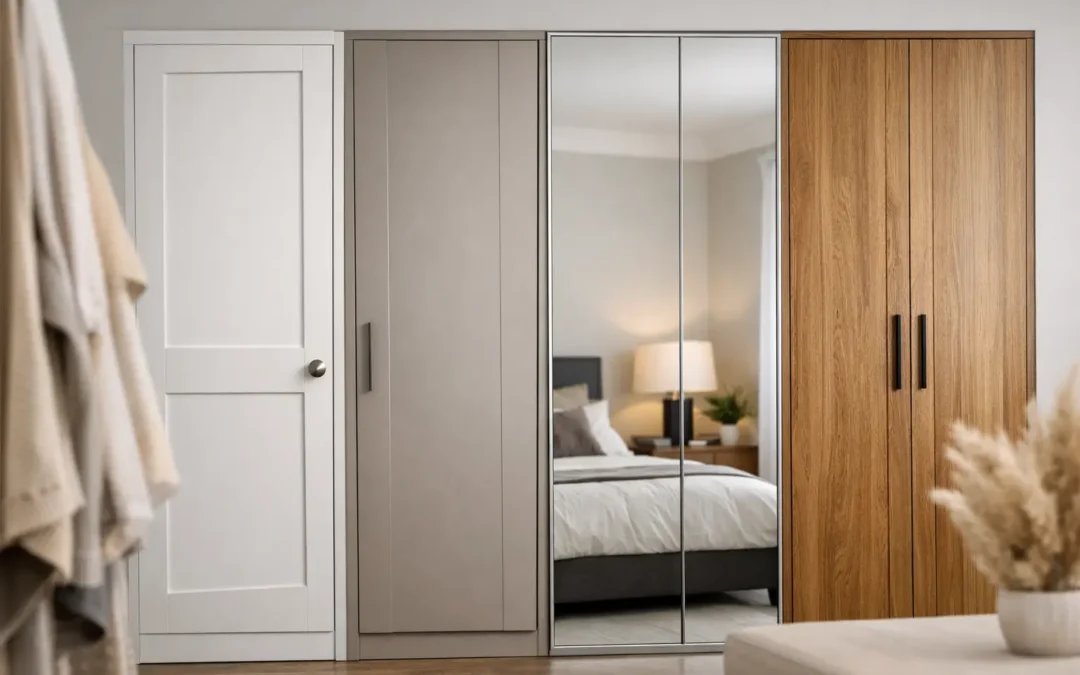
A wardrobe can be beautifully planned inside, but if the doors are wrong, the whole room feels off. That is why a fitted wardrobe door styles guide matters so much. The door style affects how the room looks, how easily you access your storage, how much floor space you need, and whether the finished design feels timeless or quickly dated.
When clients start planning a fitted wardrobe, they often focus on internals first – hanging space, drawers, shoe shelves, top boxes. All of that matters, of course. But the doors are what you see every day, and they do a lot of the heavy lifting visually. Get them right, and the wardrobe feels like part of the room rather than a large storage unit dropped into it.
Why door style matters more than most people expect
Wardrobe doors are not just a decorative finish. They shape the feel of the bedroom, influence circulation around the furniture and affect how practical the wardrobe is to use. In a smaller room, the wrong opening style can make the space feel cramped. In a larger room, a very plain door can leave the design feeling flat.
There is also the question of proportion. Tall ceilings, chimney breasts, sloping ceilings and alcoves all respond differently to certain door styles. A bespoke fitted wardrobe should work with those quirks, not fight them. That is one of the main differences between made-to-measure furniture and off-the-shelf units – you are not trying to force a standard door onto a non-standard space.
Fitted wardrobe door styles guide: the main options
Most fitted wardrobes fall into a few core door styles, but each can be tailored in finish, detailing and scale.
Hinged wardrobe doors
Hinged doors are the most traditional and, in many homes, still the best all-round option. They open fully, which means you can see the entire section of the wardrobe at once. That makes everyday use simpler, especially if you want easy access to drawers, pull-out storage or double hanging rails.
From a design point of view, hinged doors are flexible. They suit classic panelled rooms, simple modern schemes and everything in between. You can keep them flat and understated or add detail with framed fronts, shaker styling or painted finishes.
The trade-off is clearance. Hinged doors need space in front to open properly, so they are not always ideal if the room is tight or the bed sits close to the wardrobe run.
Sliding wardrobe doors
Sliding doors are a strong choice where space is limited. Because the doors move across rather than opening out, they help preserve floor space and keep circulation cleaner. In compact bedrooms, that can make a real difference.
They also tend to give a more contemporary look, particularly with larger panels and cleaner lines. Mirrored sliding doors remain popular for practical reasons, but they are not the only route. Coloured glass, wood-effect finishes and more refined framed designs can all work well if you want something less showroom-like.
That said, sliding doors do come with compromise. You can only access part of the wardrobe at a time, which some people find less convenient. The design and installation also need to be spot on. Poorly made sliding systems can feel flimsy or awkward very quickly, which is why quality matters here.
Shaker wardrobe doors
Shaker doors are less about how they open and more about the face design. Usually used on hinged wardrobes, they feature a framed panel that gives enough detail to feel considered without becoming fussy. They work especially well in period homes, country-style interiors and modern classic bedrooms.
One reason shaker remains so popular is balance. It adds character, but it is not heavily decorative. Painted in the right colour, it can look calm, tailored and expensive without trying too hard.
The detail needs to be proportioned properly, though. In smaller rooms or on very wide doors, the frame design can feel too busy if the scale is wrong.
Flush or flat-front wardrobe doors
Flush doors are ideal if you want a cleaner, more architectural finish. With no panel detailing, they create a simpler surface and can help a fitted wardrobe blend into the room more quietly. In contemporary spaces, they often make the wardrobe feel smarter and less dominant.
They are particularly effective when finished in a matt painted colour that matches the room palette. In some schemes, they can even be designed to read almost like wall panelling rather than furniture.
The caution here is that very plain doors leave nowhere to hide. The quality of the materials, spray finish, alignment and installation all become more noticeable.
Mirrored wardrobe doors
Mirrored doors can be built into both hinged and sliding designs. Their biggest advantage is obvious – they bounce light around the room and remove the need for a separate full-length mirror. In darker or narrower bedrooms, that can make the space feel more open.
Used carefully, mirrors are practical and stylish. Used too heavily, they can dominate the room. Full mirror across an entire wall is not right for every property, especially if you want a softer or more traditional interior. Sometimes one or two mirrored panels within a broader wardrobe design give you the benefit without the glare.
Choosing the right style for your room
The best choice depends on the room itself, not just the look you like in a photo.
If your bedroom is compact, sliding doors may solve a practical problem straight away. If you have the space to open doors fully and want easier access to every section, hinged doors are usually stronger day to day. If your room already has period features or a more classic feel, shaker or panelled doors often sit more naturally. If you prefer a cleaner finish, flat-front doors can make the room feel more current and uncluttered.
Ceiling height also matters. Taller wardrobes can benefit from door designs that break up the vertical scale, especially in painted finishes. Lower ceilings may suit simpler proportions so the wardrobe does not crowd the room visually.
Awkward layouts are where bespoke design really proves its value. Loft rooms, alcoves and chimney breast arrangements often need a wardrobe door solution that balances access with proportion. A standard retail wardrobe rarely handles that well.
Finish, colour and handles change the result
Door style is only part of the decision. The finish can completely alter the character of the wardrobe.
Painted doors are one of the most versatile options because they can be tailored exactly to the room. Soft neutrals keep things calm and timeless, while deeper shades add weight and presence. A bespoke service allows far more control here, particularly if you want a specific colour rather than settling for a limited factory range.
Wood-effect finishes bring warmth and texture, but they need to suit the wider scheme. In some rooms they look rich and grounded. In others they can feel heavy. This is where seeing samples in the actual space is far more useful than making a decision from a screen.
Handles also make a bigger difference than many people expect. A shaker wardrobe with simple knobs feels classic. The same doors with longer metal handles can look more contemporary. Handleless or push-to-open designs can be striking, but they are not always the most practical choice in a busy family bedroom.
Practical points worth thinking through early
Good wardrobe design is not about choosing the prettiest front and hoping for the best. It needs to work properly every day.
Think about how often the wardrobe will be used at the same time by more than one person. Consider whether bedside tables, radiators or the bed frame affect door opening. Look at where natural light falls, particularly if you are considering mirrored or darker finishes. And be honest about maintenance. Gloss and mirrors show marks more easily, while some painted finishes are more forgiving.
Budget matters too. The cheapest route is not always the most cost-effective if the doors do not wear well or the mechanism feels poor after a short time. On fitted furniture, you are paying for precision as much as appearance. Better materials and proper installation usually show in the finished result.
For homeowners investing in a long-term bedroom upgrade, that is often where value sits. A well-designed fitted wardrobe should make the room easier to use and better to live in, not simply look good on installation day.
When bespoke is the better option
If your room is straightforward and your expectations are modest, there are plenty of standard wardrobes on the market. But where the room is awkward, storage needs are specific, or the finish needs to feel properly integrated, bespoke makes far more sense.
A tailored design lets you choose a door style that suits both the property and the way you live. It also means details such as filler panels, cornice lines, height transitions and internal layouts are designed as a whole. That is what gives fitted furniture its polished look.
Companies such as WOW Interior Design build around that principle – not forcing a home to fit a product, but designing the product to fit the home. For many homeowners across Kent and the South of England, that level of control is what turns a wardrobe from a necessity into a genuine room upgrade.
The right door style should make the room feel calmer, more useful and more finished. If you are weighing up options, start with how the space needs to work, then choose the style that supports it. That is usually where the best design decisions come from.