

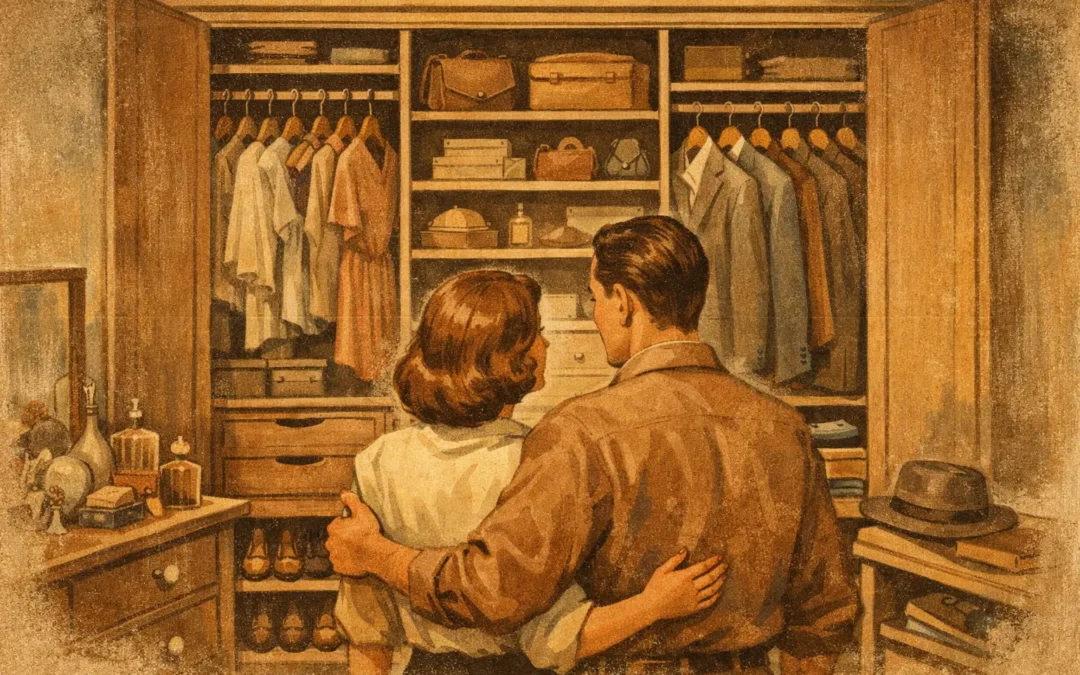
The quickest way to make a bedroom feel smaller is to give two people one wardrobe layout that was clearly designed for one. That is why the best wardrobe interiors for couples are never just about adding more rails or shelves. They are about giving each person enough of the right kind of storage, in the right place, so the room works properly every day.
A good couple’s wardrobe should reduce friction, not create it. If one person has long dresses and the other has more folded knitwear, the interior needs to reflect that. If one of you gets ready early while the other is still asleep, access and visibility matter. The best results come from planning around real habits, not generic storage diagrams.
What makes the best wardrobe interiors for couples work
The strongest wardrobe interiors start with balance, but not necessarily equality. A 50-50 split sounds fair, yet it is not always practical. One partner may need more full-length hanging space, while the other needs more drawers, shoe storage or compartments for accessories. Good design takes the pressure off by matching the storage to the person using it.
That usually means dividing the wardrobe into clearly defined zones. Each person gets their own section, with a shared area only where it makes sense. Shared space can work well for occasional items, spare bedding, luggage or seasonal storage, but everyday clothing is usually easier to manage when it has a clear owner.
Visibility is just as important as capacity. If shelves are too deep, drawers are too shallow, or rails are set at awkward heights, even a large wardrobe becomes difficult to use. Bespoke interiors solve this by being built around the room, the ceiling height and the people using them. That is especially useful in older homes, loft rooms or bedrooms with chimney breasts and sloping ceilings.
Start with each person’s storage profile
Before choosing fittings, it helps to look at what each of you actually owns and how you prefer to store it. This sounds obvious, but it is often the part people skip. The result is a wardrobe that looks impressive on paper and feels frustrating after a month.
One person may live from hanging rails. Shirts, jackets, dresses and workwear all need quick access and enough drop to avoid creasing. The other may prefer drawers for T-shirts, knitwear, gym kit and nightwear. Neither is right or wrong, but they require different interiors.
Shoes are another dividing line. Some couples need a simple shelf stack near the base of the wardrobe. Others need dedicated pull-out shoe trays because pairs get worn often and need to be seen at a glance. The same applies to handbags, watches, jewellery, belts and ties. If these items matter to your routine, they should be designed in from the start rather than squeezed into leftover space.
The most useful wardrobe features for couples
A well-planned interior usually combines hanging, shelving and drawers in a way that feels tailored rather than repetitive. Double hanging is often one of the most efficient options for couples, especially for shirts, blouses, skirts and shorter items. It doubles capacity without making access difficult.
Full-length hanging remains essential, but it does not need to dominate the whole design. Reserving one tall section for dresses, coats and longer garments is often enough. This creates room elsewhere for more practical combinations of drawers and shelves.
Drawers make a big difference in shared wardrobes because they keep smaller items contained and stop shelves becoming untidy. Soft-close drawers with internal dividers are particularly useful for underwear, accessories and folded clothing. They also help each person keep their own section organised without affecting the other’s.
Adjustable shelving adds flexibility, especially if your storage needs change over time. A couple may need more baby storage one year, more workwear the next, and less hanging space once wardrobes are edited down. Fixed interiors can look neat, but a little adaptability goes a long way.
Pull-out fittings can also earn their place, though only if they match how you live. Trouser racks, tie pulls, laundry drawers and pull-out mirrors are all useful in the right design. Used badly, they just add cost and complexity. The best approach is practical rather than decorative.
Best wardrobe interiors for couples in smaller bedrooms
Small bedrooms need careful planning, not compromise. In tighter spaces, fitted wardrobes usually outperform freestanding furniture because they use the full width and height of the room. That means less dead space above, fewer awkward gaps at the side and more usable storage overall.
For couples, floor-to-ceiling storage is often the difference between a wardrobe that copes and one that overflows. The upper sections can take suitcases, spare duvets, out-of-season clothes and less-used items, leaving the accessible space for daily essentials. This keeps the main wardrobe area cleaner and easier to maintain.
Door choice matters too. Hinged doors give full access, which many people prefer, but they need clearance in the room. Sliding doors can be the smarter option where space is tight, particularly in narrower bedrooms. The trade-off is that you only access one side at a time, so the interior layout needs to be planned carefully.
Mirrored or lighter-coloured finishes can also help a smaller room feel less heavy, but the interior should still do the hard work. A beautiful exterior will not fix a wardrobe that lacks drawers, hides items at the back or forces two people into the same awkward corner.
How to avoid common design mistakes
The most common mistake is focusing only on total storage rather than usable storage. A wardrobe can be large and still perform badly if it is filled with oversized shelves, badly placed rails or inaccessible top cupboards. Couples need storage that works quickly during busy mornings, not just storage that looks generous on a plan.
Another mistake is assuming both people will use the wardrobe in the same way. If one partner folds everything and the other hangs nearly everything, copying the same internal layout on both sides rarely makes sense. Symmetry can look tidy, but function should come first.
Too much open shelving is another issue. Open shelves are fine for folded clothes when they are well sized and easy to reach, but large stacks quickly become untidy in a shared wardrobe. Drawers often give a calmer, more practical result.
It is also worth thinking about lighting. Internal wardrobe lighting is not always essential, but it can make a real difference in deeper units or darker rooms. For couples who get dressed at different times, good lighting can improve access without needing to light the whole bedroom.
Why bespoke interiors make a difference
Off-the-shelf wardrobes tend to ask you to fit your life around their dimensions. Bespoke wardrobe interiors do the opposite. They are designed around your clothing, your room and the way the space needs to function every day.
That matters even more for couples because no two households use storage in quite the same way. One pair may want a sleek built-in look with hidden compartments and minimal visual clutter. Another may need heavier-duty storage that handles bulkier clothing, workwear or a large shoe collection. A tailored interior makes those decisions deliberate.
It also helps with awkward architecture. Alcoves, sloping ceilings, uneven walls and chimney breasts are common in many homes across Kent and the South of England. Instead of wasting those areas, a fitted design can turn them into useful storage with a clean, built-in finish.
At WOW Interior Design, this is exactly where careful planning pays off. A free design visit allows the wardrobe to be shaped around the room and the couple using it, rather than forcing a standard layout into a non-standard space.
Planning a wardrobe that lasts
The best couple’s wardrobe should still work in five or ten years, not just on installation day. That means thinking ahead a little. Changes in work patterns, lifestyle, children or even shopping habits can alter what you need from the space.
A wardrobe with a sensible mix of fixed structure and flexible elements tends to last better. Keep the core layout strong, then allow room for adjustable shelves, reconfigurable sections or additional accessories later if needed. This gives you longevity without making the interior feel over-engineered.
Materials matter as well. Interiors take daily wear, and cheaper fittings often show it. Drawer runners, hinges, shelf strength and finish quality all affect how the wardrobe feels over time. A fitted wardrobe should not only look sharp when installed, it should still open, close and function properly years down the line.
The right wardrobe interior gives both people space to get ready, stay organised and keep the bedroom feeling calm. When it is designed properly, you stop noticing the storage and start noticing how much easier the room is to live in.