

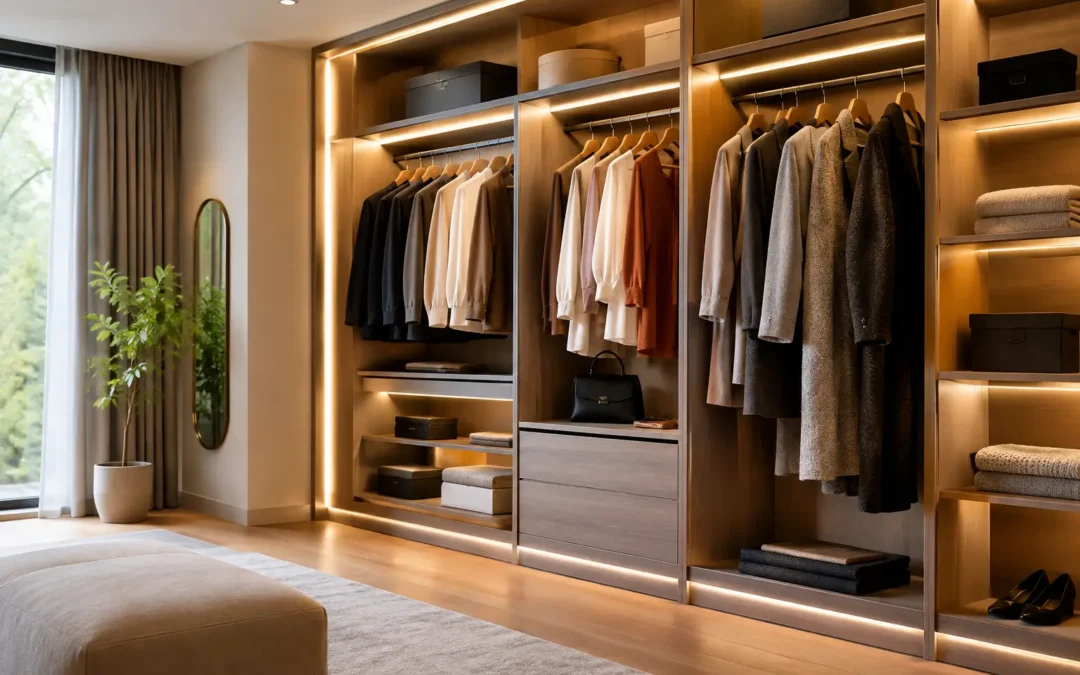
A well-planned wardrobe should not leave you searching for a navy jumper in a dark corner at 6am. The most useful wardrobe lighting trends 2026 are not about adding another gadget to the bedroom. They are about making every shelf, rail and drawer easier to use, while giving fitted furniture a considered, high-quality finish.
For homeowners investing in bespoke wardrobes, lighting is now part of the design conversation from the outset. It affects how the interior works day to day, how colours appear and how calm the room feels in the evening. The best result is discreet, reliable and tailored around the way you actually use your storage.
Wardrobe lighting trends 2026: practical luxury
The direction for 2026 is clear: integrated lighting is becoming less showy and more purposeful. Rather than bright strips of light fitted as an afterthought, homeowners are choosing carefully positioned LEDs that illuminate clothing without glare, shadows or visible fittings.
This is particularly valuable in full-height fitted wardrobes, deep corner units and walk-in dressing areas, where the room’s main light rarely reaches every compartment. A bespoke scheme can be designed around hanging sections, adjustable shelves, shoe storage and drawers, rather than forcing one general solution into every space.
Warm white lighting remains the most popular choice for bedrooms. It gives timber finishes, painted doors and fabrics a softer appearance, helping the room feel restful rather than clinical. Cooler white light can suit a dressing space where colour matching is the priority, but it needs to be used with care. Too cool, and even a beautifully designed wardrobe can feel more like a retail display than part of a home.
Sensors are replacing switches
The small detail making the biggest difference is sensor control. Door-activated lighting comes on when a wardrobe is opened and turns off once it is closed. It is simple, tidy and ideal for busy family bedrooms, where there is little appetite for remembering another switch.
For drawers, touch-free or soft-touch sensors are increasingly common. A drawer can light up as it opens, making smaller items easier to find without disturbing a partner with the main bedroom light. This works especially well for jewellery drawers, pull-out shoe racks and internal drawers behind wardrobe doors.
There is a practical benefit too. Automatic controls reduce wasted energy and prevent lights being left on behind closed doors. Good-quality LED fittings already use very little electricity, but sensors make the system work as intelligently as it looks.
Smart controls also have a place, although they are not essential for every project. Dimmable lighting can be useful in a dressing room or a shared bedroom, allowing a lower level of light early in the morning or late at night. App and voice control can be convenient, but a wardrobe still needs to function perfectly if a mobile phone is flat or the Wi-Fi is unreliable. For most homes, well-specified door sensors offer the best balance of convenience and dependability.
Light where it helps, not everywhere
A common mistake is assuming that more lighting automatically means a better wardrobe. It does not. Too many bright fittings can create reflections on glossy surfaces, cast harsh shadows across clothes and add unnecessary cost. The aim is to place light at the points where it solves a real problem.
Vertical lighting for hanging space
Slim vertical LED profiles fixed just inside the front edge of each wardrobe section are one of the strongest choices for 2026. They send light down the full length of shirts, dresses and coats, making the contents visible from top to bottom. They are particularly effective in tall wardrobes, where an overhead fitting often leaves the lower half in shadow.
Positioning matters. Lighting set too far back can be blocked by clothes, while a fitting too close to the front can shine directly into the room. A fitted furniture designer can allow for the profile within the wardrobe construction, so it feels built in rather than attached later.
Shelf and cubby lighting
Open shelving and display alcoves are still popular, especially when wardrobes include a central dressing table or a mix of closed storage and decorative space. Recessed shelf lighting can make these areas feel more intentional, whether they hold handbags, books, framed photographs or neatly folded knitwear.
The trade-off is that open shelves demand more organisation. If the purpose is maximum hidden storage, lighting every shelf may not offer enough day-to-day value. It is often better to reserve it for a few visible sections and focus the main lighting budget inside enclosed wardrobe bays.
Illuminated drawers and pull-outs
Internal drawer lighting is a quieter trend, but one that can genuinely improve how a wardrobe works. It is especially useful in deep drawers that hold accessories, gym wear or smaller clothing items. Light turns a dark box into a storage area that can be used quickly and properly.
Pull-out rails, trouser racks and shoe shelves benefit in the same way. These additions are designed to make use of difficult-to-reach space, so it makes sense to ensure they are visible when extended.
Concealed fittings keep the room refined
Visible LED tape, trailing cables and chunky light fittings can undermine the clean lines of fitted furniture. The more polished approach is to conceal the technology in routed channels, aluminium profiles or purpose-built wardrobe sides. The light source is present when you need it, but not something you notice when the wardrobe is closed.
This is where bespoke design offers a clear advantage over retrofitting. Power supplies, wiring routes and sensor locations can be agreed during the measuring and design stage. The wardrobe can then be manufactured to accommodate them neatly, with access retained where future maintenance may be needed.
A professional installation is also the sensible route for mains-powered wardrobe lighting. Electrics should be planned safely and in line with the room layout, particularly where wardrobes meet existing sockets, switches or ceiling lighting. A clean installation is not just about appearance. It protects the furniture, avoids awkward alterations later and gives you confidence that the finished system is dependable.
Colour temperature should match the bedroom
The phrase colour temperature may sound technical, but it simply describes whether a light appears warm or cool. For most fitted bedroom wardrobes, warm white around 2700K to 3000K gives the most comfortable result. It complements woodgrain finishes, neutral paint colours and the softer lighting generally expected in a bedroom.
A neutral white around 4000K can make it easier to judge the true colour of clothing. This can be useful in a dedicated dressing area, particularly for clients who get ready for work early or want a more precise view of outfits. The compromise is atmosphere: neutral lighting is clearer, but less forgiving and less cosy.
It is also worth considering the colour rendering quality of the LED. Better colour rendering helps blacks, blues, reds and natural skin tones appear more accurate. This matters more than many people realise when selecting clothes, applying make-up or coordinating accessories. Cheap LEDs may be bright, yet still make the wardrobe contents look flat or slightly off-colour.
Plan lighting alongside the storage layout
The strongest wardrobe lighting schemes start with the contents, not the fittings. Before choosing a light, consider what will be stored where. Long hanging garments need a different approach from folded clothes. Shoe racks, dressing tables, mirrored doors and awkward eaves spaces all change the lighting plan.
During a design visit, it helps to mention practical routines that can easily be overlooked: who gets up first, whether the bedroom is used for dressing, whether you wear work uniforms, or whether there are children sharing the room. These details guide decisions on sensor placement, brightness and which compartments deserve light.
Budget should be part of that conversation too. Lighting is a worthwhile upgrade, but it need not be installed in every unit to be effective. Prioritising the darkest, most frequently used sections often delivers a better result than spreading a limited budget across the whole wardrobe.
For Kent homeowners planning a fitted bedroom, WOW Interior Design can build the lighting plan into the furniture design from the first measure. That means the wardrobe, finish, internal storage and illumination are considered as one project, not a series of compromises.
The right wardrobe lighting should make an ordinary morning easier and a finished room feel more considered after dark. Choose it for the way you live, keep the fittings discreet, and let the quality of the furniture do the talking.