

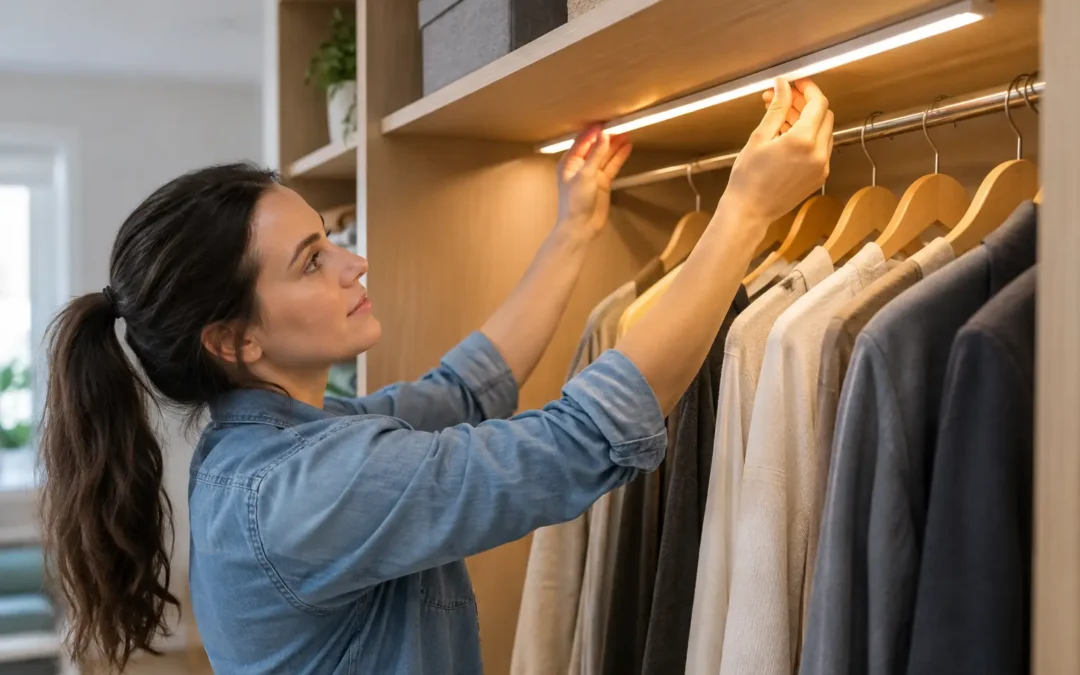
A dark wardrobe makes even a well-organised bedroom feel less practical. Clothes disappear into corners, colours are harder to judge on early mornings, and deep shelves become places where things are stored but rarely used. When you install wardrobe lighting as part of a fitted design, it turns the inside of the furniture into a properly usable space, not simply a box with doors.
The best result is rarely about fitting the brightest strip light available. It comes from planning the light around the layout of the wardrobe, the way the doors open, the depth of the shelves and the items you need to find. Done properly, wardrobe lighting should look discreet when the furniture is closed and feel effortless when it is open.
Start with the wardrobe layout, not the light fitting
Lighting needs to be designed around the storage rather than added as an afterthought. A tall hanging section needs illumination that reaches clothes from shoulder height to the floor. Drawers may benefit more from a soft internal light that comes on when opened. Shelves need light at the front edge so that folded clothes and accessories are visible without casting a shadow from above.
This is one reason bespoke wardrobes offer a clear advantage. The cabinet depth, shelf positions, hanging rails and internal divisions can all be planned with the lighting in mind. Cables can be hidden within panels, channels can be recessed neatly, and fittings can be positioned before the wardrobe is built and fitted.
Consider how you use each section. A wardrobe used by two people getting ready at different times may need individual sensors on separate bays. A dressing area may call for a warmer, more flattering light, while a utility cupboard can use a brighter practical option. There is no single arrangement that suits every room.
Choose the right type of wardrobe lighting
LED lighting is the usual choice for fitted wardrobes. It produces very little heat, uses little energy and is available in slim profiles that suit furniture interiors. The decision is then about where the light sits and how it is operated.
LED strip lighting for shelves and hanging spaces
LED strip lighting is ideal for the underside or front edge of shelves, as well as vertical internal panels. It gives an even wash of light instead of a bright spot in one area. For the cleanest finish, it should sit within an aluminium profile with a diffuser. This softens the light, protects the strip and avoids the visible dotted effect that can make a wardrobe look less considered.
Vertical strips fitted near the front of each side panel work especially well in tall hanging sections. They light the face of the clothes rather than the back wall, making it easier to see what you own.
Recessed spotlights for a refined look
Small recessed LED spotlights can suit wider compartments, top shelves or display areas. They are tidy and precise, particularly in wardrobes with glass-fronted sections or a dedicated space for bags, shoes and accessories.
Their limitation is shadow. One spotlight in the centre of a deep section may leave the sides poorly lit. They are often best combined with shelf lighting or used where the storage is shallow and more open.
Illuminated hanging rails
An illuminated hanging rail puts light exactly where it is needed. It can be an excellent choice for a clean, contemporary wardrobe, especially where a shelf above would otherwise block light from reaching garments.
However, this option needs careful specification. The rail must be strong enough for the clothing load, the cable route must be hidden, and the chosen rail needs to work with the wardrobe’s internal width and fixing method. It is a detail best decided during the design stage.
Select a colour temperature that suits the room
The colour temperature of the LED affects how clothes, finishes and paint colours appear. For most bedrooms, warm white lighting around 2700K to 3000K creates a calm, welcoming feel. It works well with timber textures, painted furniture and softer bedroom schemes.
Neutral white, generally around 4000K, gives a crisper view of colours and can be useful in a dressing room or a wardrobe used for workwear. It is more functional but can feel colder in a traditional bedroom. If you are unsure, warm white is usually the safer starting point for a fitted bedroom.
Do not judge the decision from a small sample alone. Dark cabinetry, mirrored doors, matte painted finishes and the amount of natural light in the room all change how the lighting will feel. The aim is enough clear light to choose an outfit confidently, without making the wardrobe look clinical.
How to install wardrobe lighting safely and neatly
The installation method depends on whether the lighting is mains-powered or low voltage. Most wardrobe LEDs are low voltage, using a driver to convert the mains supply. The visible light fittings may be simple, but the driver, switching and electrical connection still need proper planning.
A professional installation normally begins with a dedicated route for the cable and a suitable location for the driver. It needs to remain accessible if maintenance is ever required, but it should not take up valuable hanging or shelf space. In fitted wardrobes, it can often be concealed above the units, within a service void or in an adjoining cabinet.
The light channels or fittings are then recessed or surface-mounted before final assembly where possible. Recessing gives the most built-in appearance, but it needs sufficient panel thickness and accurate machining. Surface-mounted profiles are slimmer to fit and can be the better choice in an existing wardrobe, provided the cable can still be concealed.
For safety, mains electrical work should be carried out by a competent electrician. This is particularly relevant if a new socket, switched spur or cable route is required. Avoid loose wires, overloaded plug adaptors and inaccessible drivers that cannot be replaced without dismantling furniture. A polished wardrobe interior should never compromise safe installation.
Choose controls you will actually use
The control method has a major effect on how the wardrobe feels day to day. A door sensor is often the most convenient option: open the door and the lights come on; close it and they switch off. This avoids searching for a switch when your hands are full and prevents lights being left on.
For sliding wardrobes, a sensor needs more careful positioning because there may be no traditional door edge to trigger it. Infrared sensors, touch switches or a discreet wall switch can be more reliable depending on the door system and room layout.
Motion sensors can work well inside walk-in wardrobes, but they need sensible sensitivity and timing. A sensor that switches off while you are standing still deciding what to wear soon becomes irritating. Dimmable lighting is worth considering for wardrobes near a bed, where full brightness may be unwelcome late at night.
Common mistakes to avoid
The most common mistake is placing lights too far back. This lights the rear panel but leaves clothing and shelf fronts in shadow. Another is using cool, harsh LEDs simply because they appear brighter in a showroom. A wardrobe should be useful, but it should still belong to the room.
It is also easy to underestimate power requirements. Longer runs of LED strip, multiple wardrobe bays and several sensors all need a correctly sized driver. An undersized power supply can lead to dimming, flickering or early failure.
Finally, do not let lighting become an obstacle to the storage itself. A fitting that reduces hanging height, catches on bulky coats or prevents shelves from being adjusted is not a good solution. Good fitted design resolves those details before installation, not after the wardrobe is in place.
When to add lighting to an existing wardrobe
It is possible to retrofit wardrobe lighting, particularly with slim surface-mounted LEDs and battery-powered fittings. Battery lights can be useful for a quick improvement in a small cupboard, but they need recharging or replacement and rarely give the finish or reliability of wired lighting.
For a long-term bedroom upgrade, integrated low-voltage LEDs are the better investment. If you are already replacing doors, altering the internals or commissioning fitted wardrobes, that is the right time to include lighting. The additional planning is modest compared with the disruption of modifying finished furniture later.
At WOW Interior Design, we plan wardrobe lighting alongside the storage, finish and layout, so it earns its place in the room. The right lighting should make choosing clothes quicker, keep every compartment useful and add a quiet touch of quality every time you open the doors.