

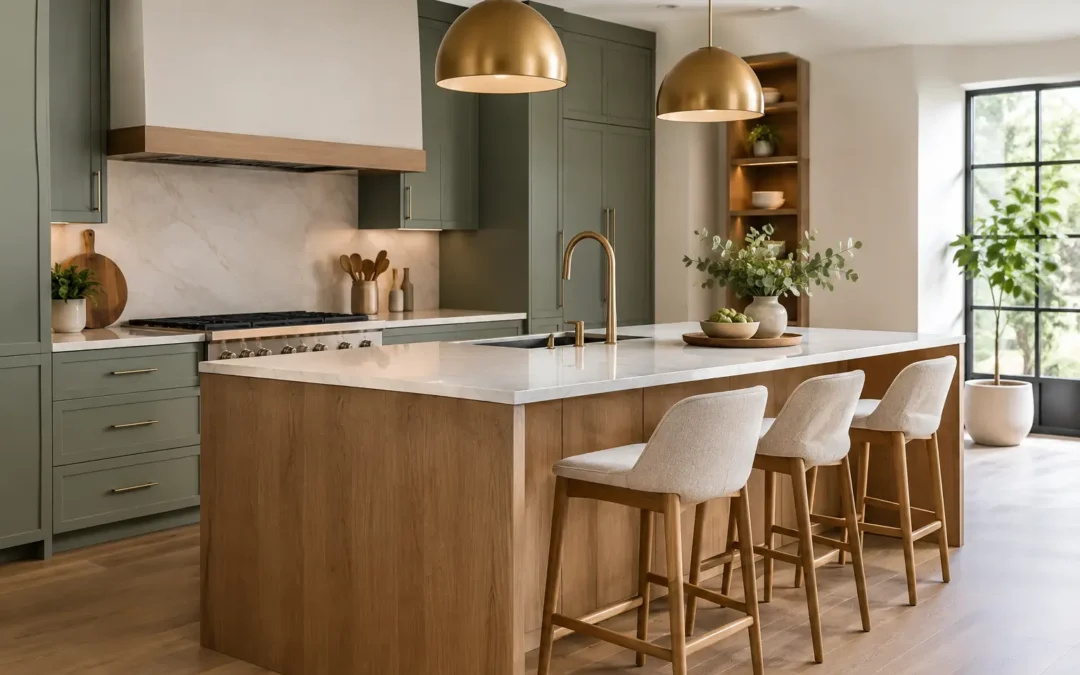
A tall run of wardrobes that finishes exactly at the ceiling. A home office that closes away when the working day is done. A window seat that stores toys, bedding or books without taking over the room. The most useful custom cabinetry trends 2026 are not about chasing a look for its own sake. They are about making every part of the home work harder, look calmer and feel properly considered.
For homeowners investing in fitted furniture, the direction is clear: less generic furniture, more tailored solutions. Rooms are being designed around real routines, awkward layouts and the belongings people actually need to store. The best results balance practical joinery with a finish that feels at home in the property, whether that means a clean contemporary bedroom or a characterful family house.
Custom Cabinetry Trends 2026: A Move Towards Purposeful Design
The era of buying a collection of separate storage pieces and hoping they work together is losing appeal. Freestanding furniture can be useful, but it often leaves wasted space above, beside and behind it. It also makes awkward alcoves, sloping ceilings and uneven walls harder to deal with.
Bespoke cabinetry offers a more complete answer. It can follow the proportions of the room, make use of every available centimetre and create a finish that feels built in rather than added later. This matters particularly in bedrooms, loft rooms, converted spaces and period homes, where standard-sized furniture rarely fits neatly.
In 2026, homeowners are also being more selective about what deserves a permanent place. Rather than filling a room with units, the focus is on designing fewer, better pieces with a clear job to do. A fitted library can hold books, display favourite objects and hide household clutter behind lower cupboards. A dressing area can combine hanging space, drawers, mirrors and lighting in one organised run.
The trend is not maximalism. It is intelligent use of space.
Warm, Layered Finishes Replace Cold Uniformity
Bright white and high-gloss finishes still have a place, especially in compact rooms where light matters. But warmer palettes are becoming the stronger choice for homeowners who want their fitted furniture to feel settled and individual.
Soft putty, warm grey, mushroom, clay, olive and deep blue-green tones are appearing on wardrobes, media units and home office furniture. Timber-effect interiors and natural wood details bring further warmth without making a room feel heavy. Painted cabinetry is particularly useful because it can be matched to existing wall colours, panelling, flooring or a favourite fabric.
The key is balance. A darker finish can give a large fitted wardrobe real presence, but in a north-facing or smaller bedroom it may need lighter walls, reflective surfaces or carefully planned lighting around it. Equally, pale cabinetry does not have to be plain. Shaker-style doors, slim framed fronts, fluted details or a contrasting interior can add depth while keeping the room bright.
A made-to-measure design visit is valuable here. Samples look different under the lighting in your own home than they do in a showroom, and the surrounding finishes need to be considered before a colour is chosen.
Texture is doing more of the talking
Flat, handleless cabinetry remains popular for modern interiors, but it is being softened with texture. Reeded or fluted panels, timber-grain doors, linen-look finishes and subtle framed detailing can make a large expanse of storage more interesting without becoming fussy.
This works especially well on feature pieces such as a media wall, hallway storage or a fitted bar area. In a bedroom, texture is often best used selectively: perhaps on central doors, drawer fronts or a dressing-table section. Using it across every surface can make a compact room feel busy.
Storage Designed Around Daily Life
The strongest fitted furniture should improve the way a room is used every day. That sounds obvious, but it is where off-the-shelf storage often falls short. A wardrobe with a standard rail and a few shelves may technically hold clothes, yet still leave shoes piled on the floor and accessories without a home.
Custom cabinetry trends in 2026 put internal planning at the centre of the design. Double hanging for shorter items, full-height hanging for dresses and coats, drawers sized for folded clothes, pull-out trays and adjustable shelving all help create a wardrobe that stays organised after the first week.
The same approach applies beyond the bedroom. Family living rooms need discreet places for games consoles, chargers, paperwork and children’s belongings. Hallways benefit from seating, shoe storage, coat cupboards and a sensible drop zone for bags and keys. A home office may need open shelves for books, closed units for files and a desk at the right height for comfortable daily use.
Good cabinetry does not merely hide clutter. It reduces the effort required to keep clutter under control.
Flexible Rooms Need Fitted Furniture That Can Adapt
Many homes now ask more of each room. A spare bedroom may be a guest room, occasional workspace and overflow storage area. A dining room may become a study during the week. A living space may need to support family time, entertaining and quiet reading.
This is encouraging more integrated, multi-purpose furniture. A fitted desk can sit within a wall of storage and be screened by doors when needed. A window seat can include drawers below and shelving beside it. A library wall can incorporate a television, concealed cables and cupboards for technology, while still looking like furniture rather than an electronics station.
There is a trade-off to consider. Highly specialised storage can be brilliant for your current routine, but homes and families change. The most lasting designs combine dedicated elements with adaptable shelves, drawers and cupboard interiors. That gives you the benefit of a tailored layout without locking the room into one use forever.
Media walls become quieter and more refined
Media walls continue to be requested, but the look is becoming more furniture-led. Instead of a television sitting in a large, over-detailed feature wall, homeowners are choosing well-proportioned cabinetry with concealed wiring, balanced shelving and closed storage below.
The television can still be a focal point, but it does not need to dominate the room. Painted finishes, timber accents and integrated lighting help the unit sit naturally alongside the rest of the interior. In smaller rooms, a shallower design with fewer open shelves is often the smarter choice, as it preserves floor space and avoids a crowded effect.
Details That Make Bespoke Cabinetry Feel Premium
A fitted room is judged as much by the details as by the overall design. Door alignment, neat scribing against uneven walls, handles that feel right in the hand and interiors that are easy to access all make a difference over time.
For 2026, expect to see discreet integrated lighting used more thoughtfully. Wardrobe lights can make early mornings easier. LED strips under shelves can add atmosphere to a library or display unit. A softly lit dressing area is practical as well as flattering. Lighting should support the room, not become a gimmick, so it needs to be planned alongside the furniture rather than added as an afterthought.
Hardware is also becoming more deliberate. Some clients prefer the uninterrupted look of push-to-open or integrated pull details. Others choose knobs or handles in aged brass, black or brushed nickel to add contrast. Neither option is automatically better. Handleless doors suit a streamlined scheme, while visible hardware can bring personality and makes sense in more traditional spaces.
Why the Design Process Matters as Much as the Trend
No trend is worth copying if it does not suit the house, the room or the people using it. The most successful projects begin with accurate measuring and honest discussion about what is not working now. Is the problem insufficient hanging space, a lack of paperwork storage, an unused alcove or simply a room that feels disjointed?
From there, design decisions become clearer. Ceiling-height wardrobes may be the right answer for a small bedroom, but only if the upper storage is used for seasonal items. Open shelving can make a library feel personal, but it needs enough closed storage elsewhere to prevent visual clutter. Dark cabinetry can be striking, but it should be proportioned carefully in a room with limited daylight.
At WOW Interior Design, this is why the process starts with a free design consultation and in-home measure. A bespoke solution should respond to the room as it is, not force the room to accommodate standard furniture. With more than 25 years of experience behind the fitting process, the aim is a polished result that is practical from day one.
The best trend to take into your next project is simple: choose cabinetry that earns its place. When storage is designed around your home and your habits, a bedroom, office or living room feels easier to use and far better to come back to.