

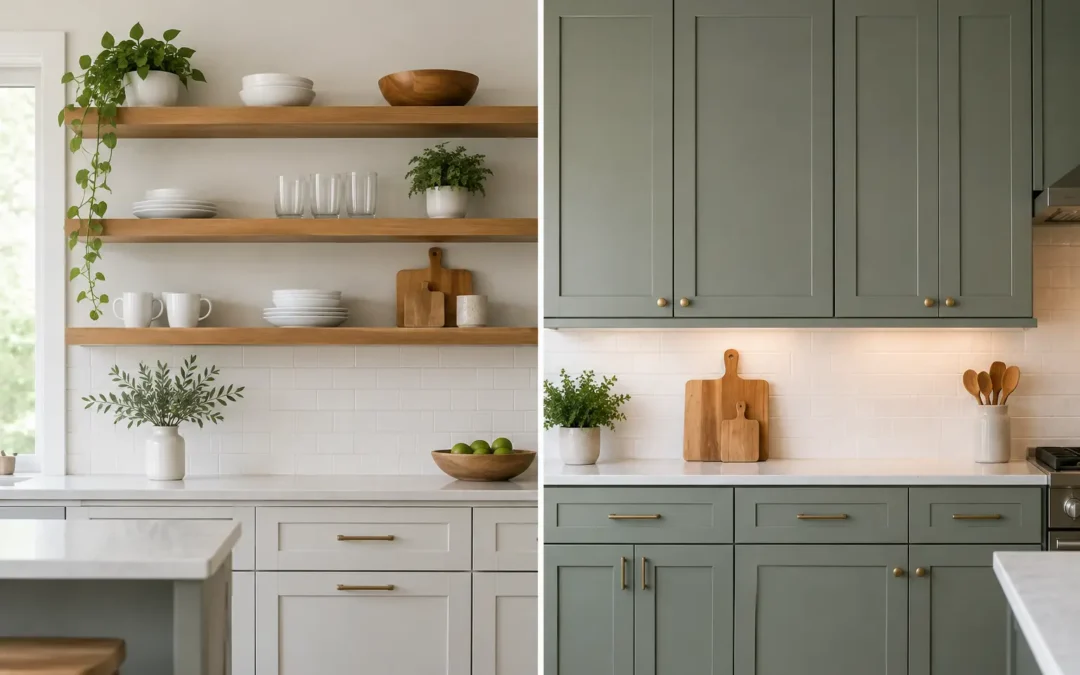
A shelf full of well-chosen books, ceramics or glassware can make a room feel personal within seconds. The same shelf, filled with paperwork, mismatched mugs and everyday clutter, can make it feel permanently untidy. That is the real decision behind open shelving versus cabinets: not simply which look you prefer, but how you want the room to work every day.
For a fitted interior, the strongest answer is often not one or the other. It is a considered balance of visible display, concealed storage and carefully planned proportions that suit your home and routines.
The real difference is what each asks of you
Open shelving puts your belongings on show. It creates depth, breaks up a large run of fitted furniture and gives you a place to introduce colour, texture and personality. In a library, home office or living room, shelves can prevent a fitted installation from feeling too solid or heavy.
Cabinets do the opposite job equally well. Doors create visual calm, protect contents from dust and allow the less attractive parts of daily life to disappear. Chargers, children’s games, folders, bedding and household supplies do not need to be styled before guests arrive.
Neither approach is automatically more practical or more attractive. Open shelving rewards organisation. Cabinets offer forgiveness. The right choice depends on the purpose of the room, how much storage you need and how much you genuinely want to see.
Open shelving versus cabinets: appearance and atmosphere
Why open shelves can lift a room
Open shelves work especially well where a room needs character rather than more bulk. A few beautifully spaced shelves can turn an unused alcove into a feature, give a home office a more relaxed feel or add interest above a fitted desk. They are particularly effective for books, framed photographs, attractive storage boxes, artwork and objects collected over time.
The sense of openness is valuable in smaller rooms too. Full-height cabinets can be the best way to maximise storage, but an unbroken wall of doors may feel imposing if it is not designed carefully. Introducing a shelf section, a recessed display area or a painted back panel brings relief and visual depth.
There is also a practical advantage when you use certain items constantly. Cookbooks, reference books, favourite mugs, office supplies or children’s reading books are easy to reach without opening and closing doors. When fitted at the correct height, shelving can make a room more convenient as well as more appealing.
The trade-off is that open shelves become part of the room’s decoration. Their contents need some thought. They do not have to look like a magazine display, but they do need regular editing. If every surface becomes a holding area for odds and ends, the room can quickly feel busier than intended.
Why cabinets create a calmer finish
Cabinets are the workhorses of a well-organised home. They make it possible to store a great deal without making a room look like it is being used for storage. In bedrooms, they keep clothes, spare bedding and personal items out of sight. In a home office, they hide files, printers and cables. In living spaces, they provide a home for technology, games and the everyday items that rarely enhance an interior.
Fitted cabinets are also useful where a room has awkward angles, chimney-breast alcoves, sloping ceilings or uneven walls. A bespoke design can use the full height and depth available, rather than leaving difficult gaps around freestanding furniture. This matters in homes where every bit of usable space counts.
Door style has a major effect on the finished look. Shaker doors bring detail and a more classic feel, while simple slab doors can look clean and contemporary. A painted finish in a chosen colour allows the cabinetry to sit quietly against the walls or become a defining feature of the room.
Cabinets are not maintenance-free, but they are easier to live with if you prefer an uncluttered home. A quick close of the door restores order. For busy family rooms and hardworking bedrooms, that can be worth far more than an extra display shelf.
Think about what you are storing, not only where it will go
Before choosing a layout, look honestly at the items you need to accommodate. The contents should lead the design.
Books and decorative pieces suit open shelving, provided shelves are sized for the books you actually own. A shelf designed purely for appearance may look good initially but waste valuable space if tall hardbacks or large albums do not fit. Consider whether you want adjustable shelves too, particularly in a library or home office where your needs may change.
Items that create visual noise are better behind doors. This includes paperwork, wires, spare toiletries, board games in worn boxes, cleaning supplies and assorted equipment. If you are designing bedroom furniture, drawers and closed cupboards will usually do more of the everyday work, while one or two open areas can be reserved for the things you enjoy seeing.
Depth matters just as much as height. Deep shelves can become a place where objects disappear behind one another. Shallow shelving is often smarter for display, paperbacks and smaller accessories, while deeper cabinets are better for bulkier belongings. A measured design visit helps establish these dimensions before anything is made.
Cleaning, maintenance and daily use
Open shelving collects dust more visibly than enclosed storage. That does not mean it should be avoided, but it is a factor to acknowledge. Decorative objects, book tops and shelf surfaces need occasional cleaning, and kitchen-adjacent shelves may need more frequent attention because of cooking residue.
Cabinets protect contents from dust but require good internal organisation. Without shelves, drawers or sections designed around the contents, a large cupboard can become a black hole. The outside looks tidy while the inside becomes frustrating to use.
This is where fitted furniture earns its place. A cabinet can include internal drawers, adjustable shelving, pull-out trays and tailored compartments. A desk unit can conceal cables and equipment while leaving an open shelf nearby for the books and accessories that make the space feel like yours. Good storage should reduce the effort of keeping a room in order, not merely hide it.
The best option for bedrooms, offices and living rooms
In a bedroom, cabinets usually deserve priority. Clothing, laundry, shoes and bedding need generous hidden storage, and a restful room benefits from fewer visible items. Open shelving works best as a small accent: a dressing-table niche, a display shelf within a wardrobe run or a book area beside the bed.
In a home office, a mix is often ideal. Closed cupboards can house files, a printer and technical equipment, while open shelves keep reference books and selected personal pieces close by. This combination can make a work space feel professional without becoming sterile.
In a living room or library, the balance may lean further towards open shelves, especially for keen readers. Even then, lower cabinets are useful for the practical items that share the room with books. A fitted media wall can combine both, with shelving designed around display and cabinetry used to contain equipment, cables and storage.
For commercial spaces, such as a reception area or client-facing office, the same principle applies. Open shelving can communicate personality and display products or literature, but closed storage keeps supplies and operational clutter away from view.
A balanced fitted design often gives you more
Choosing between shelves and cabinets does not have to mean committing an entire wall to one format. Some of the most successful interiors use cabinets at lower level, taller concealed storage at the sides and open shelving at eye level. This gives the design rhythm while keeping the majority of storage practical.
Colour and lighting can sharpen that balance. Cabinet fronts painted to match the room create a calm, built-in effect. A contrasting back panel can make open shelves stand out without adding clutter. Subtle integrated lighting can turn shelving into an evening feature, but it should support the room rather than draw attention to every item stored there.
At WOW Interior Design, every fitted project starts by understanding how the room is used, what needs to be stored and the finish you want to achieve. With more than 25 years of experience, the focus is on creating furniture that fits the space properly and remains enjoyable to use long after installation.
The best test is simple: keep the things you use, love or want to display within sight, and give everything else a well-planned place behind a door. A thoughtful combination will make your room feel lighter, more organised and far easier to live with.