

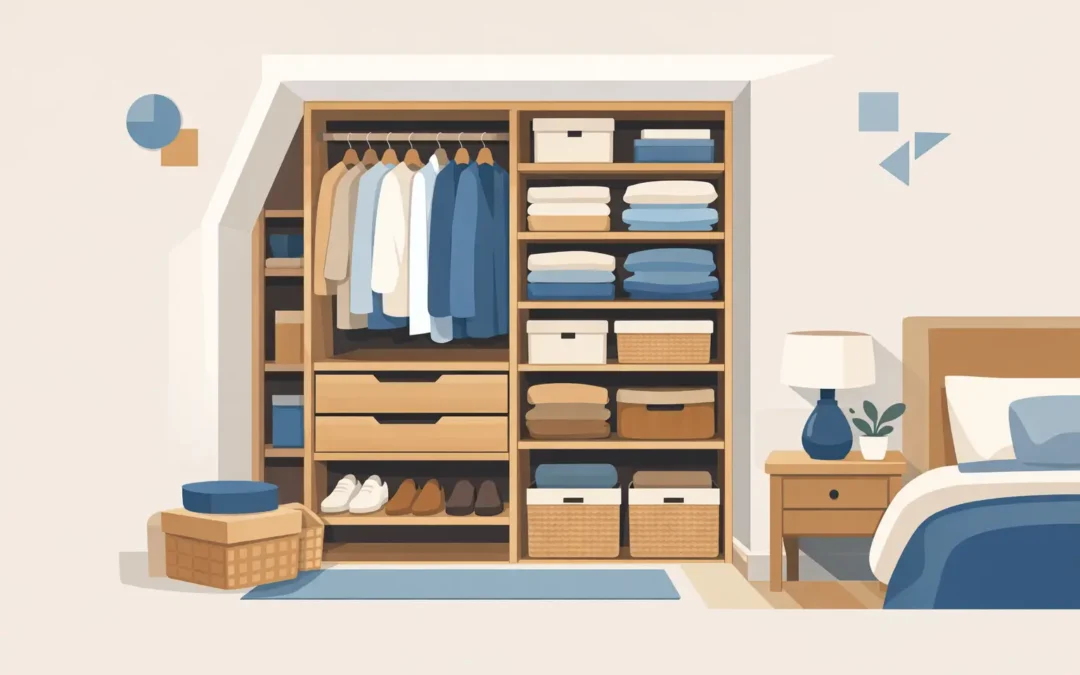
That narrow recess either side of a chimney breast can be one of the most useful parts of a bedroom – or one of the easiest to waste. If you are wondering how to maximise alcove wardrobe space, the answer is rarely just adding a rail and a pair of doors. Alcoves work best when every millimetre is planned around what you actually need to store, how you use the room, and the shape of the space itself.
Standard freestanding wardrobes usually leave gaps at the sides, dead space above, and awkward corners inside. A fitted approach changes that completely. Done properly, an alcove wardrobe should look like it belongs to the room and work much harder than a shop-bought unit ever could.
Why alcove wardrobes often underperform
Alcoves look simple, but they are not always straightforward. Walls can be out of square, chimney breasts can reduce usable depth, skirting boards interrupt clean lines, and ceiling heights often vary more than people expect. That is why off-the-shelf furniture tends to be a compromise.
The biggest mistake is treating every alcove the same. One side may be better for hanging clothes, while the other suits shelving or drawers. The best result comes from designing each alcove around the room and the person using it, rather than forcing a matching layout where it does not make sense.
How to maximise alcove wardrobe space from the start
The first step is to be honest about what needs to go inside. Long dresses, shirts, folded knitwear, shoes, bags, spare bedding and laundry all need different storage. If you start with the door style or finish before sorting the internal layout, you risk ending up with something that looks smart but never quite works day to day.
It also helps to think vertically. Most alcoves have more height than width, which means the upper section matters. Full-height fitted wardrobes make use of the area above eye level for less frequently used items such as suitcases, seasonal clothing or extra duvets. In smaller bedrooms, that high-level storage can make a surprising difference.
Depth is the next consideration. If your alcove is generous enough, full-depth hanging is ideal. If it is shallower, you may need front-facing rails, pull-out fittings or a mixed layout. This is where bespoke design earns its place. A shallow alcove does not have to be wasted space, but it does need the right internal solution.
The best internal layout for an alcove wardrobe
There is no single perfect configuration, but there are patterns that work well. For most people, a mix of hanging, shelving and drawers gives the best balance. Too much hanging space creates empty voids under shorter garments. Too many shelves can become cluttered if they are not sized properly.
Double hanging is often one of the smartest ways to increase capacity, especially for shirts, blouses, skirts and trousers. A full-length section is still useful, but not usually across the whole wardrobe. If you split the interior carefully, you can fit far more without making it feel cramped.
Drawers built into the lower section are particularly useful in alcove wardrobes because they keep smaller items organised without taking up extra room elsewhere in the bedroom. Fitted drawers also tend to make better use of width than standalone chests, especially where the wall is uneven.
Shelves should be planned with purpose. A stack of narrow shelves can look efficient on paper but become frustrating in practice. Wider, well-spaced shelves are often better for knitwear, jeans and storage boxes. If the wardrobe is being used by two people, dividing the interior into clearly defined zones usually makes the space easier to maintain.
Make awkward areas work harder
Alcoves often include details that seem inconvenient at first – boxed-in pipework, sloping ceilings, chimney offsets or uneven plaster. These do not need to limit the wardrobe. In many cases, they simply shape the design.
A chimney breast, for example, can create a natural focal point with wardrobes built neatly into the alcoves on either side. One side might prioritise hanging space, while the other includes shelving, drawers or even a built-in laundry section. Matching exteriors can keep the room balanced, even if the interiors differ.
This is often where homeowners get the best result from bespoke fitted furniture. Instead of battling the architecture, you work with it.
Doors matter more than most people think
When looking at how to maximise alcove wardrobe space, door choice is not just about style. It affects access, clearance and how the room feels.
Hinged doors give full access to the interior, which is useful if the alcove is deep and you want easy visibility. They suit larger bedrooms where there is enough space for doors to open comfortably. They also allow for more flexibility with drawer placement inside.
Sliding doors can be a better choice where floor space is tight. They keep walkways clear and suit a cleaner, more contemporary look. The trade-off is that you can only access part of the wardrobe at once, so the internal design needs more thought.
In some period homes, shaker-style doors work beautifully in alcoves because they feel in keeping with the room. In more modern interiors, flat painted fronts or subtle handleless detailing can help the wardrobes sit quietly within the scheme. The right finish makes fitted wardrobes feel intentional rather than imposed.
Use the space above and around the wardrobe
One of the easiest ways to lose storage in an alcove is stopping short of the ceiling. That gap above a wardrobe quickly becomes a dust trap and wastes valuable volume. Full-height cabinetry gives a cleaner finish and adds useful storage without increasing the footprint.
You can also think beyond the wardrobe itself. If the alcove sits beside a bed, integrated bedside shelving or bridging units can create a more complete fitted bedroom design. If there is room around the chimney breast, open shelving or cupboards above can add extra practical storage without making the room feel overbuilt.
The key is restraint. Not every inch needs to be filled if it makes the room feel heavy. Good design balances storage capacity with visual calm.
Finishes and colour can change how spacious it feels
Practicality comes first, but appearance still matters. Alcove wardrobes are often a prominent feature in the bedroom, so they need to improve the room as well as store your clothes.
Lighter painted finishes can help smaller bedrooms feel more open, especially where alcoves are narrow. Matching the wardrobe colour to the walls usually creates a softer, more built-in look. Darker tones can be very effective too, but they tend to suit rooms with more natural light or stronger architectural character.
Mirrored panels may make sense if the bedroom needs a dressing mirror and you want to bounce more light around the room. That said, they are not right for every style of interior. Sometimes a solid painted finish gives a more refined result.
When bespoke is the better investment
If your alcoves are perfectly square and your storage needs are simple, a standard solution may seem tempting. But most bedroom alcoves are not perfect, and that is where fitted design pays off. You gain better use of the footprint, a cleaner finish, and storage tailored to your daily routine.
You also avoid the usual frustrations of trying to make flat-pack furniture behave like built-in joinery. Gaps disappear, awkward corners are accounted for, and the wardrobe becomes part of the room rather than something pushed into it.
For homeowners improving a long-term home, bespoke fitted wardrobes are often the more cost-effective choice over time because they solve the problem properly first time. A well-designed alcove wardrobe should make the room easier to live with every day, not just look good on installation day.
At WOW Interior Design, this is exactly where a measured, tailored approach makes the difference. When an alcove is designed around the space, the storage and the finish all at once, the result is cleaner, smarter and far more useful.
A good alcove wardrobe should feel effortless
The best alcove wardrobes do not shout for attention. They simply make the room work better. Clothes are easier to store, the bedroom feels calmer, and awkward recesses stop being a problem to work around.
If you are planning a bedroom upgrade, it is worth stepping back from the idea of just filling the gap. The real value comes from shaping the storage around your home and the way you live in it. That is how an alcove becomes one of the hardest-working parts of the room.